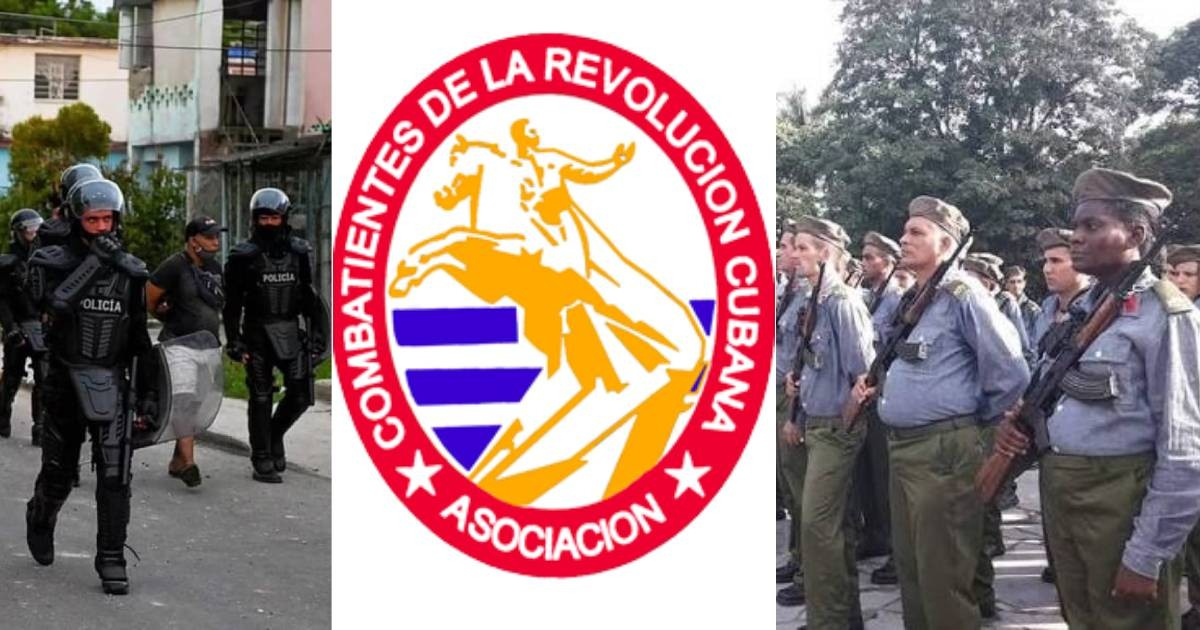
The U.S. Department of the Treasury's Office of Foreign Assets Control (OFAC) announced new sanctions on Monday targeting the Rapid Response Brigades, Territorial Troop Militias (MTT), and the Association of Combatants of the Cuban Revolution (ACRC), adding them to the Specially Designated Nationals (SDN) List. This move represents the latest effort to penalize the Cuban regime under Executive Order 14404.
The Rapid Response Brigades, long viewed as a primary tool for political repression in Cuba, are the main focus of these sanctions. Established in June 1991 by Fidel Castro and the Cuban Communist Party during the Special Period, these brigades are composed of regime loyalists, Communist Party members, and plainclothes military personnel who act as a paramilitary force to intimidate and suppress dissidents, activists, and protestors.
Organizations like Amnesty International and Human Rights Watch have documented these brigades' involvement in acts of repudiation, beatings, and other physical assaults against individuals expressing dissent for years. Their activities gained particular attention during the July 11, 2021 protests (11J), when they collaborated with the Ministry of the Interior (MININT) and the Revolutionary Armed Forces (FAR) to quell the largest anti-government demonstrations seen in Cuba in decades. Human Rights Watch reported over 1,400 detentions within just three days.
High-Profile Incidents and Recent Developments
A notable incident linked to these groups occurred in April 2025, when U.S. Immigration and Customs Enforcement (ICE) arrested Daniel Morejón García in Miami. García, a former National Defense Council president in Artemisa, was accused of being part of the Rapid Response Brigades and participating in beatings and physical abuse against 11J protestors. More recently, in March 2025, the Cuban regime conducted training exercises with these brigades in the provinces of Guantánamo and Holguín, including shooting practice and weapons handling, as part of the official strategy following the declaration of 2026 as the "Year of Preparation for Defense."
In addition to the Rapid Response Brigades, OFAC targeted the MTT, which were established on January 20, 1980, under the doctrine of the "War of All the People." The MTT, classified as a governmental entity, encompasses over a million members under the structure of the Ministry of the Revolutionary Armed Forces (MINFAR).
The ACRC, founded on December 7, 1993, was also added to the list. According to the Cuban Observatory for Human Rights, members of this organization have engaged in repugnant acts and physical assaults against activists and opposition members.
Economic Entities Under Scrutiny
Alongside these measures, OFAC has extended sanctions to several state entities seen as financial lifelines for the Cuban regime. These include the Ministry of Tourism (MINTUR), Port Maritime Transport Business Group (GEMAR), Foreign Trade Business Group (GECOMEX), Antillean Export Corporation S.A. (ANTEX)—linked to the military conglomerate GAESA—OSDE Caudal S.A., and energy sector companies COREYDAN S.A. and ENETEC S.A.
Simultaneously, the U.S. Department of State released a statement entitled "Further Sanctions on the Cuban Regime's Sources of Funding and Tools of Oppression," framing these actions as part of Washington's strategy to increase pressure on Cuba's repressive and financial structures.
This marks the fifth round of sanctions under Executive Order 14404, signed by President Donald Trump on May 1, 2026. Previous actions targeted GAESA on May 7, the Intelligence Directorate and MININT on May 18, MINFAR, the Committees for the Defense of the Revolution (CDR), and Miguel Díaz-Canel on June 4, and CUPET on June 11.
Understanding the Impact of U.S. Sanctions on Cuba
Why did the U.S. impose sanctions on the Rapid Response Brigades?
The U.S. imposed sanctions on the Rapid Response Brigades due to their significant role in political repression in Cuba, highlighted by their involvement in suppressing dissent and protests.
What entities were included in the recent sanctions?
The sanctions targeted the Rapid Response Brigades, Territorial Troop Militias, and the Association of Combatants of the Cuban Revolution, along with several state entities like the Ministry of Tourism and energy companies.
How have international organizations responded to the actions of these brigades?
International organizations such as Amnesty International and Human Rights Watch have documented and condemned the brigades' involvement in acts of violence and repression against Cuban citizens.