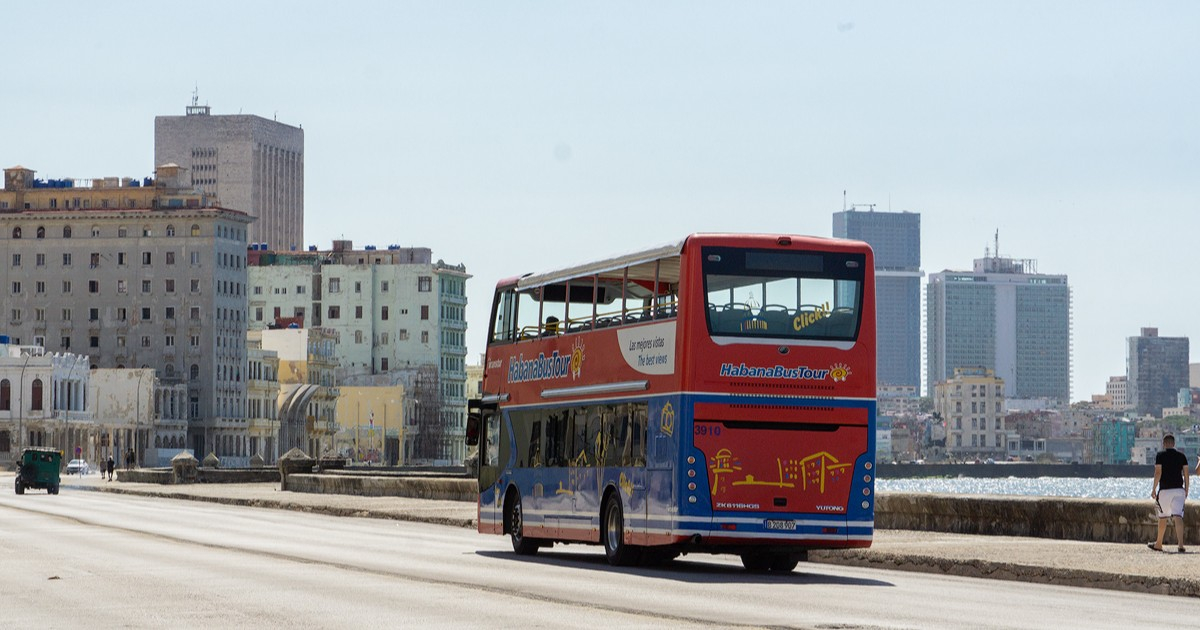
The U.S. Department of the Treasury has added Cuba's Ministry of Tourism (MINTUR) to its Specially Designated Nationals (SDN) list as of this past Monday.
This latest wave of sanctions affects nine additional entities under the Cuban regime, encompassing repressive agencies and state-owned enterprises.
The move was announced by the Office of Foreign Assets Control (OFAC) alongside a State Department statement titled "Further Sanctions on Sources of Financing and Tools of Oppression of the Cuban Regime."
Impact on Cuba's Tourism Industry
The sanctions against MINTUR come amidst one of the most challenging periods for Cuban tourism in decades. In the first quarter of 2026, the island saw only 298,057 international visitors, marking a 48% decrease compared to the same period in 2025. Hotel occupancy rates have plummeted to 12.9%, and tourism revenue has fallen by 42.4%.
Who Else Was Sanctioned?
Among those designated, two organizations with documented histories of repression were included: the Rapid Response Brigades (BRR), established in June 1991, and the Territorial Troops Militia (MTT), founded in January 1980.
The BRR played a significant role in the violence during the July 11, 2021 protests, where members assaulted demonstrators with sticks and blunt objects.
The Cuban Revolutionary Combatants Association (ACRC) was also sanctioned, identified by human rights organizations for its involvement in acts of repudiation and aggression against activists.
On the economic front, the sanctions list included the Maritime Port Transport Business Group (GEMAR), the Foreign Trade Business Group (GECOMEX), OSDE Caudal S.A., and the Antillean Export Corporation S.A. (ANTEX), the latter directly linked to GAESA according to the SDN list.
Additionally, two fuel sector companies faced penalties: COREYDAN S.A. and ENETEC S.A.
Background of Increased Sanctions
This new round of sanctions is part of a sustained offensive that began with the signing of Executive Order 14404 by Trump on May 1, 2026. The order expanded the legal framework to sanction strategic Cuban sectors and established secondary sanctions against foreign companies operating with designated entities.
Since then, the sanctions have been progressively applied: on May 7, GAESA and its president Ania Lastres Morera were sanctioned, accused of managing illicit assets valued at up to $20 billion.
On May 18, the U.S. sanctioned the General Directorate of Intelligence (DGI), the Ministry of the Interior (MININT), and the National Revolutionary Police (PNR). On June 4, the Committees for the Defense of the Revolution (CDR) and ICAP were targeted. On June 11, the state-owned oil company CUPET faced sanctions.
Overall, since January 2026, the Trump administration has implemented over 240 restrictive measures against the Cuban regime, intensifying maximum pressure on Havana across all economic, military, and security fronts.
Understanding U.S. Sanctions on Cuba
What entities in Cuba were recently sanctioned by the U.S.?
The U.S. recently sanctioned Cuba's Ministry of Tourism, Rapid Response Brigades, Territorial Troops Militia, the Cuban Revolutionary Combatants Association, and several economic entities including GEMAR, GECOMEX, OSDE Caudal S.A., ANTEX, COREYDAN S.A., and ENETEC S.A.
How have these sanctions affected Cuba's tourism industry?
Cuba's tourism industry has been severely impacted, with a 48% decrease in international visitors in early 2026, hotel occupancy rates dropping to 12.9%, and a 42.4% decline in tourism revenue.
What is Executive Order 14404?
Executive Order 14404, signed by Trump on May 1, 2026, expanded the legal framework for sanctioning strategic sectors in Cuba and established secondary sanctions against foreign companies dealing with designated Cuban entities.