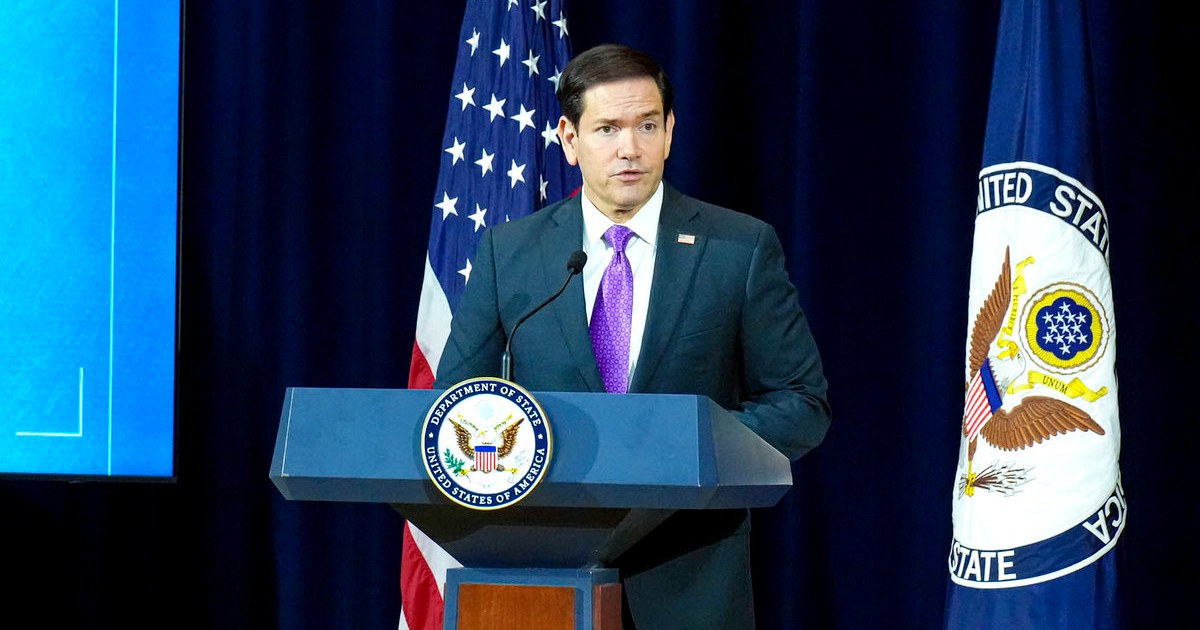
A statement from Secretary of State Marco Rubio demanding the release of Cuban political prisoners turned into a platform for collective venting on Sunday, with hundreds of comments expressing deep-seated frustration over empty promises that fail to bring about real change.
Posted on CiberCuba's social media to mark the fifth anniversary of the July 11 protests, the message sparked a flood of reactions, where the prevailing sentiment was not enthusiastic support, but rather disillusionment, hopelessness, and fatigue.
Countless comments echoed the same sentiments: "all talk, no action," "the people are dying while you speak."
One commenter captured the mood with brutal honesty: "I've been listening to speeches full of broken promises for 65 years. For the first time in many years, I put my hope in someone who promised to liberate us, but it’s taking too long. No more speeches; we need action, action, action."
Another individual lamented, "It's painful how we've placed our hopes in these people because our disarmed, indoctrinated populace cannot free itself from this communist plague. Yet, for months we've heard only talk, with no action. Economic measures have been tightened, choking the country, but it's the people who are suffering."
The Island's Imprisonment
The call extended beyond the formal political prisoners. Numerous comments broadened the scope: "the entire island is imprisoned," "we are millions of prisoners," "the whole population needs liberation."
One person stated, "90% of everyday Cubans are political prisoners. We live without freedom, without electricity, without food, without water, without medicine. A literal concentration camp."
The grim reality that fuels this despair is staggering. According to Prisoners Defenders as of July 9, Cuba has 1,306 political prisoners, setting a new historical record. This includes 40 minors, with 338 serving sentences directly linked to the July 11 protests, excluded from the April 2026 pardon.
Economic Sanctions and Public Suffering
Meanwhile, Cuba experienced its fourth total blackout of the year on July 10, with outages lasting up to 87 hours in some provinces, while 33.9% of households face chronic hunger, and only 30% of essential medicines are available.
Numerous comments pointed out that economic sanctions do not impact the regime’s elite but rather the ordinary people.
"Mr. Rubio, we agree on the release of so many prisoners, but there is widespread exhaustion due to lack of power, food, health, and inflation. Sanctions against the government do not solve the public's issues. They live as well or better, while it affects the lives of children, the elderly, and the common people," wrote one individual.
Another comment directly challenged political credibility: "Stop threatening and take action against this regime, or you will never again have the Cuban-American vote."
Calls for Direct Intervention
A majority demanded direct intervention, arguing that negotiations with dictatorships are futile and that the Cuban people are unarmed. A more reflective voice suggested that freedom should come from the people themselves.
Rubio’s demand came on the fifth anniversary of the largest popular protests in Cuba since 1959, when thousands took to the streets in over seventy locations. The regime's response was massive repression. Five years later, hundreds of protesters remain imprisoned, and the crisis has deepened to unprecedented levels.
"It's time for action to surpass rhetoric," wrote someone, "because today's Cubans are dying physically and mentally. Those in power will not act unless forced. Liberation for a kidnapped Cuba is just and necessary right now."
Understanding the Cuban Crisis and Political Response
What has been the impact of economic sanctions on ordinary Cubans?
Economic sanctions have primarily affected the everyday citizens, leading to shortages of food, medicine, and basic services, rather than impacting the regime's elite.
Why are the July 11 protests significant?
The July 11 protests are significant as they represent the largest expression of public dissent in Cuba since 1959, highlighting widespread dissatisfaction with the regime.
What are the current conditions like in Cuba?
Cuba is facing severe economic hardships, including frequent power outages, food shortages, and a lack of medical supplies, contributing to widespread public discontent.