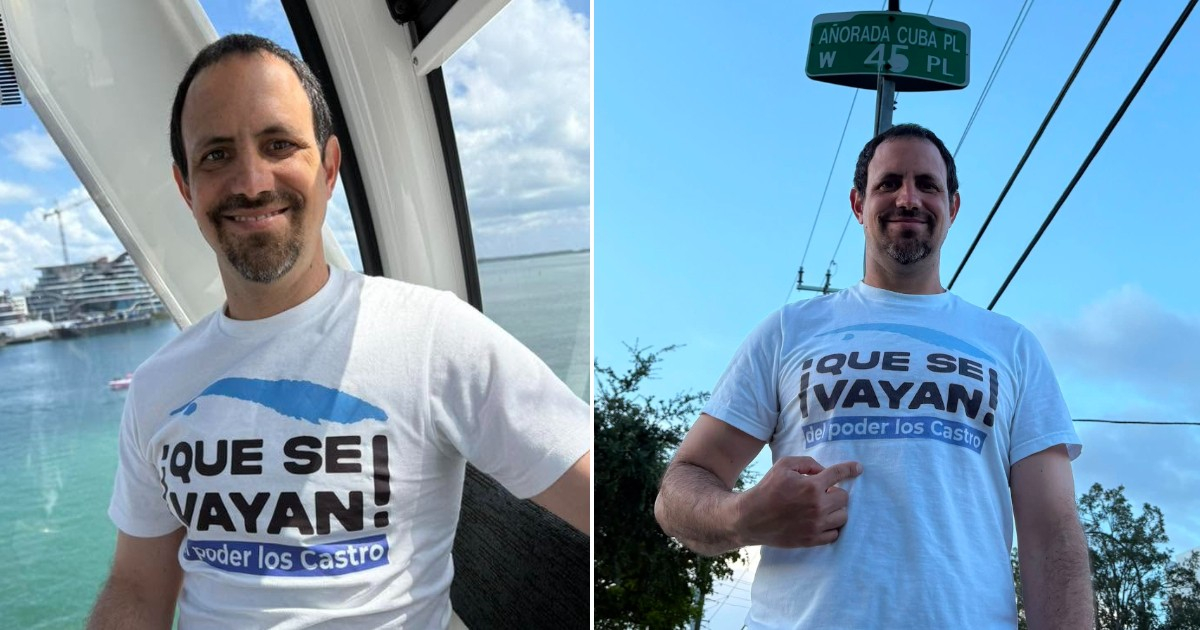
On the occasion of the fifth anniversary of the July 11, 2021 protests, Cuban activist and biochemist Oscar Casanella shared a powerful message on Facebook. He described that date as "the day of national rebellion in Cuba" and urged his compatriots to persist in the quest for freedom.
Casanella drew a comparison between July 11 and the uprising led by Carlos Manuel de Céspedes on October 10, 1868, at La Demajagua. He stated, "Just as that date marked the beginning of the struggle for independence, July 11, 2021, heralded a new chapter in Cubans' fight for liberty and democracy."
The former University of Havana immunology professor, who was forced to leave Cuba in 2022 under threat of imprisonment and now resides in Miami, highlighted the significance of July 11 as the first time since 1959 that thousands of citizens spontaneously took to the streets in over 60 cities and towns, from Pinar del Río to Guantánamo, across all provinces.
"It was clear that the struggle was not just a few activists' battle, but that of an entire nation yearning for greater freedoms," Casanella wrote, recalling the chants that echoed that day: "Freedom!", "Homeland and Life!", "Down with the dictatorship!" and "We are not afraid!"
The activist emphasized the psychological impact of that day: "For millions of Cubans, both on the island and abroad, that day held deep moral significance: many realized they were not alone." He compared the geographical reach of July 11 to the protests in Belarus in August 2020 and the Tunisian Revolution of 2010-2011, noting few contemporary movements achieved similar territorial spread in a single day.
The Continuing Struggle
Casanella acknowledged that although the July 11 protests did not lead to an immediate regime change, they were met with massive repression, including thousands of arrests and hundreds of convictions. He warned, however, that the historical impact goes far beyond immediate outcomes: "That day changed how Cubans perceive themselves and how the world views Cuba."
The fifth anniversary comes amid a severe crisis. As of July 9, 2026, a record 1,306 political prisoners remain incarcerated in Cuba, with 338 jailed for their involvement in the July 11 protests. The April 2026 pardon, which freed 2,010 prisoners, explicitly excluded those convicted of "crimes against authority," a charge the regime uses to criminalize July 11 demonstrators.
Simultaneously, Secretary of State Marco Rubio demanded the immediate release of all Cuban political prisoners on Monday. The day following the anniversary, a protest erupted in Old Havana with chants against regime leaders, and residents of Guanabacoa engaged in a loud protest after enduring over 33 hours without power.
A Call to Action
Casanella, who is currently seeking political asylum in Miami after years of surveillance, threats, and workplace retaliation by State Security, was unequivocal in his message: "Make no mistake, the people of Cuba are at war with the Castro family's totalitarian dictatorship because this Caribbean monarchy is committing genocide against Cubans on the island."
He concluded his message with a direct call to those who share his cause: "As long as there are political prisoners in Cuba and a dictatorship that imposes misery and instills fear of speaking, associating, and participating in politics and decision-making in our country, we must continue to fight."
"We need a free homeland where we can live with dignity, freedom, and without fear. We need a free homeland that welcomes us back when we, the exiled, wish to return."
Understanding the Impact of July 11 Protests
What triggered the July 11, 2021 protests in Cuba?
The July 11, 2021 protests were triggered by widespread frustration with the Cuban government's handling of economic and health crises, leading to spontaneous demonstrations across the country demanding freedom and change.
How did the Cuban government respond to the July 11 protests?
The Cuban government responded with a harsh crackdown, resulting in thousands of arrests and numerous convictions of protesters, which has been widely criticized by international human rights organizations.
What is the current situation for political prisoners in Cuba?
As of July 2026, there are a record number of 1,306 political prisoners in Cuba, with 338 specifically imprisoned for their participation in the July 11 protests, highlighting the ongoing repression in the country.