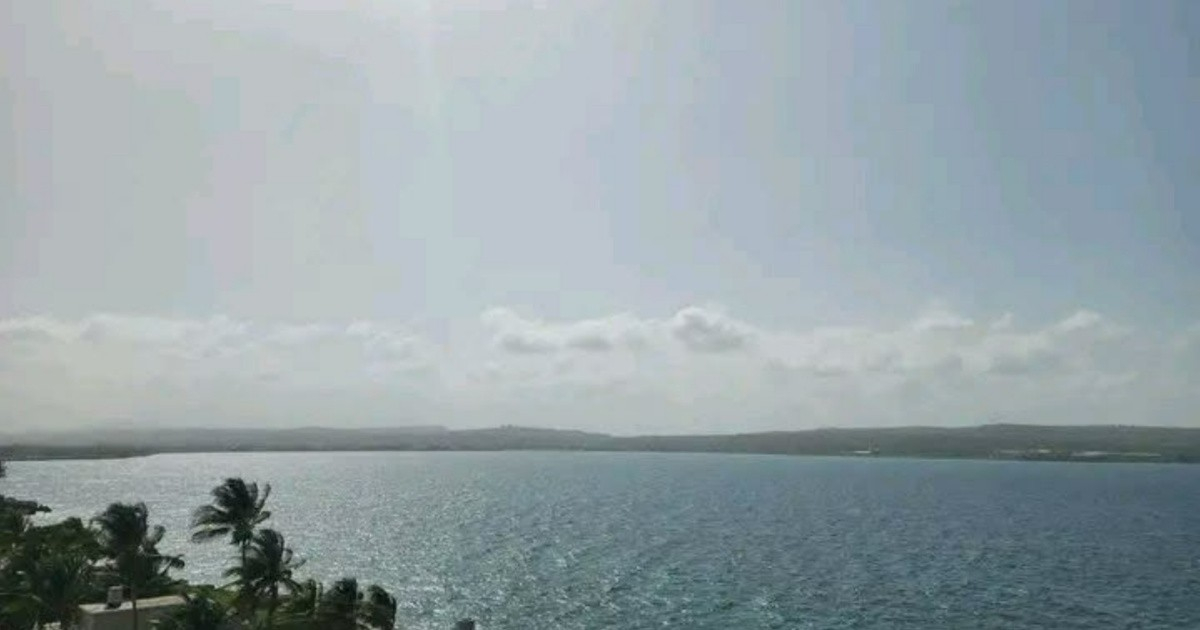
This Sunday morning, the skies over Matanzas took on a pale hue, with visibility notably diminished due to the Sahara dust cloud enveloping the western half of Cuba. This marks the most intense occurrence of the 2026 season, as reported by Periódico Girón following a briefing by meteorologist Henry Delgado Manzor.
On Saturday, July 11, Cuba experienced the highest concentration of Sahara dust recorded so far in 2026, impacting the entire island from east to west. Meteorologist Rubén Capote described it as "the largest concentration of Sahara dust we've seen this season."
While the main body of the dust cloud began moving towards Florida and the Yucatán Peninsula on Sunday, Matanzas and the rest of western Cuba remained under its influence.
Maps presented by meteorologist Vladimir Leon from the Meteorología_Cuba page indicated surface values reaching 800 µg/m³ and concentrations up to 1,500 µg/m³ at altitudes between one and three kilometers. Leon explained, "The first graph shows the surface concentration, which is quite dense. The second and third graphs refer to altitudes between one and three kilometers where the dust concentrations are higher and denser."
The dust presence also led to a decrease in rainfall, with only isolated showers occurring in the south from Matanzas to Sancti Spíritus, while remaining scarce elsewhere across the country.
The Recurrence of the Sahara Dust Phenomenon
This phenomenon is a common summer occurrence in the Caribbean. The dust clouds originate from sandstorms in the Sahara Desert and the Sahel region in Africa, propelled westward by trade winds across the Atlantic, arriving in the Caribbean, Central America, and even the southeastern United States. They can ascend to altitudes between two and seven kilometers.
From a health perspective, this event poses a genuine alert for thousands of Cubans. The arrival of these dust concentrations results in decreased air quality and may exacerbate allergic reactions, eye, skin, and mucous membrane irritations. The most vulnerable groups include individuals with asthma, chronic bronchitis, or allergies, children under four, seniors over 65, and pregnant women. Since at least 2018, peaks in bronchial asthma in Cuba during the summer have been linked to this phenomenon.
Meteorological authorities advise wearing masks, avoiding prolonged outdoor activities, keeping doors and windows closed, staying hydrated, and rinsing eyes and nasal passages with clean water. "Protection is crucial, especially for those with respiratory conditions and those working outdoors," Leon emphasized.
Preparing for Future Dust Cloud Invasions
The 2026 season commenced on June 3, when INSMET meteorologist Raydel Ruisanchez warned of the first significant wave affecting eastern Cuba. By July 9, the year’s largest dust columns had reached Florida. Just two days later, Cuba experienced the highest peak seen all year.
Meteorologist Vladimir Leon cautioned that "another invasion of this dust could arrive later in the week," keeping the residents of Matanzas and the rest of western Cuba on alert.
Understanding the Impact of Sahara Dust on Cuba
What is the Sahara dust cloud?
The Sahara dust cloud is a collection of dust particles from sandstorms in the Sahara Desert and the Sahel in Africa, carried westward by trade winds across the Atlantic Ocean.
How does the Sahara dust affect health in Cuba?
The dust can reduce air quality, leading to aggravated allergies, and irritations in the eyes, skin, and mucous membranes. It poses a higher risk for people with asthma, chronic bronchitis, or allergies, as well as young children, the elderly, and pregnant women.
What precautions should be taken during a Sahara dust event?
It is recommended to wear masks, avoid extended outdoor activities, keep homes sealed, stay hydrated, and use clean water to wash eyes and nasal passages.