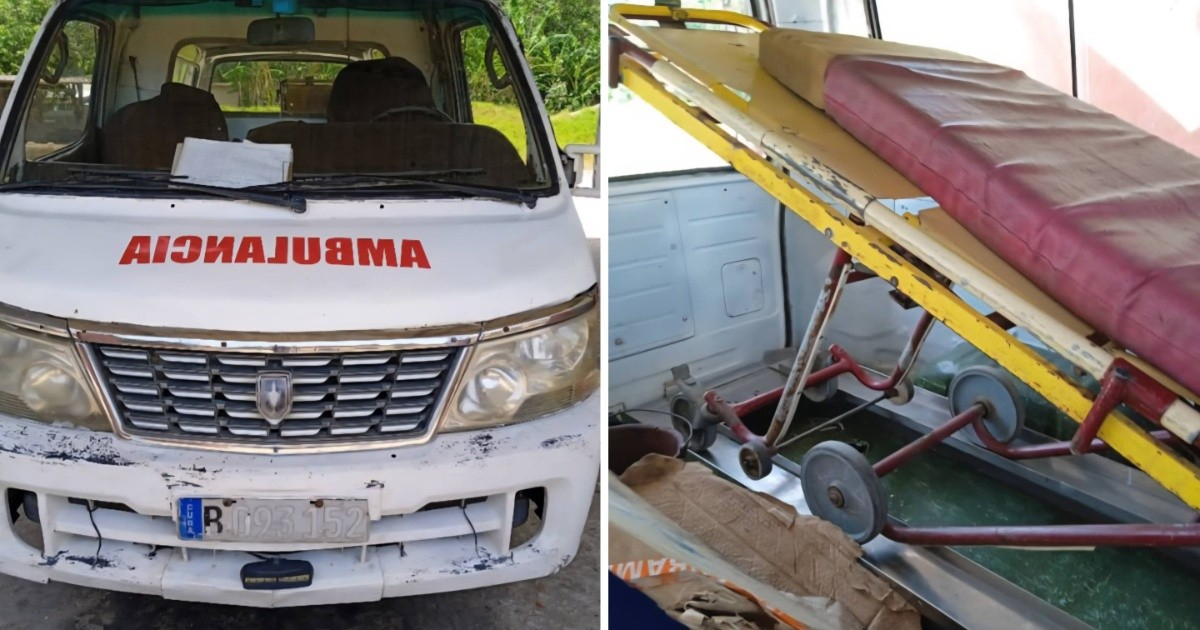
A Cuban man, identified as Juan Carlos León, shared a revealing account on social media this Sunday. He and his son were forced to buy a broken part for a state ambulance out of their own pockets so they could transport his wife for essential cancer treatment. This poignant story was brought to light by independent journalist José Luis Tan Estrada.
León explained in a Facebook comment that the ambulance had been out of commission for over six months, stuck in a workshop due to government neglect. Meanwhile, his wife required frequent visits to the oncology center for radiation and IV treatments.
“Let me tell you, a few years back, this ambulance was stuck in the shop for more than six months while my wife was sick. We needed to frequently visit the oncology center for her radiation and IV treatments. My son and I had to purchase the broken part to ensure she could get her appointments and that the ambulance could serve others as well,” León wrote.
Structural Issues Plague Cuban Ambulance System
Tan Estrada, a journalist from Camagüey who was exiled by the regime, described the situation with straightforward words: “The ultimate irony. A citizen had to buy the parts the state should provide, just to transport his wife.”
This incident is not an isolated one. The collapse of Cuba’s ambulance fleet is a long-standing structural issue that has worsened over the years. In Artemisa, Jinbei-brand ambulances are out of commission due to a lack of spare parts. Meanwhile, in Havana, a so-called cemetery of immobilized ambulances exists, where dozens of vehicles lie idle due to missing tires and maintenance resources.
Private Sector Pressured to Support Failing System
Statistics from 2026 highlight the severity of the crisis: only 16 of the 54 necessary ambulances are operational in Matanzas, and just 12 units function in Pinar del Río. The regime, unable to sustain the system, now pressures the private sector to finance the purchase of parts and fuel.
In May, the Cuban Neuroscience Center sought private support to maintain its transport fleet, implicitly acknowledging the state's inability to handle the issue alone.
Oncology Patients Suffer the Most
The crisis hits cancer patients particularly hard. Approximately 60,000 individuals in need of radiotherapy are not receiving treatment, and between 12,000 to 16,000 patients requiring chemotherapy face interrupted care due to transport issues and power outages affecting medical equipment.
The situation is further compounded by a severe medication shortage; as of April 2026, only 30% of essential medications were available, with 461 out of 651 essential drugs missing from state pharmacy shelves.
In November 2025, a video captured a patient being wheeled in a chair due to the lack of stretchers in a Cuban hospital, illustrating the same systemic collapse that forces citizens to resolve issues the state should address.
Understanding the Ambulance Crisis in Cuba
Why did Juan Carlos León have to buy ambulance parts?
Juan Carlos León needed to purchase ambulance parts because a state ambulance was out of service for over six months, and his wife required frequent visits to an oncology center for treatment.
What is the state of the ambulance system in Cuba?
Cuba's ambulance system is in a state of collapse with many vehicles immobilized due to lack of parts and maintenance. This has been a worsening structural issue over the years.
How are cancer patients affected by the ambulance crisis?
Cancer patients are severely impacted as transportation issues and power outages disrupt their access to necessary treatments like radiotherapy and chemotherapy.