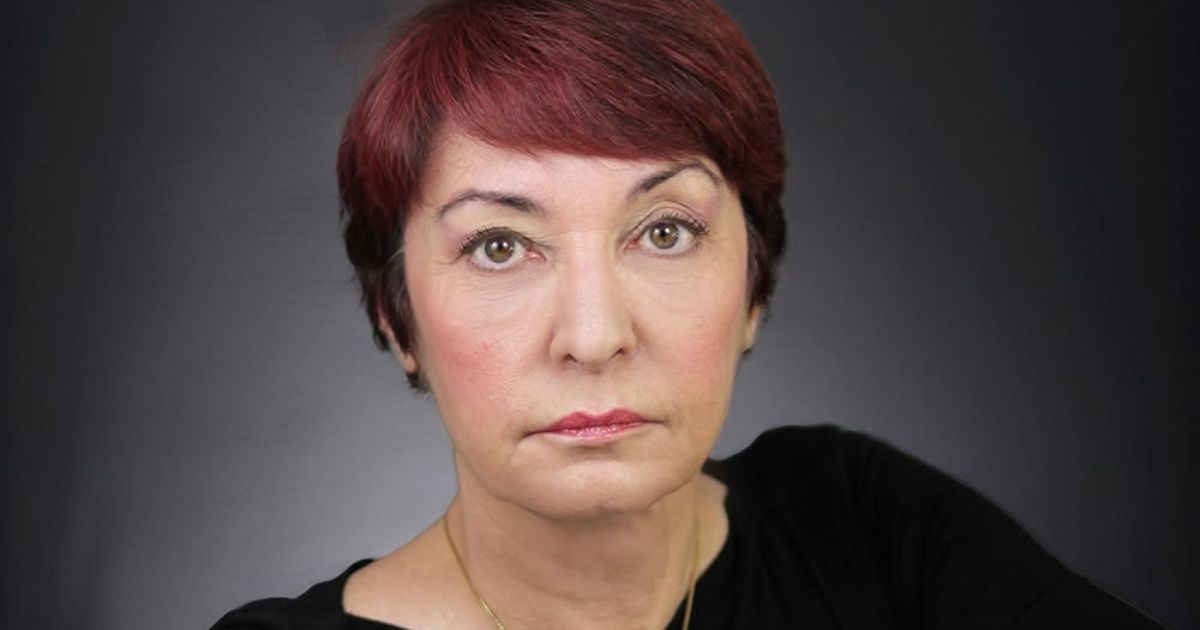
This week, Cuban writer Daína Chaviano took to her Facebook profile to publish a powerful message denouncing the complete collapse of Cuba and questioning the regime's legitimacy in claiming to speak for the Cuban people. Her comments were sparked by an interview given to USA Today by Colonel Raúl Guillermo Rodríguez Castro (also known as "The Crab"), who is the grandson of Raúl Castro.
In her Facebook post, Chaviano refers to Castro's grandson as a "bodyguard—whose only claim to fame is his bloodline to the family ruling Cuba through repression and imprisonment—who has offered an interview stating he's open to negotiating with another country to ease the island's economic crisis, as if he were the chosen representative of a people who never elected him to speak on their behalf."
Chaviano, who has been exiled in Miami since 1991, highlights that the interview reveals that neither he nor those around him have any intention of relinquishing the wealth and power amassed by the ruling family over three generations.
Criticism of International Complicity
"They remain determined to maintain their hold, while blaming others for the catastrophe they have caused," Chaviano wrote, further criticizing the United Nations for giving a platform to spokespeople of a regime she describes as imprisoning and torturing women and minors simply for seeking food and freedom.
"Most horrifying is that organizations like the UN—established to uphold peace, justice, and condemn dictatorial and fascist regimes—offer their stage to these oppressors," the writer stated, unhesitatingly labeling those who enforce repression on the island as executioners.
A Grim Reality
Chaviano paints a grim picture of Cuba's current reality: millions have fled the island, while over eight million remain, enduring extreme poverty, with elderly individuals dying of hunger on the streets and children scavenging for food.
These observations align with data from independent economists: by 2026, Cuba is projected to face a GDP contraction ranging from 6.5% to 15%, widespread power outages lasting between 20 to 40 hours in certain areas, an inflation rate nearing 70%, and a minimum wage equivalent to $4.65 monthly, while an estimated 96,060 pesos are required to cover basic needs.
Chaviano describes the situation as a "silent and concealed genocide that the international community prefers to ignore, as many differentiate between types of extermination depending on who commits them. Some are condemned; others, like what Cuba suffers, are not even acknowledged."
Reflecting on Historical Protests
Chaviano's message comes amid the fifth anniversary of the July 11, 2021, historic protests. This past Sunday, the date was marked by renewed banging of pots and pans in Old Havana and a significant protest in Guanabacoa, while 1,281 political prisoners remain incarcerated, 338 of whom were detained for participating in those demonstrations.
In April 2026, Chaviano had already warned that the current crisis surpasses even the hardships of the 1990s Special Period, pointing out that people have reverted to cooking with charcoal, a practice unseen in previous times. She also revealed that high-ranking Cuban military officials secretly oppose the regime, according to a confidential source.
The writer's followers have responded en masse to her post, sharing stories from family members on the island and agreeing with her stark assessment. Many commented that her depiction of starving elderly and children searching for food in the trash mirrors scenes that have become commonplace in various Cuban municipalities.
Chaviano concludes her piece with a somber reflection on the abandonment felt by the Cuban people in the face of global indifference: "From that once-paradisiacal island, only a land sunk in misery remains: the threshold of a hell from which it will never emerge unless its inhabitants manage it on their own, as the world seems unwilling to assist."
Understanding Cuba's Economic and Social Crisis
What triggered Daína Chaviano's recent statements about Cuba?
Daína Chaviano's recent statements were motivated by an interview given to USA Today by Raúl Guillermo Rodríguez Castro, who spoke about negotiating to ease Cuba's economic crisis, which she viewed as inappropriate and unrepresentative of the Cuban people's voice.
How does Chaviano describe the current situation in Cuba?
Chaviano describes Cuba as a nation in deep poverty, with millions fleeing, those remaining suffering extreme deprivation, and a government unwilling to relinquish its control or wealth.
What are some of the economic challenges Cuba is facing?
Cuba is grappling with a projected GDP contraction, widespread power outages, high inflation, and a minimum wage that is insufficient to meet basic living needs.