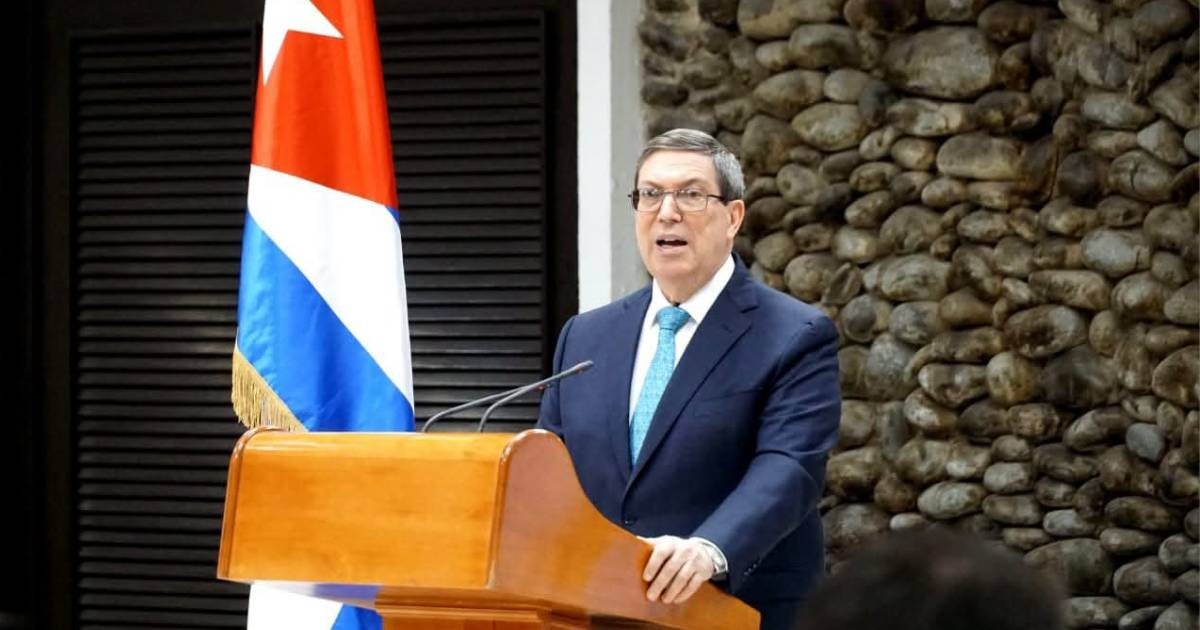
Cuban Foreign Minister Bruno Rodríguez Parrilla criticized the so-called "anti-Cuban mafia" on Sunday, alleging they are collaborating with the Department of State to justify what he termed an attack on Cuba. Simultaneously, he acknowledged the severe hardships and suffering faced by the Cuban populace.
In a post on the social media platform X, the Foreign Minister claimed these groups operate "with the usual opportunism, attempting to mobilize the vast military and technological might of the U.S. against Cuba."
Rodríguez added that despite the challenging circumstances confronting the nation, "Cubans face the harsh everyday reality with severe deprivations and suffering, yet remain peaceful, united, and supportive, striving to overcome the current situation."
Escalating Tensions Mark Anniversary of July 11 Protests
The statement coincides with the fifth anniversary of the significant protests on July 11, 2021, amid a renewed surge of tensions between Havana and Washington.
The term "anti-Cuban mafia" is frequently used by the Cuban regime to describe exile organizations in Miami and Cuban-American leaders in the United States, including Secretary of State Marco Rubio and Congressman Mario Díaz-Balart, whom they blame for advocating a tougher stance toward Havana.
Rodríguez's remarks are part of an increasingly confrontational series of statements made in recent weeks. On July 1, he labeled Rubio a "liar" and warned that any U.S. military action against Cuba would result in "a bloodbath" with thousands of casualties in both countries. That same day, he also noted that talks between Havana and Washington "show no progress" and accused the U.S. delegation of maintaining a policy of "constant threats."
Political Rhetoric Intensifies Amidst Key Anniversaries
Later, on July 7, Rodríguez spoke at a special session of the United Nations General Assembly convened by Cuba, where he alleged a so-called "multidimensional war" against the island nation.
The foreign minister's comments follow a statement by Marco Rubio on Saturday, marking the anniversary of July 11, in which he demanded the release of 1,306 Cuban political prisoners and accused the regime of continuing alliances with U.S. adversaries, posing "a grave threat to national security."
On the same day, President Donald Trump posted on Truth Social, vowing to "expel communism from our shores," while the U.S. Senate passed a resolution to commemorate the July 11 protests and once again called for the release of Cuban political prisoners.
Legal Actions Deepen Diplomatic Strains
This heightened atmosphere of confrontation is further intensified by a federal grand jury indictment in the Southern District of Florida against Raúl Castro for the 1996 shootdown of the Brothers to the Rescue planes, which resulted in the deaths of four American citizens.
Despite the hardening of political rhetoric, U.S. officials informed the Associated Press last May that Washington is not currently considering imminent military action against Cuba, although they noted that "all options" remain available.
Understanding U.S.-Cuba Relations
What is the "anti-Cuban mafia" according to the Cuban government?
The term "anti-Cuban mafia" is used by the Cuban regime to refer to exile organizations in Miami and Cuban-American leaders in the United States, who are seen as advocating a tougher policy against Havana.
Why did Bruno Rodríguez accuse Marco Rubio of being a liar?
On July 1, Bruno Rodríguez accused Marco Rubio of being a "liar" and warned that any U.S. military action against Cuba would lead to significant casualties, describing it as "a bloodbath."
What recent actions have intensified U.S.-Cuba tensions?
Recent actions contributing to rising tensions include Marco Rubio's call for the release of Cuban political prisoners, Donald Trump's anti-communism vow, the U.S. Senate's resolution on the July 11 protests, and a federal indictment against Raúl Castro.