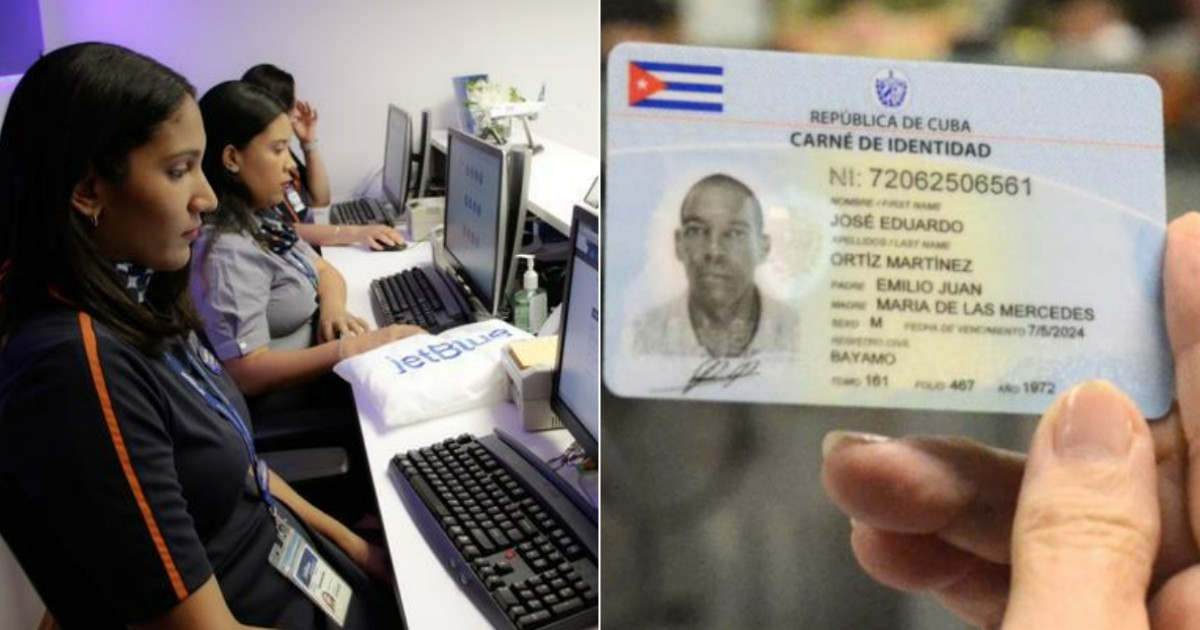
Thousands of Cubans living abroad could be impacted by significant omissions in the Personal Identity and Address System Law Proposal, which the regime released for public consultation on July 10.
The regulation introduces new guidelines for registering and updating addresses but fails to clarify how these will apply to those who emigrated years ago and still have their parents' or other relatives' homes in Cuba listed as their address.
Instead of providing clear answers, the proposal leaves critical questions unresolved. It does not specify whether these individuals will be allowed to retain their registered Cuban address, if they will need to register an overseas address, or how these situations will be handled once the new legislation is implemented.
This lack of clarity has sparked anxiety among many expatriates, who worry about the potential repercussions of the reform.
Unclear Definitions and Obligations
Article 8 defines domicile as "the place where the person habitually resides or intends to establish themselves" and mentions that authorities will consider factors like "physical presence in the location" and "evidence of intent to establish stable living conditions."
Although this definition raises questions about its application to those permanently residing outside Cuba, the proposal does not stipulate that emigrants will automatically lose their registered domicile in Cuba nor does it specifically address their circumstances.
Moreover, Article 10 mandates that Cuban citizens maintain their domicile registration up to date. However, the text does not clarify the procedure for those living abroad or if they can keep a registered domicile in Cuba while residing elsewhere.
Property Rights and Registrations
Another article drawing attention is Article 13, which allows property owners or usufructuaries to request the cancellation of the domicile registration of individuals authorized to reside in their property when they do not share ownership or usufruct rights.
This provision could affect anyone registered at a property they do not own, but the proposal does not offer a specific approach for emigrants nor does it foresee automatic cancellation due to residing outside Cuba.
Additionally, Article 12 clarifies that domicile registration "does not create property rights" over the dwelling, maintaining the independence of domicile registration from property ownership.
The Impact on Cuban Emigrants
Overall, the proposal leaves unanswered a primary concern for the emigrant community: what will happen to the domicile of Cubans who permanently reside abroad but maintain a registered address on the island.
Many of these answers may be left to regulations that the Council of Ministers will need to approve once the law is enacted. The proposal itself refers to these regulations for developing the new system's procedures, though there is currently no explicit mention of how emigrants' domiciles will be treated.
Beyond the new address guidelines, the proposal establishes a Personal Identity and Address System managed by the Ministry of the Interior (MININT). Noteworthy innovations include the introduction of a digital identity for electronic transactions and an expanded biometric data registry, encompassing facial photographs, fingerprints, voice, iris, signature, skin color, eye color, and height.
The proposal also suggests that Cuban consular offices handle applications related to the Personal Identity and Address Registry for citizens abroad. However, it does not specify if these mechanisms will cover the registration or updating of addresses for those permanently living outside the country.
Contextualizing the Proposal with Migration Laws
The proposal coincides with the implementation of Migration Law 171, approved in 2024 and published in the Official Gazette in May 2026, which introduces the concept of "effective migratory residence" and sets new rules for the stay of Cuban citizens.
The human rights organization Cubalex warned that this new legal framework broadens state control over individual mobility and consolidates a migration system with extensive administrative discretion.
While the Personal Identity and Address System Law Proposal and Migration Law 171 address matters related to citizens' identification and status, the former does not explicitly link domicile and effective migratory residence.
However, the coexistence of these regulations fuels uncertainty among many emigrants, who are eager to learn how they will be interpreted and applied once the law is approved and its regulations published.
Frequently Asked Questions About Cuba's Identity and Address Law Proposal
What is the primary concern of Cuban expatriates regarding the new law proposal?
The main concern is the uncertainty about how the new guidelines will affect their registered domiciles in Cuba, especially if they have been living abroad for years.
Does the proposal address the registration of emigrants' addresses abroad?
The proposal does not specify whether emigrants should register an address abroad or how their domiciles in Cuba will be maintained under the new law.