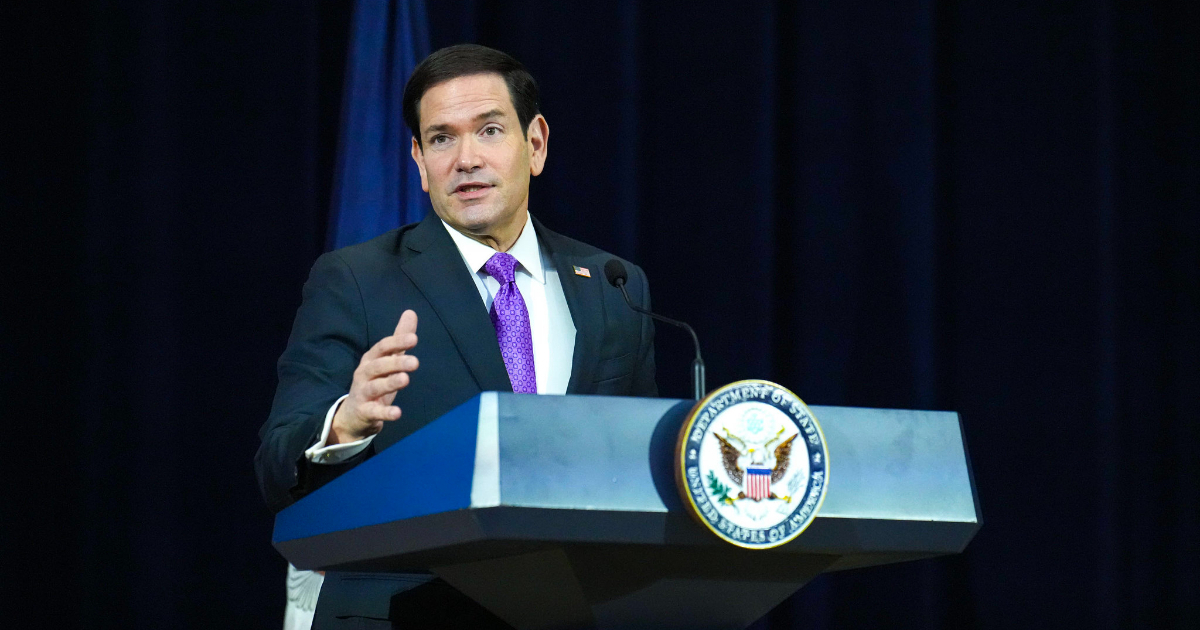
CiberCuba's article highlighting U.S. Secretary of State Marco Rubio's statement on the fifth anniversary of the July 11, 2021 protests sparked a lively debate among readers on Facebook.
The piece detailed Rubio's call for the immediate release of all Cuban political prisoners and his warning that Washington will employ "all tools at its disposal" to push for political and economic reforms on the island.
While many supported the essence of Rubio's message, a different sentiment dominated the discussion: fatigue. After five years of international condemnations, sanctions, official statements, and promises of pressure on the Cuban regime, many participants expressed frustration over the lack of tangible changes for those imprisoned since the July 11th protests.
The frustration was palpable from the outset. "Enough talk, it's time to act," one reader commented, capturing the prevailing mood among many engaged in the debate.
Echoing this sentiment, others shared phrases like "Less talk and more action," "Words aren't enough," and "We've heard this for years."
Despite varying nuances, the common thread was a perception that diplomatic statements alone have not altered the regime's behavior or eased the plight of political prisoners.
Several readers pointed out that July 11, 2026, marks five years since Cuba's largest protests since 1959, lamenting that hundreds remain imprisoned for their participation.
"Five years and the prisoners are still there," wrote one user. Another added, "Every year is the same speech, and they keep doing whatever they want."
Concise yet poignant phrases summarized the disillusionment: "We're tired," "More of the same," "They always say the same thing," and "The regime ignores the statements."
Support for the cause of freeing political prisoners was evident, with many comments backing this goal. "Freedom for all political prisoners," one reader wrote.
Another declared, "All 11 million Cubans are prisoners," expanding the discussion beyond those currently incarcerated.
This support, however, was accompanied by impatience with Washington's strategy. Numerous participants called for more visible measures, deeming repeated diplomatic condemnations insufficient.
"No more speeches," one comment read. "When will they act?" asked another. "We need results," summarized another participant.
The conversation underscored the sense that time is running out for those still imprisoned and for millions of Cubans enduring power outages, shortages, inflation, and a lack of freedoms.
Some readers expressed disappointment with the Trump administration, feeling that announced measures have yet to yield tangible changes on the island.
"The people need action," wrote one user. "Anyone can talk," another commented. "We're tired of promises," added another reader.
Others highlighted the urgency of the situation. "Every day families suffer," one participant wrote. Another noted, "The prisoners are still waiting as the years go by."
There were also voices defending the need to maintain international pressure on the Cuban regime, acknowledging that this strategy should be accompanied by tangible results.
"Keep up the pressure," one reader urged. Another said, "We can't abandon the political prisoners."
Some expressed hope that Rubio's statements might lead to new measures, while others responded with skepticism. "We don't believe in more words," one user wrote. "When I see results, I'll believe," added another.
Criticism also targeted Rubio, with some questioning the effectiveness of his statements, arguing that words alone haven't changed the Cuban reality.
In these cases, the critique wasn't aimed at the goal of freeing political prisoners but rather at the perception that U.S. warnings have yet to produce immediate consequences for the regime.
As often happens in discussions related to Cuban politics, some responses echoed official propaganda. However, beyond these, the predominant tone among other participants was one of a citizenry weary of waiting for changes perceived as too slow.
Rather than rejecting Rubio's message, many readers seemed to express a loss of confidence in the effectiveness of official statements. The notion of "enough with demands" appeared repeatedly, paired with the hope that these warnings would finally translate into actions capable of altering the island's reality.
The conversation revealed another significant element: five years after the July 11th social unrest, support for freeing political prisoners remains strong among debate participants, yet it coexists with growing emotional exhaustion.
Many comments conveyed the sense that time has worn down the patience of those still awaiting justice for the incarcerated and political change in Cuba.
In this context, CiberCuba's publication became a platform where dozens of readers not only reacted to the words of the U.S. Secretary of State but also expressed their own frustration over the prolonged crisis that seems to have no end in sight.
Amid phrases like "We're tired," "Less talk, more action," "Words aren't enough," and "The prisoners are still waiting," the conversation echoed a sentiment shared by many participants: a desire for international declarations to evolve from mere messages of support into concrete results for those still deprived of liberty and for a country still grappling with one of the most challenging periods in its recent history five years after July 11th.
Key Issues with Cuban Political Prisoners and International Response
What is Marco Rubio's stance on Cuban political prisoners?
Marco Rubio has called for the immediate release of all Cuban political prisoners and has warned that the United States will use all available tools to push for reforms on the island.
How did Cuban citizens react to Rubio's statements?
Many Cuban citizens expressed frustration and fatigue over the lack of tangible changes, despite supporting the goal of freeing political prisoners. They called for more decisive actions rather than just diplomatic statements.
Why is there frustration among Cubans regarding international responses?
Cubans are frustrated because, despite international condemnations and sanctions, there have been no significant changes in the situation of political prisoners, and the regime's behavior has not altered.
What are the broader implications of the July 11 protests?
The July 11 protests marked the largest demonstrations in Cuba since 1959, highlighting widespread discontent with the regime. They have become a symbol of the struggle for political change and freedom in Cuba.