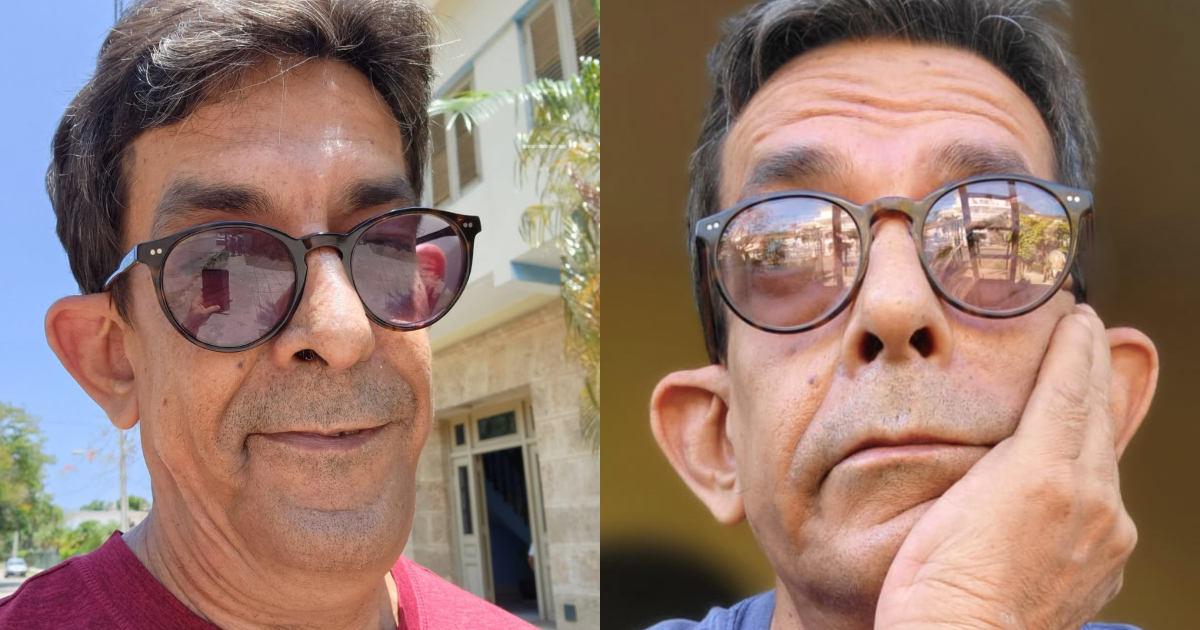
Cuban actor and comedian Ulises Toirac took to his Facebook profile this past Saturday to share an in-depth political and economic analysis. In his post, he argues that "caudillismo," or strongman leadership, stands as one of Cuba's most detrimental historical legacies and remains the chief hurdle to establishing the institutional trust needed to attract foreign investment.
Toirac's argument is built on a specific premise: Cuba's economic recovery hinges not on the sheer number of measures adopted but on creating a "trustworthy environment concerning laws and institutions" as the cornerstone of any reform.
"Nothing deters investors more than a caudillo-led economy," Toirac wrote, pointing out that many foreign businesses have left Cuba without receiving payment owed to them. This, he says, is because caudillos often disregard agreements when something doesn't suit them.
The Historical Roots of Caudillismo in Cuba
Toirac traces the roots of this phenomenon throughout Cuban history, suggesting, "We don't yearn for a president; we crave a leader who rules with an iron fist. We're inherently gang-like, more swayed by persuasive talk and the charisma of manipulators, who ultimately reveal themselves as destructive forces."
He highlights Fidel Castro as the quintessential caudillo who, in addition to holding power for decades, systematically eliminated any potential alternative leadership. "From Camilo to Ochoa and Lage, the result is a circle of close associates lacking critical faculties and courage, preferring compliance over initiative," he states.
The Leadership Void Post-Castro
Regarding Miguel Díaz-Canel, Toirac is blunt: "He lacks the necessary tools, and the leadership vacuum left by Fidel Castro demands not just a tough leader but an exceptionally formidable one." The resulting void, he concludes, is filled by familial allegiance: "Caudillismo passes on to the family, waiting in chrysalis for its moment."
Controversy Surrounding "El Cangrejo" in U.S.-Cuba Relations
The immediate catalyst for Toirac's analysis is the role of Raúl Guillermo Rodríguez Castro, known as "El Cangrejo," in unofficial negotiations between Cuba and the United States. As a colonel in the Ministry of the Interior and grandson of Raúl Castro, he offered to negotiate with Trump during an interview with USA Today on July 6.
Toirac had previously discussed "El Cangrejo" on July 9, asserting that in Cuba, "the Castro surname carries more weight than any formal position." In his latest post, he goes further, labeling the acceptance of Raúl's grandson by the U.S. side as "a negative distortion that undermines the country's needs," bypassing the formal institutional hierarchy meant to handle such negotiations.
Toirac critiques the emergence of Raúl Guillermo as a negotiator, warning it signals a regression to Cuba's genetic feudal caudillismo. He sarcastically questions whether any entrepreneur would invest $20 million in building a sugar mill under such circumstances, urging readers to consider this without recalling "images of parties and yachts."
Despite being banned from state cultural institutions and summoned by State Security in 2024, Toirac continues to voice his criticisms on social media. On July 4, he demanded the release of political prisoners and described Cuba as a "humanitarian disaster."
Communist Party official Elier Ramírez Cañedo confirmed "El Cangrejo's" role as an interlocutor on July 9, amid a rapprochement process that began in February 2026 with contacts between Rodríguez Castro and Secretary of State Marco Rubio, and included a visit by CIA Director John Ratcliffe to Havana in May.
Understanding Cuba's Political Dynamics
What is caudillismo?
Caudillismo refers to a political system dominated by strongman leadership, often characterized by authoritarian rule and the concentration of power in the hands of a single leader or a small group.
Why does Ulises Toirac criticize caudillismo in Cuba?
Ulises Toirac criticizes caudillismo because he believes it is a significant barrier to institutional trust and hinders Cuba's ability to attract foreign investment, which is essential for the country's economic recovery.
What role does Raúl Guillermo Rodríguez Castro play in U.S.-Cuba negotiations?
Raúl Guillermo Rodríguez Castro, known as "El Cangrejo," has been serving as an informal negotiator between Cuba and the United States, bypassing the formal institutional hierarchy typically involved in such diplomatic efforts.