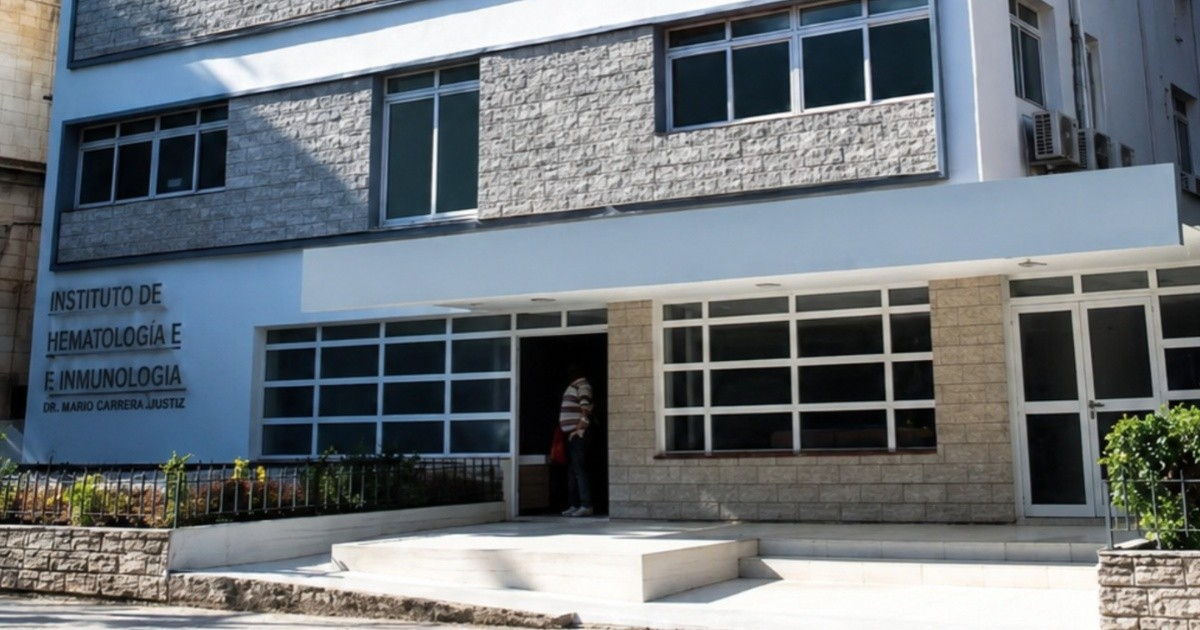
Johana Tablada, the deputy chief of the Cuban embassy in Mexico, acknowledged on Facebook this past Saturday that patients from the National Institute of Hematology and Immunology in Havana were evacuated in ambulances due to the hospital's generator running out of fuel for weeks. She used the opportunity to point fingers at the US embargo.
In her post, Tablada shared a message she received from a relative, stating: "Ambulances are transferring patients admitted to the Institute of Immunology because the hospital's generator has been out of fuel for weeks."
Instead of addressing the regime's accountability, Tablada criticized US Ambassador to the UN, Mike Waltz, and Secretary of State Marco Rubio, accusing them of imposing "medieval methods of collective torture, aiming to impoverish, humiliate, and destabilize Cuba for domination purposes."
The evacuation of this key national center for treating blood disorders such as leukemia comes amidst the worst energy crisis Cuba has faced in decades.
On July 10, merely a day before Tablada's post, Cuba endured its fourth nationwide blackout of the year affecting the National Electric System. Another blackout had occurred just days prior on July 7.
The energy shortfall exceeds 2,000 MW against a maximum demand of 3,050 MW, with only 995 MW in operational capacity. Some regions experience power cuts lasting over 70 consecutive hours, while Havana faces outages up to 22 hours daily.
Since April 2026, Cuba has not received oil shipments, and by December 2025, 97 distributed generation plants, including hospital power stations, were shut down due to a lack of diesel and fuel oil, sidelining more than 1,000 MW of power.
The healthcare crisis is just as severe: 96,387 patients are waiting for surgery, including over 11,000 children. Elective surgeries have been canceled in Holguín, Matanzas, and Sagua de Tánamo due to fuel shortages, and Havana has recorded the nation's highest increase in infant mortality in 2026.
Tablada's habit of blaming the embargo while ignoring the regime's structural failures is a recurring theme.
Just three days earlier, she had called the US delegate's intervention at the UN "disgusting," following a session where Cuba received only 136 votes in favor of discussing the embargo—a significant drop from 187 in 2024 and 165 in 2025—with 30 abstentions marking the regime's worst result in over three decades.
In the same session, Ambassador Waltz presented photos of more than 800 Cuban political prisoners to the General Assembly.
In March 2026, the UN launched a $94.1 million emergency plan to ensure fuel availability exclusively for critical services in Cuba, signaling international recognition of the energy collapse now forcing evacuations from one of the island's most crucial specialized hospitals.
Understanding the Impact of Cuba's Energy Crisis
What led to the evacuation of patients at the National Institute of Hematology and Immunology in Havana?
Patients were evacuated because the hospital's generator had been out of fuel for weeks, a situation attributed by Johana Tablada to the US embargo.
How severe is Cuba's current energy crisis?
Cuba is experiencing a significant energy shortfall, with generation deficits surpassing 2,000 MW and operational capacity at just 995 MW. This has resulted in prolonged power outages across the country.
How is the healthcare sector in Cuba affected by the energy and fuel shortages?
The healthcare sector is in crisis, with 96,387 patients on surgical waiting lists and elective surgeries being suspended. The situation is exacerbated by fuel shortages impacting hospital operations.
What has been the international response to Cuba's energy crisis?
The UN has initiated a $94.1 million emergency plan to provide fuel for critical services in Cuba, indicating international acknowledgment of the country's severe energy challenges.