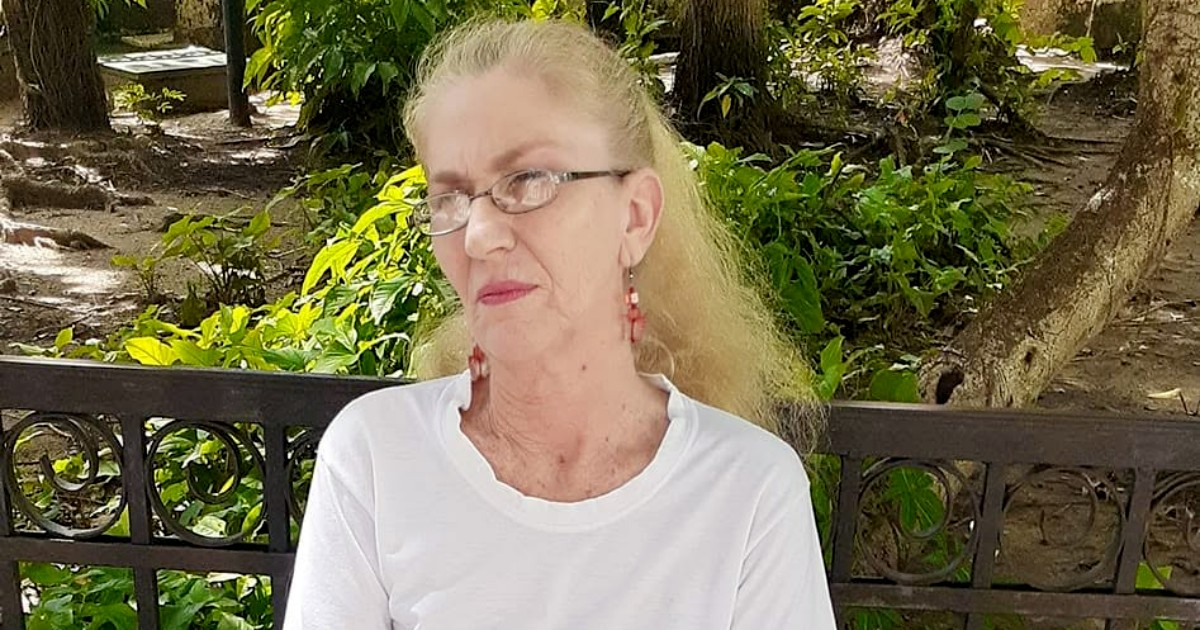
On the fifth anniversary of the July 11 protests, Camagüey-based activist Madelyn Sardiñas Padrón shared a comprehensive post on Facebook. She pointed out three significant falsehoods propagated by the Cuban regime that have been exposed within the past year: the true nature of medical missions, Cuban military presence in Venezuela, and the acknowledgment of political prisoners on the island.
Sardiñas Padrón emphasized the regime's implicit acknowledgment of political prisoners, highlighted by Raúl Guillermo Rodríguez Castro, the grandson of Raúl Castro, known as "El Cangrejo." In an interview with USA TODAY on July 7, a MININT colonel indicated that "Cuba is willing, under appropriate conditions, to release individuals considered political prisoners."
For the activist, this statement shattered over six decades of denial: "With this phrase, the grandson broke the longstanding denial and implicitly acknowledged what had always been hidden."
She reminded readers that while dictator Fidel Castro often labeled imprisoned dissidents as traitors serving the United States, and Deputy Minister Carlos Fernández de Cossío claimed there were "not even one," Raúl Guillermo's declaration abruptly reversed that stance.
Challenging these "appropriate conditions," Sardiñas Padrón questioned, "Do they intend to use these individuals' lives and freedom as bargaining chips to secure their own safety and privileges?" She referenced the recent releases and unknown relocations of Luis Manuel Otero Alcántara and Maikel Osorbo as potential indicators of such conditions.
The Reality Behind Cuban Medical Missions
The second facade Sardiñas Padrón identified was the portrayal of medical missions as acts of international solidarity. In reality, she stated, "The State paid doctors about 15% of what it received for the services they provided. The excuse of collecting passports to prevent loss was utterly feeble."
This narrative aligns with findings from international bodies: in April 2025, the Inter-American Commission on Human Rights released a 199-page report indicating severe forced labor, and the European Parliament passed an amendment labeling Cuban medical brigades as "modern slavery."
Cuban Military Presence in Venezuela Exposed
The third deception involved Cuban military presence in Venezuela, long denied by Havana. This was irrefutably confirmed when 32 Cuban soldiers died during the U.S. operation that led to the capture of Nicolás Maduro on January 3, 2026.
Despite this, Fernández de Cossío attempted to downplay the situation on CNN, claiming there were no "troops," just personal security for Maduro—a stance Sardiñas Padrón views as shameless.
The piece comes amid increasing repression: by the end of June, Amnesty International reported over 1,300 political prisoners in Cuba. This figure excludes those facing legal proceedings, arbitrary detentions, or systematic harassment without formal incarceration.
Five years after the July 11 protests, more than 800 individuals remain imprisoned as a direct consequence, according to Sardiñas Padrón. She carries personal weight in this matter: on July 11, 2023, she was arbitrarily detained in Camagüey for stating on Facebook that political prisoners exist in Cuba.
This Saturday, she announced she would repeat her silent protest: "I will sit silently for an hour in Agramonte Park in my hometown of Camagüey. I won't carry signs or a phone for selfies, but those who see me in my white blouse will understand that I'm demanding the immediate, unconditional release of all political prisoners."
In February 2026, over 1,500 citizens signed a petition urging deputies to promote an amnesty law, an initiative Sardiñas Padrón pushed with a legislator, though she cautions that Cuban law doesn't even empower deputies to initiate such an amnesty.
Key Insights into Cuba's Political Climate
What are the three major falsehoods exposed by Madelyn Sardiñas Padrón?
Sardiñas Padrón identified the true nature of Cuban medical missions, the military presence in Venezuela, and the existence of political prisoners as major falsehoods exposed within the past year.
How did Raúl Guillermo Rodríguez Castro's statement impact the recognition of political prisoners?
His statement about the potential release of political prisoners under certain conditions implicitly acknowledged their existence, contradicting decades of denial by the Cuban regime.
What evidence supports the claim of Cuban military presence in Venezuela?
The deaths of 32 Cuban soldiers during a U.S. operation in Venezuela that captured Nicolás Maduro confirmed the military presence, despite previous denials by the Cuban government.