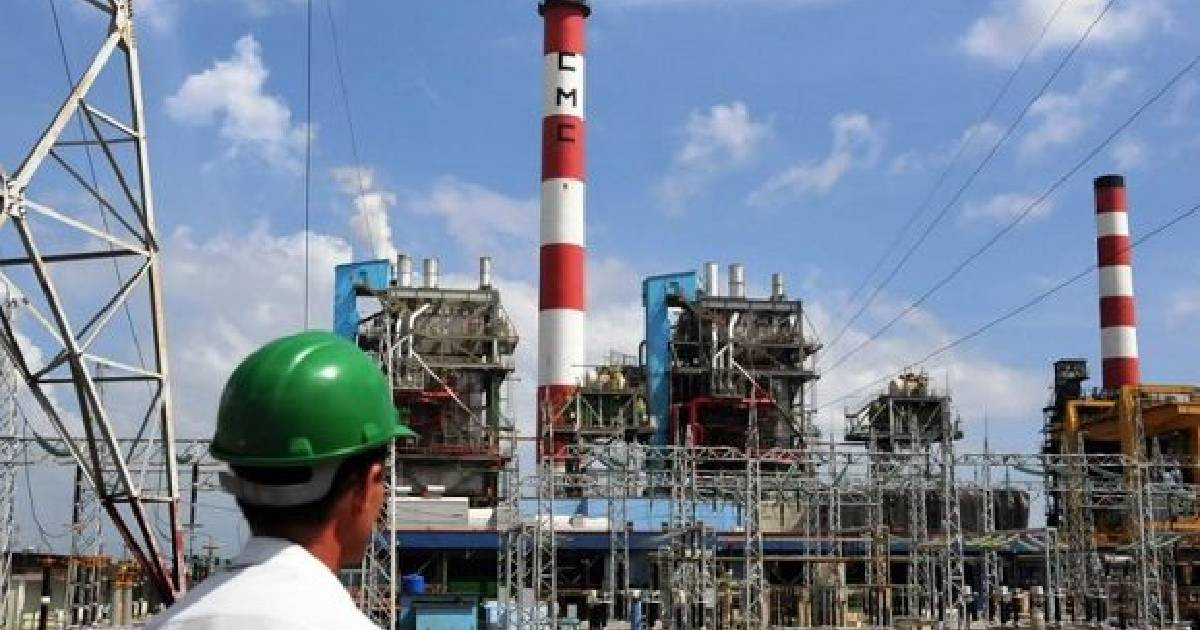
The Cuban Electric Union (UNE) announced on Saturday that the National Electric System (SEN) has been reconnected from Santa Clara to the province of Holguín. This move is part of the ongoing recovery efforts following Cuba's fourth complete blackout in 2026, which occurred when the system failed entirely at 4:30 PM on Friday.
According to an official post by the UNE on Facebook, the state-owned company also revealed that "the eastern region is preparing for recovery with the incorporation of Renté Unit 3 into the system" and that "Felton Unit 1 is set to start up in the coming hours."
The organization acknowledged operating under significant constraints. "Despite the existing fuel limitations, vital services across the country are prioritized," they emphasized.
The Friday collapse was triggered at 3:55 PM by a failure in the 220 kV line between Santa Clara and Sancti Spíritus, causing the SEN to split and several thermal units to go offline, leading to a complete disconnection just 35 minutes later.
The situation worsened early Saturday when a voltage collapse in the western microsystem further complicated the system's restoration.
Ongoing Challenges and Public Outcry
Prior to the blackout, the system was already extremely fragile. The SEN's availability was merely 935 MW against a demand of 3,100 MW, with 106 distributed generation plants shut down due to fuel shortages, accounting for an additional 890 MW out of service.
This marks the eighth total blackout in roughly 24 months, occurring just three days after Cuba experienced its largest energy deficit in history—2,341 MW—with 73% of the population affected simultaneously on July 8.
The government's response has been largely rhetorical. Energy and Mines Minister Vicente de la O Levy declared, "No one here gives up," yet failed to announce any structural measures. Meanwhile, President Miguel Díaz-Canel merely called for "better organization" of blackouts without committing to investments to boost generation.
Citizens' frustration spilled onto social media. "We can't live like this forever; there are children, young people, and the elderly here. Something must change to improve this because, frankly, we're at unbearable levels," a Cuban wrote online.
Infrastructure Concerns and Irony
Others criticized the system's structural weaknesses: "Isn't there a plan within those 35 minutes to prevent the 220 kV line failure between the two cities from escalating beyond the local level?"
Irony also found its place. "Now it's like a short circuit in a house outlet can bring down the SEN," summarized another citizen's widespread perception of the system's state.
Experts estimate that modernizing Cuba's electrical infrastructure would require between $8 billion and $10 billion, a sum the regime lacks and has no prospects of acquiring, as thermoelectric plants age between 40 and 60 years without comprehensive capital maintenance.
Understanding Cuba's Ongoing Energy Crisis
What triggered the recent blackout in Cuba?
The blackout was triggered by a failure in the 220 kV line between Santa Clara and Sancti Spíritus, causing the SEN to split and leading to a complete disconnection of the power system.
How is the Cuban government addressing the energy crisis?
The government's response has been largely rhetorical, with calls for better organization but no commitment to structural changes or investment in increasing power generation.
What are the estimated costs to modernize Cuba's electrical infrastructure?
Experts estimate that modernizing the infrastructure would require between $8 billion and $10 billion, a financial burden the government is currently unable to bear.