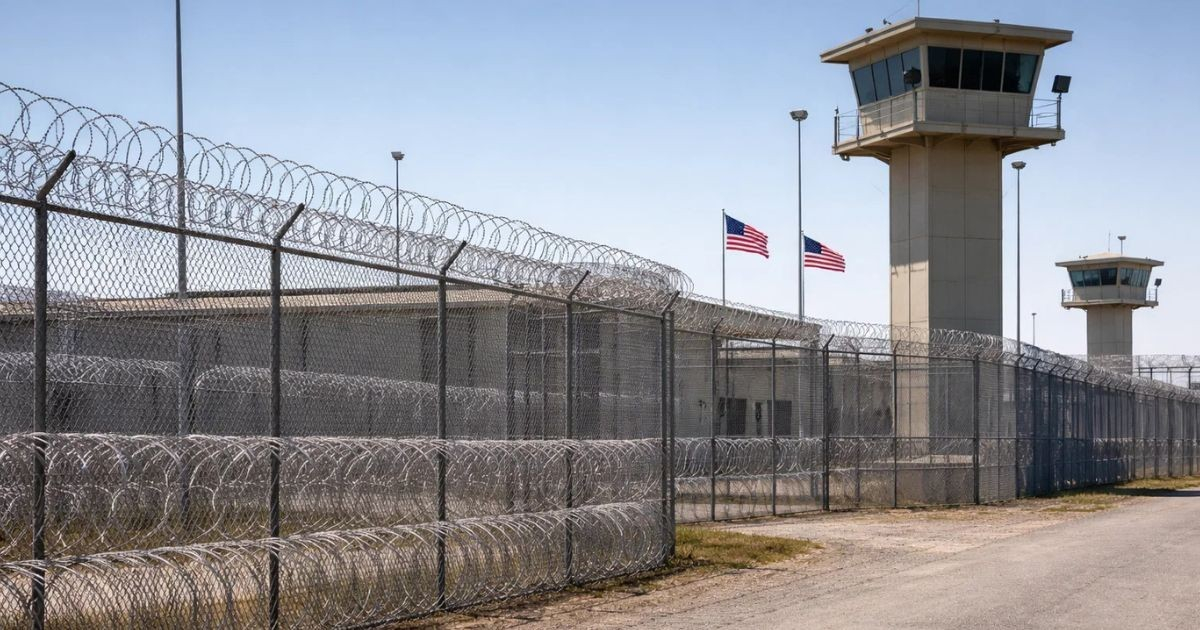
Fifteen out of the 45 detention centers managed by the U.S. Immigration and Customs Enforcement (ICE), each with a capacity for 500 or more detainees, have gone more than a year without any formal inspection. This lapse leaves thousands of migrants in facilities operating without federal oversight.
A CBS News analysis published on Thursday highlighted this issue, revealing that five of these 15 large facilities have no record of ever being inspected. This means around one-third of the nation's largest detention centers are functioning without recent scrutiny.
The root of this problem is a policy shift ICE implemented in 2025, reducing the frequency of inspections for centers dedicated solely to agency detainees from twice yearly to just once. Facilities shared with other inmates are now reviewed every two years, while centers housing fewer than 50 migrants conduct biennial "assisted self-inspections."
Among the facilities not recently inspected are the Florence Correctional Center in Arizona, last checked in December 2024 and averaging 518 detainees daily, and the Golden State Annex in McFarland, California, which hasn't been reviewed since January 2025 and holds an average of 603 detainees.
The controversial center known as "Alligator Alcatraz," located in the Everglades of Florida, never underwent an ICE inspection before its closure in June, despite processing nearly 21,000 deportations in under a year.
Escalating Concerns Over Deteriorating Conditions
This oversight gap coincides with a severe decline in detention conditions. The mortality rate in ICE custody has more than doubled since the start of Trump's second term, rising from one death per 3,848 detainees—an average from 2009 to 2024—to one per 1,630, according to a Reuters analysis published on June 17.
Since January 2025, at least 50 individuals have died in custody, including 21 who were found unresponsive before receiving medical care. There have been ten suicides and 16 deaths from cardiovascular complications.
The mortality rate reached 88.9 deaths per 100,000 detainees in fiscal year 2026, marking the highest level in 22 years and surpassing even the COVID-19 pandemic peak of 75.6 in 2020.
Overcrowding and Increased Use of Force
Overcrowding exacerbates the situation: the detained population swelled from about 40,000 in January 2025 to roughly 57,000 by early June 2026. The use of force in these facilities rose by 37% in 2025 compared to the previous year, with 780 incidents affecting 1,330 individuals.
On July 3, Democratic Congresswoman Debbie Wasserman Schultz conducted a surprise inspection at the ICE center in Miramar, Florida. She discovered more than 150 people crammed into four rooms designed for 56 each, extreme temperatures, a single toilet without privacy per room, and showers available every two days.
"People are literally lying on the floor. There’s absolutely no space. It’s wall-to-wall people," Schultz reported, also warning, "It's hard to know if you meet ICE standards if a facility isn't inspected."
The Inspector General of the Department of Homeland Security (DHS) has launched an official investigation into the rising deaths and the increased use of force in ICE centers, with fieldwork scheduled for August.
Understanding ICE Detention Center Inspections and Conditions
Why have some ICE detention centers not been inspected in over a year?
A policy change in 2025 reduced the frequency of inspections for ICE detention centers dedicated solely to agency detainees from twice yearly to once annually. Shared facilities are now reviewed every two years, while smaller centers conduct biennial self-inspections.
What are the implications of the lack of inspections?
The absence of inspections leaves facilities operating without federal oversight, leading to deteriorating conditions, including increased mortality rates and overcrowding.
What actions are being taken to address these issues?
The DHS Inspector General has initiated an investigation into the increased deaths and use of force, with fieldwork planned for August.