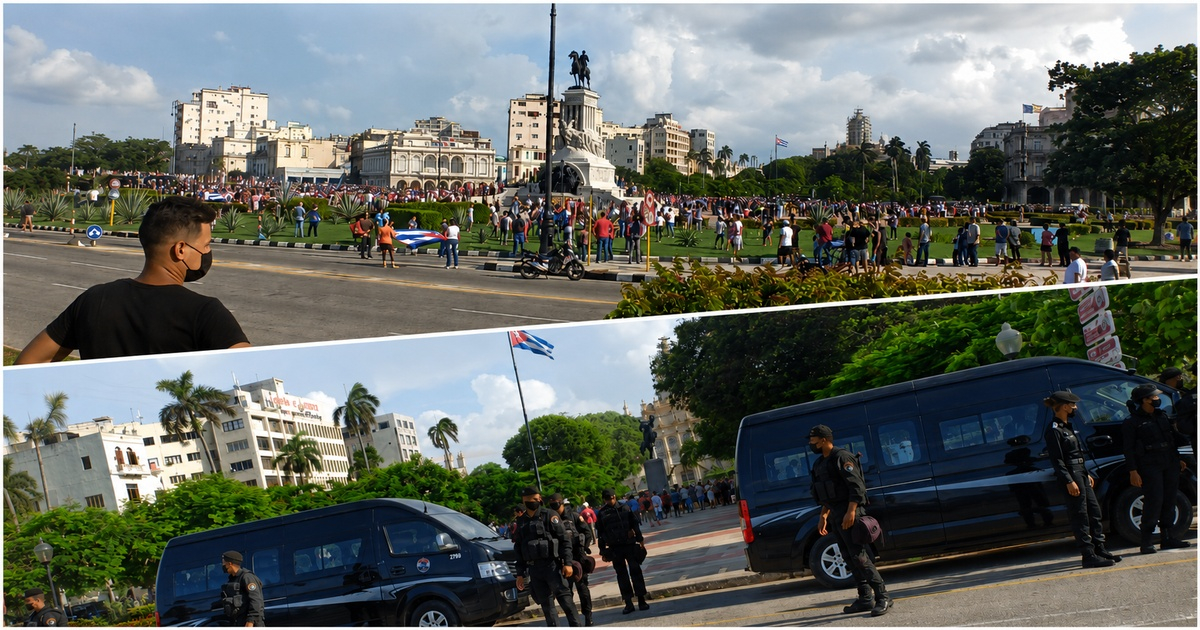
If someone had told me five years ago that I would be organizing a symposium on the fate of my country, I wouldn't have believed them. More astonishingly, I would not have imagined that the dictatorship would still be clinging to power, that political prisoners would remain behind bars, or that a new, equally flawed economic policy would be unveiled. And certainly, I wouldn't have guessed we'd witness the emergence of a new figurehead from the socialist regime.
Back on July 11, 2021, I was just another mother standing in long lines at newly opened dollar stores, quietly resenting the absurdity of a dollarized economy. Like many, I was outraged by the double standards promoted by the state-run media and felt helpless when my children asked for basic necessities I couldn't provide. The frustration was palpable, as solid as a mountain, yet no one in my immediate circle ever imagined that a massive protest, or even a small demonstration, would occur. Years of indoctrination through educational institutions and state media had instilled the belief that the regime would remain unyielding, regardless of our will, leaving us feeling powerless to effect change.
Our limited knowledge of the young activists from the San Isidro Movement sparked admiration, but we were daunted by the perception that they were extraordinary individuals. In a society steeped in a culture of silence, we doubted that enough courageous people could emerge to challenge the system. The psychological paralysis was profound, fueled by preconceived stigmas, fears of public exposure, brutal repression, and the dread of losing even more freedoms than those we had already surrendered long ago.
During those days, conversations focused solely on survival or escape. We huddled in our homes, away from prying eyes, to read independent news articles that resonated with our reality. The official censorship distanced us from state media, leading some to detox from its influence. However, the awakening of national consciousness varied in speed and complexity, particularly for those without organizational support. ETECSA's exorbitant mobile data prices meant that many of us were only sporadically online, learning about the protests through Canel's inflammatory rhetoric.
The regime's puppet buried his political career with a single call for combat. His apathy and lack of empathy were the catalysts the people needed to realize that there were two sides: those who suffered under the system and those who thrived from it. In many homes, we believed the dictatorship's end was imminent, and when it didn't fall, we anticipated repeated protests. The blackout of electricity and communication fueled our deepest anxieties, particularly for the demonstrators and their families. Social media messages led us to hope for eventual reconciliation, even if only as a strategic gesture of empathy. Instead, we were confronted with the regime's darkest face, marked by racially and rurally biased repression. Yet, repression is a double-edged sword: it instills fear, but it also ignites a suppressed yearning for freedom.
Talk of freedom had never been so widespread in Cuba, at least not in recent years. A significant portion of the population chose exile, as the regime encouraged emigration to alleviate social pressure. The drastic population decline from over 11 million to around 9 million in just five years is a stark indicator of the Cuban people's disillusionment with the system. The exodus reflects dissatisfaction not only with the crisis but also with governance. Those who believe in a system's functionality stay and endure hardships, trusting in eventual resolution. But when faith in governance is lost, emigration becomes the only viable option.
Since July 11, we are not the same. Our reality has been dehumanized, and the ruling party, once promising social benefits, has drastically slashed public spending. After losing public support, they shed their masks of manipulation, displaying open disdain and cold indifference. In just five years, we've faced tragedies due to negligence, epidemics from garbage accumulation, a total collapse of the electrical infrastructure, monetary policies tied to dollarization, and increased military violence.
Who could believe prosperity and respect would emerge from the violent, the greedy, the indifferent? Five years after July 11, they present capitalist measures to feign transformation, yet justice remains off the table. The regime mutates like a virus, seeking social acceptance, international legitimacy, and buying time, reminiscent of the tension prior to July 11, 2021. While we have changed, so have they. They grant interviews to international media to forge alliances and attempt dialogue with the northern neighbor that keeps them awake at night; yet domestically, nothing has truly changed.
To think that economic reform alone will resolve Cuba's issues is not only naive but immoral. Justice is not a secondary concern; it is the main course. Those unjust to one will not hesitate to be unjust to another if it threatens their power. Humanity is non-negotiable, and today, being human means understanding that the republic we aspire to build must start with structural changes and individual freedoms, not mere economic adjustments.
Understanding the Impact of July 11 Protests in Cuba
What were the main causes of the July 11 protests in Cuba?
The July 11 protests were largely driven by widespread frustration over economic hardships, lack of basic freedoms, and discontent with the government's handling of the COVID-19 pandemic. These issues, compounded by years of systemic repression, culminated in the largest demonstrations seen in decades.
How has the Cuban government responded to the protests?
The Cuban government responded to the protests with a mix of repression and attempts to deflect public anger. This included arresting demonstrators, censoring independent media, and implementing limited economic reforms to placate public discontent, all while maintaining a firm grip on power.
What changes have occurred in Cuba since the protests?
Since the protests, Cuba has experienced a significant emigration wave, a sign of eroding trust in the system. Internally, the regime has attempted to implement economic reforms, but these have failed to address deeper issues of governance and human rights, leaving the population disillusioned.