Anniversaries often prompt reflection on the past, yet the anniversary of July 11 compels us to scrutinize the present.
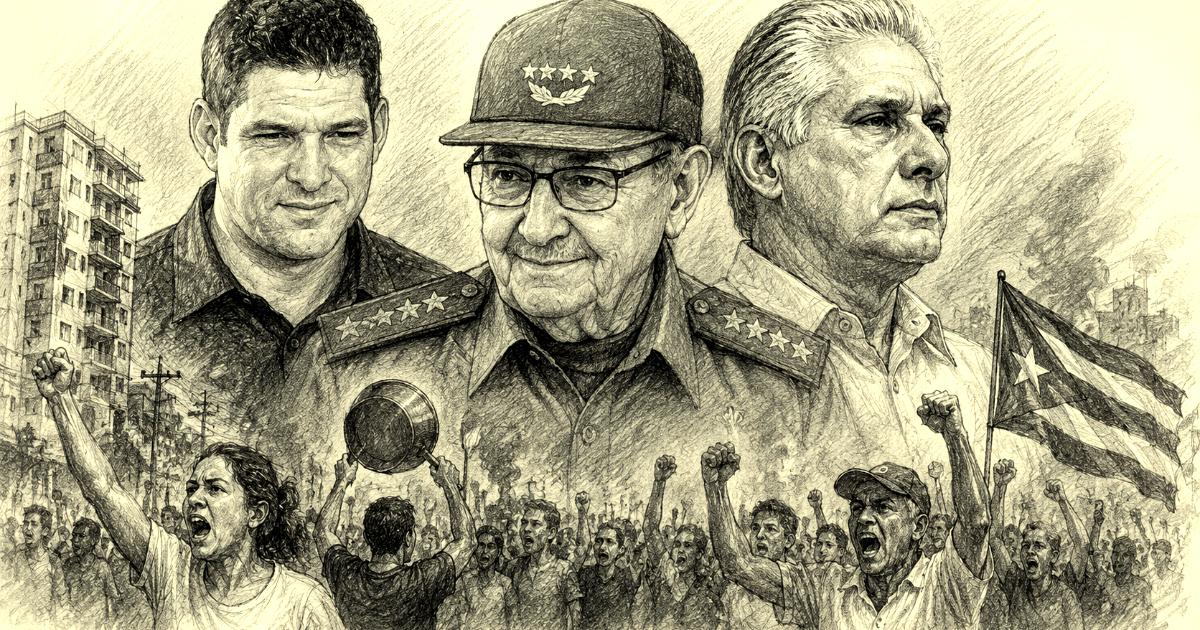
Half a decade has passed since throngs of Cubans took to the streets demanding freedom, food, medicine, and political change. Today, the sound of banging pots once again echoes through Havana.
The Cuban Observatory of Conflicts reported 107 street protests in June, with 82 occurring in the capital. In Central Havana, a chant encapsulated the depth of discontent: "We want freedom, not electricity." The return of power wouldn't quell the protests.
This doesn't necessarily mean Cuba is experiencing another July 11. Instead, it signifies something perhaps more concerning for the regime: the causes of that uprising remain unresolved, and the memory of the events persists.
Unyielding Causes and Lingering Memory
Prolonged blackouts, exorbitant food prices, deteriorating hospitals, and a society that has learned fear can be overcome—these are the realities. Yet, the cost of overcoming that fear is also well understood.
According to the latest update by Justicia 11J, by April 2026, 775 individuals were imprisoned for political reasons in Cuba, with 338 sentenced for participating in the July 2021 protests.
The significance of July 11 endures, still shackled within Cuba's prisons.
The "Combat Order" and Its Aftermath
On July 11, 2021, Cuba's appointed leader, Miguel Díaz-Canel, appeared on state television, issuing the infamous "combat order" that defined the government's response: "Revolutionaries to the street."
His call mobilized police, special forces, military personnel, plainclothes agents, and pro-government brigades. The resulting violence and arrests turned his words into a political sanction for repression.
In La Güinera, one of Havana's poorest neighborhoods, Diubis Laurencio Tejeda was shot in the back by a police officer during the protests. The bullet pierced his lung, reaching his heart, marking him as the sole officially acknowledged fatality.
The prosecutor's office deemed the officer's actions as "self-defense" despite the lack of evidence that Diubis posed any direct threat.
National Crackdown and Political Imprisonment
Justice 11J documented the detention of 1,586 individuals during the July 2021 protests. While not all were imprisoned, the scale of the arrests highlights a nationwide crackdown.
Hundreds faced criminal trials, often in mass proceedings, with sentences sometimes exceeding twenty years. The regime labeled political protests as criminal acts, using charges like sedition and public disorder.
Even outside prison, released individuals faced ongoing surveillance and restrictive conditions, undermining any sense of true freedom.
Exile as an Alternative to Imprisonment
When imprisonment fails to silence dissent, the regime offers exile as an alternative. José Daniel Ferrer, a leader of the Patriotic Union of Cuba, ultimately accepted exile in 2025 after prolonged imprisonment and pressure on his family.
This forced emigration is not a choice but a coerced decision between continued incarceration or leaving one's country.
Artists, journalists, and activists also face exile, an attempt by the state to empty the civic space, while those who remain are constantly reminded of the potential consequences.
Sanctions and International Response
Following the July 11 protests, the Biden administration imposed sanctions on Cuban officials and entities. These measures, targeting individuals like Díaz-Canel and military leaders, aimed to hold the regime accountable for its actions.
However, the effectiveness of these sanctions should be judged by tangible outcomes: the unconditional release of prisoners, cessation of family harassment, and restoration of civil rights.
The Role of "El Cangrejo"
Amidst international pressure, a new figure emerges: Raúl Guillermo Rodríguez Castro, known as 'El Cangrejo.' Despite lacking any official governmental role, he represents a continuation of the dynastic power structure.
His authority stems from familial ties rather than democratic legitimacy, highlighting the regime's preference for maintaining control within the family circle.
The Unfinished Story of July 11
Five years on, the essence of July 11 remains unresolved. The protests shattered the illusion of a compliant society, revealing a populace eager to assert its political agency.
Cuba's future depends not on a new, unelected successor but on the liberation of those imprisoned for speaking out, the end of familial punishment, and the ability of Cubans to choose their representatives.
The struggle continues, as the spirit of July 11 endures, imprisoned but not forgotten.
Key Questions on Cuba's Political Climate
What were the main demands during the July 11 protests in Cuba?
Protesters demanded freedom, food, medicine, and political change.
How has the Cuban government responded to these protests?
The government responded with repression, arresting protesters and using force to quell dissent.
What role does Raúl Guillermo Rodríguez Castro play in the current Cuban regime?
Raúl Guillermo Rodríguez Castro, known as 'El Cangrejo,' holds no official position but is a key informal negotiator for the regime due to his familial connections.