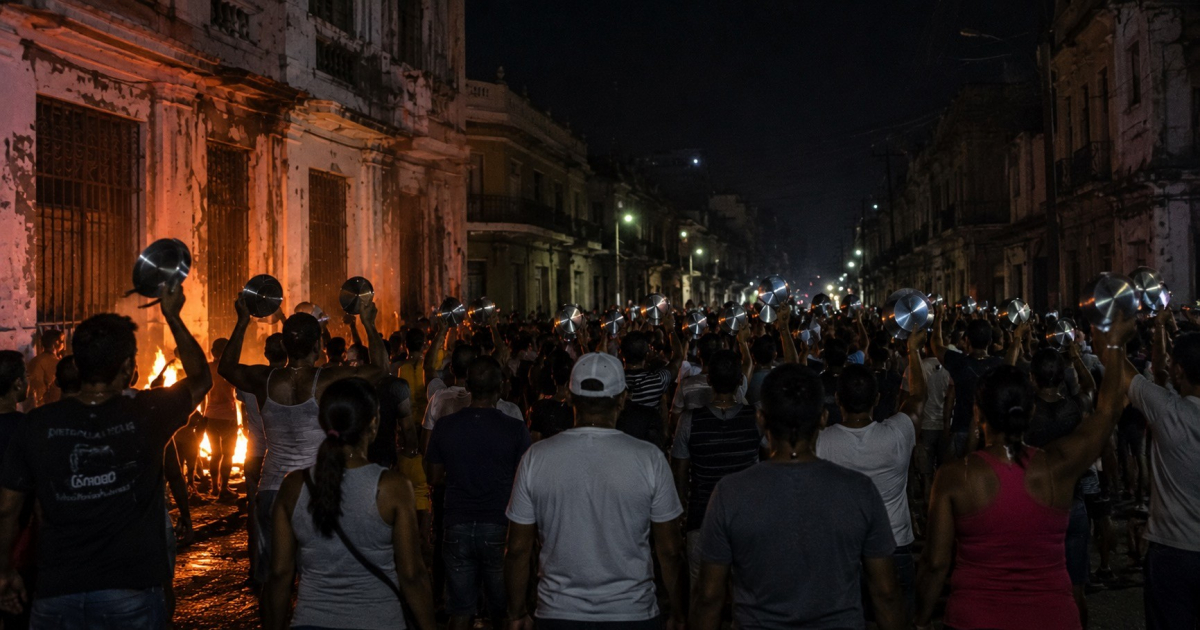
Every night, Cuban spoons clash with the hollow echoes of empty pots, creating a resounding cry that reverberates across the island. This clamor of hunger and protest is spreading far and wide throughout Cuba.
What began as a solitary act of bravery has evolved into a symphony of defiance, reaching more towns and cities across the nation. While some, out of fear, choose to make their pots resonate within the safety of their homes, an increasing number of bold citizens are taking to the streets. They are acutely aware of the potential for police brutality or arrest, yet remain resolute in demanding their rightful claims.
The sound of metal on metal is something that dictators dread. In our history, it was Carlos Manuel de Céspedes who rang the bell of his sugar mill, La Demajagua, to signal the liberation of his enslaved workers and call them to arms against the oppressive Spanish colonial rule. Those bronze clangs marked a pivotal moment in the struggle for Cuban independence, a call for the young Cuban nation to expel those who stifled its dreams of sovereignty and freedom.
It seems there are chimes that shake the dictatorship to its core: the church bells calling congregations to spiritual strength, and the pounding of pots urging citizens to take to the streets and assert their rights.
Today, from the streets and homes of Cuba, come new sounds that urge us to demand a change in the system that has oppressed and degraded us for nearly seven decades. Some may dismiss them as inconsequential echoes of pots, but they are, in truth, drums beating a call to overcome our fears and rise against our tyrant, heralding the impending end of tyranny.
Ironically, the only ones who don't doubt the resolve of the Cuban people are the regime's enforcers. For weeks, they have been hearing the whispers of a nationwide protest planned for July 11, 2026, the fifth anniversary of the significant peaceful uprising in 2021. The call also includes rehearsing the "Freedom Human Chain," where protesters link arms in the streets, creating barriers to make it harder for oppressors to dismantle the demonstrations.
The fear that Cubans will come out en masse and become the sovereign internal force that topples them from power has led Castro and Díaz-Canel's henchmen to conduct a campaign of intimidation. They arrest conscientious citizens, beat them savagely, strip them naked, photograph them in this state, and abandon them miles from their homes without money or phones. Several have been threatened with a "bullet in the head" if they continue to call for the pot protests and the human chain. These horrific acts have names and have been denounced in recent hours.
However, rather than being intimidated, Cubans are increasingly realizing that while freedom is sometimes costly, slavery proves to be far more expensive.
On one of those darkest Havana nights, Cuba's lifelong tyrant (choose either of the two, for Cuba is cursed with both) will peer out from the comfort of his well-lit palace, alarmed by the ever-nearing clatter of pots. He will frantically shout into the darkness that he has plunged his country into, "For whom do the pots clatter?" And from the depths of that darkness, voices filled with dignity will respond, echoing the famed words of English poet John Donne, "Do not ask for whom the [pots clatter, tyrant]; they clatter for you."
Understanding the Cuban Protests
What is the significance of the pot-banging protests in Cuba?
The pot-banging protests symbolize the Cuban people's hunger for change and their defiance against the oppressive regime. It is a call for freedom and an end to decades of tyranny.
Why are Cubans planning a protest on July 11, 2026?
Cubans plan to protest on this date to mark the fifth anniversary of the significant peaceful uprising that occurred in 2021. It's a day of remembrance and a renewed call for change.
What is the "Freedom Human Chain" in the context of Cuban protests?
The "Freedom Human Chain" is a planned form of protest where participants link arms in the streets, creating a united front that makes it more difficult for authorities to break up the demonstrations.