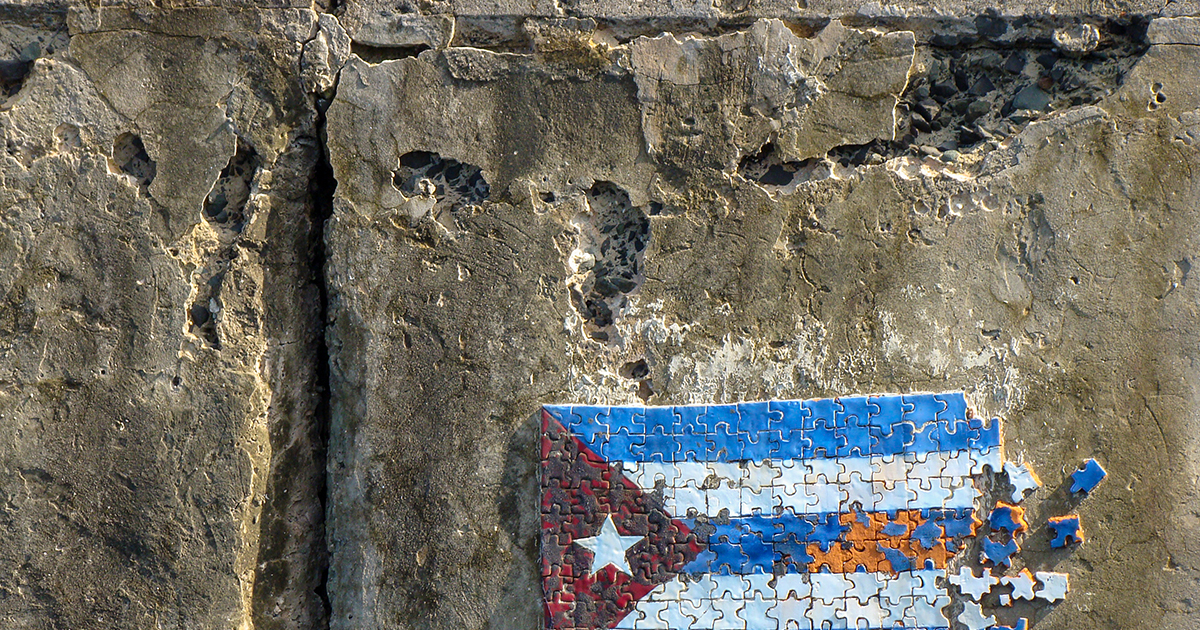
Some words are born to break chains but end up being used to forge them. Few political terms have held as much symbolic power as "revolutionary." For generations, it embodied dissatisfaction, rebellion, the desire for change, and the willingness to challenge perceived injustices. It was a word linked to movement, critique, and the hope of transforming society.
History, however, shows that words can be co-opted by power. When a political concept shifts from an open idea to a mandatory identity, it loses its essence. This is what happened to "revolutionary" during various political processes in the 20th century: it evolved from describing a person eager to alter reality to labeling those who claimed to have the correct interpretation of history.
The Shift from Questioning to Defending
The revolutionary ceased to be the individual who questioned the established order and, in some official narratives, became the one who defended a new untouchable order. This marked the beginning of the word's transformation.
Any revolution that refuses critique contradicts its own origins. Societal change does not occur because an elite claims to possess absolute truth; it happens when citizens can participate, debate, and freely decide their future.
From Inquiry to Allegiance
Problems arise when a political cause stops accepting questions and starts demanding loyalty. When an idea becomes dogma, differing opinions are no longer seen as alternative viewpoints but as threats.
The 20th century demonstrated how hopeful terms were also used to justify power concentrations. Words like justice, equality, people, and revolution mobilized millions but were also employed to legitimize systems where individual freedom was subordinated to an official ideology.
Cuba: A Case Study
Cuba stands as one of the most visible examples of this transformation. The word "revolution," initially linked to promises of social change and national renewal, became associated over decades with a political system where power was declared the sole representative of the nation, critique was limited, and political plurality was excluded.
The revolution transitioned from being a project subject to citizen scrutiny to an established truth. Defending it was deemed an obligation, while questioning it could be seen as betrayal.
Preserving the Essence of Change
No word retains its greatness when it loses its connection to freedom. True social change does not require fear, censorship, or silencing. Societies progress precisely because differences exist, because ideas can clash, and because no government, movement, or party should rise above the citizen's right to question.
The issue has never been the pursuit of profound transformations. The problem emerges when those who speak of change end up denying the principles they claimed to defend.
A revolution that stops opening paths and starts erecting barriers ceases to be a transformative force and becomes a structure for preserving power.
The Memory and History of Words
Words carry memory and history. "Revolutionary" lost part of its original meaning when it stopped representing rebellion against authority and began to justify authority itself.
Reclaiming the true sense of political concepts also means reclaiming the ability to think freely. No word belongs forever to an ideology. Words belong to society, to debate, and to human consciousness.
And when a word born to change the world ends up being used to prevent change, it begins its own demise.
Understanding the Transformation of "Revolutionary"
How did the term "revolutionary" change over time?
The term "revolutionary" evolved from representing a desire to disrupt and reform unjust systems to being used as a label for those defending a new established authority.
Why did "revolutionary" lose its original meaning in Cuba?
In Cuba, "revolutionary" lost its original meaning as it became synonymous with defending a political system where power was concentrated, critique was stifled, and political diversity was absent.
What is necessary for true social change?
True social change requires an environment free from fear, censorship, and silencing, where different ideas can be expressed, debated, and challenged.