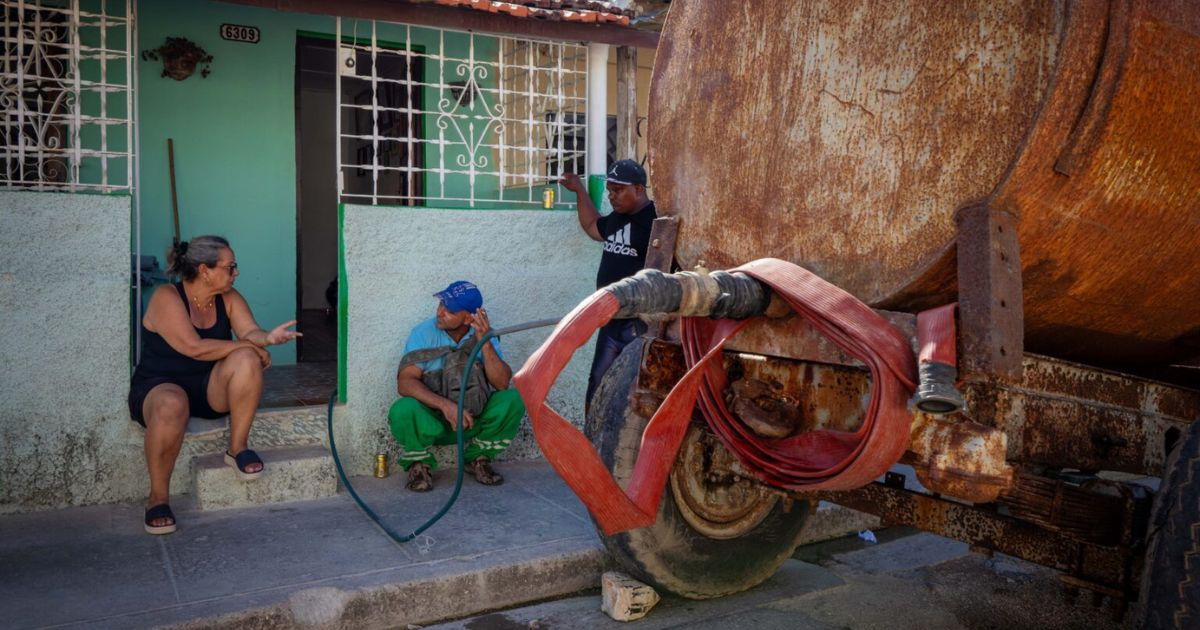
A significant rupture in the main Northwest pipeline system has disrupted water supply across vast areas of Santiago de Cuba early Friday morning, as reported by the Aguas Santiago Water and Sewer Company in an official statement aired by CMKC Radio Revolución.
The break occurred in the 1,000 mm high-density polyethylene pipeline located before the El Cobre dairy farm, affecting the water flow to the Quintero I and II Potable Water Plants, which are crucial for the city's water distribution.
According to a statement signed by the head of the Basic Business Unit, Estailis Izaguirre Delis, and approved by the general director Ludmila Rodríguez Barroso, the rupture has led to a significant reduction in the water volume entering the Quintero system. This necessitates temporary service restrictions to ensure the responsible management of available resources.
Maintenance crews are currently in the process of organizing preliminary arrangements to begin repair work, with a technical projection of 48 hours to complete the tasks. Following the repairs, a gradual restoration of service by sectors will commence, according to the company.
During the repair period, eight hospital centers will receive priority supply through networks and tanker trucks, including the South Children's Hospital, the Military Hospital, the Molinera, the Provincial Hospital, the South Maternal, the North Maternal-Children's, the Oncology Hospital, and the Clinical Surgical Hospital.
Hydrometric sectors such as La Ceiba, Vista Alegre-Ampliación Terrazas-Pastorita, part of Sueño, and Mariana Torre Bajo will continue receiving service due to their connection to these vital centers.
Conversely, sectors such as Maestra 1, María Lina Los Pinos, Los Olmos, San Pedrito, and Jiménez will remain without supply until repairs are completed. The Altamira sector, within the circuit of 14th Street of Luis Daggnes and Comancié, maintains conditional protection "as long as operational conditions permit," according to the official note.
This is not the first time this same pipeline has failed. A similar rupture in July 2024 left 80% of Santiago de Cuba without water for several days, affecting hundreds of thousands in areas including Centro Norte, Los Olmos, and the José Martí District.
Another breakdown occurred in March 2026, with repairs not commencing until April 3rd.
The latest rupture comes at a particularly challenging time for the city. Electrical crises and technical failures have halted pumping stations, with areas like El Cristo having gone up to 48 days without water before this latest incident.
Over 60% of the water distributed in the city is not chlorinated due to failures in generator groups, leading to outbreaks of dengue and hepatitis A.
In April 2026, the UN described Santiago's water situation as having a "systemic humanitarian impact."
Aguas Santiago has set up the phone number 620686 for public inquiries and urged residents to "maximize water-saving measures and rational usage during this period."
Frequently Asked Questions About Santiago de Cuba's Water Crisis
What caused the water supply disruption in Santiago de Cuba?
The disruption was caused by a rupture in the main Northwest pipeline system, affecting water flow to key potable water plants.
How long is the repair expected to take?
The repair work is projected to take around 48 hours, after which a gradual restoration of service will begin.
What measures are being taken for critical facilities?
Eight hospital centers will receive priority water supply through networks and tanker trucks during the repair period.
How can residents get more information?
Residents can call Aguas Santiago at 620686 for inquiries and further information.