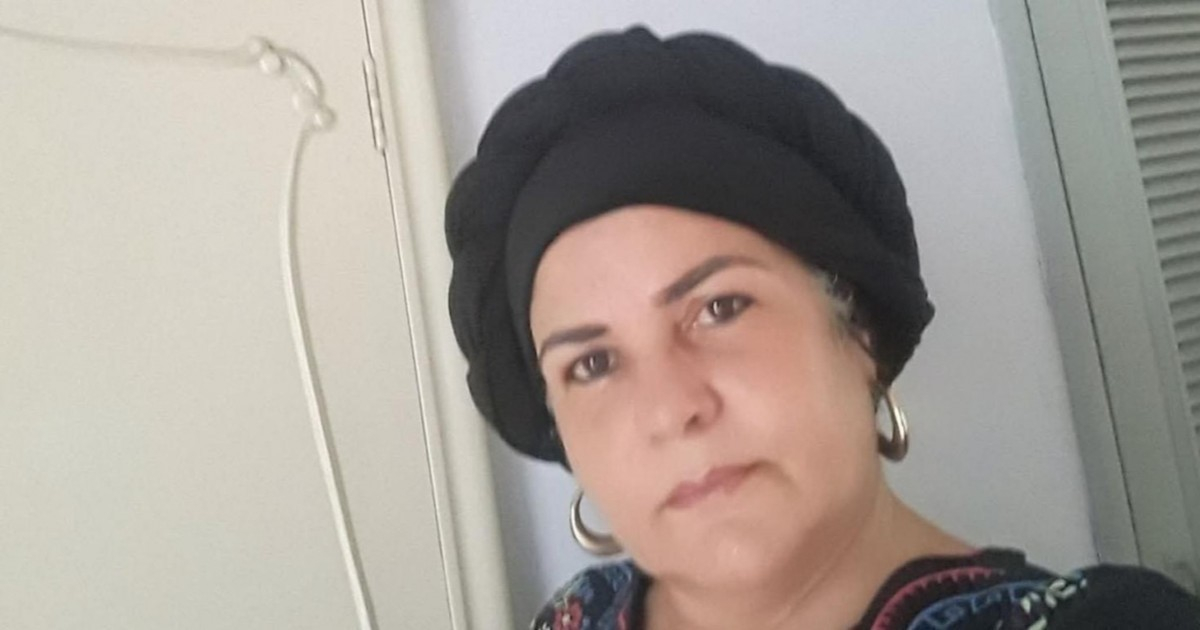
Cuban actress and broadcaster Laritza Camacho took to Facebook to express a powerful civic stance with a statement that leaves no room for interpretation: "I oppose the Cuban government because it opposes Cuba. Nothing works in my country."
Camacho clarified that her disapproval is not ideologically driven but rather a call for civic improvement: "My fight is civic because we urgently need a functioning country."
The Need for Accountability in Government
A central theme in her post is the demand for government officials to fulfill their duties instead of constantly engaging in political discourse. "A transportation minister's sole responsibility, in any country, is to solve transportation issues. The same applies to food, defense, tourism, agriculture, and any other ministry," she wrote, highlighting how the regime's political obsession has eclipsed effective governance.
Camacho attributed the decline of civic values in Cuba to political voluntarism: "Political voluntarism has led to major economic failures, the downfall of excellent professionals, and the censorship of internationally renowned artists."
Historical Failures and Their Lessons
She cited the 1970 ten-million-ton sugar harvest as a paradigmatic failure. The regime halted industries and mobilized the entire nation in a bid to produce 10 million tons of sugar, achieving only 8.5 million. "They still call it a victory, but true success would have been our sugar industry growing steadily, with quality and firm steps, rather than ending up destroyed," Camacho remarked, referring to an industry now producing less sugar than in 1899.
Demanding Responsibility and Change
The actress straightforwardly demanded accountability, calling for the removal of those who implemented ineffective measures, those who built new hotels while classic ones decayed, those responsible for monetary reforms, and those who made unfulfilled promises.
She listed some of these promises: "a [house] a day promised by President [Díaz-Canel]," "a glass of milk promised by Raúl Castro," "a better summer assured by DC."
Her conclusion was unequivocal: "If they can't solve the problem, they need to step aside."
Advocating for the Release of Political Prisoners
As a Cuban citizen, Camacho demanded the release of political prisoners, who number over 1,200 according to groups like Prisoners Defenders. Her call is bolstered by recent statements from Raúl Guillermo Rodríguez Castro ("El Cangrejo"), who acknowledged to USA Today that these prisoners are political and could be freed "under the right conditions," and from Díaz-Canel, who described the pot-banging protests as "Cuban Cubanism," implying that "no one else should be imprisoned for that."
"I believe the conditions are ripe to declare amnesty now and also to apologize to the Cuban people for their imprisoned sons," she emphasized.
However, Camacho firmly opposed negotiating this freedom with Washington or the Vatican: "Would negotiating the release of political prisoners with the US not grant the empire extra power over our sovereign right to exist and decide?"
Her answer was unequivocal: "The only party with whom the release of political prisoners in Cuba should be negotiated is the Cuban people."
Her publication arrived a day after she commented on El Cangrejo's interviews, highlighting the gap between the regime's egalitarian rhetoric and the luxurious lifestyle of its elite. "There is a wealthy elite in Cuba and an overwhelmed populace," she noted at the time.
Understanding Laritza Camacho's Critique of the Cuban Government
Why is Laritza Camacho critical of the Cuban government?
Laritza Camacho criticizes the Cuban government for its failure to function effectively and its political obsession, which she believes opposes the interests of Cuba and its people.
What historical example does Camacho use to illustrate government failure?
Camacho cites the 1970 sugar harvest, where the regime's ambitious target of 10 million tons fell short, as an example of political voluntarism leading to economic failure.
What solution does Camacho propose for political prisoners in Cuba?
Camacho advocates for the release of political prisoners through negotiations with the Cuban people, rather than external powers like the US or the Vatican.