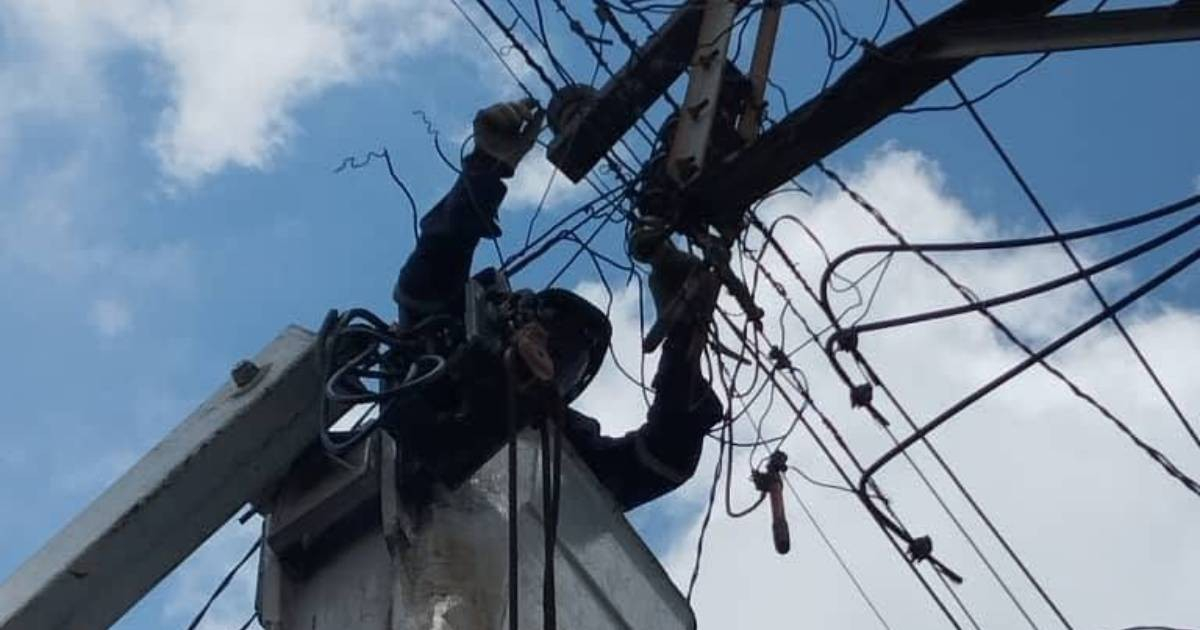
The Electric Company of Havana revealed on Thursday that it will cease managing power outages through the block system, opting instead for a circuit-based approach. This adjustment was expedited following the recent collapse of the National Electric System (SEN), as acknowledged by the company itself.
In an official statement, the company clarified that the new model was initially intended for a gradual rollout. However, the energy crisis necessitated an accelerated implementation.
"This new method was planned to be gradually introduced... yet, given the emergencies posed by the recent fall of the National Electric System, it was necessary to fast-track its application," the statement read.
According to the state entity, managing by circuits will allow real-time monitoring of service status, outages, faults, and maintenance work, in addition to facilitating information access through their digital platforms.
The decision comes just days after the third national blackout of 2026, marking the seventh total collapse of the SEN in the past 18 months. The widespread outage on July 6 was triggered by the shutdown of Unit 6 at the Nuevitas thermoelectric plant in Camagüey.
Although the system was reconnected afterward, the generation shortfall continued to worsen. On July 8, the country recorded a historic deficit of 2,341 megawatts, with only 935 MW available against a demand of approximately 3,100 MW.
Amid this scenario, numerous Havana residents reported power outages lasting 27 to 30 consecutive hours in neighborhoods such as Versalles in La Lisa, Zamora in Marianao, and Cruz Verde in Cotorro.
"It used to be Block 1. Now, I don't even know my category, but I've been without electricity for over 30 hours," wrote a user identified as Fla on the company's official Telegram channel.
New Approach Sparks More Questions than Answers
Rather than easing concerns, the announcement raised new questions among users.
The publication attracted nearly 400 negative reactions, compared to just about thirty positives, along with over a hundred comments where users criticized the Electric Company for not releasing the circuit list or explaining how citizens can identify the circuit their home belongs to.
"Days later, under pressure from everyone, including journalists, they finally decide to do what should have been done from the start," commented user MP89.
Others voiced fears that the new scheme might deepen disparities between neighborhoods.
"I'm in a circuit that borders another halfway down the block, and they don't lose power while I've only had electricity for two hours since the SEN collapse," complained Jenrry Álvarez Cruz, noting that the neighboring circuit houses several small and medium-sized private businesses.
No Improvements in Power Generation
The announcement coincided with a day when Miguel Díaz-Canel visited several Havana municipalities to address the energy crisis. During his visit, the leader called for better organization of the outage scheduling but did not announce measures to boost electricity generation capacity.
Meanwhile, the system's infrastructure continues to show signs of wear. The Antonio Guiteras thermoelectric plant, the country's largest, has been offline 17 times during 2026, amid fuel shortages and deteriorating generator plants.
The prevailing frustration among many users was encapsulated in a comment following the Electric Company's announcement: "With your apologies, nothing gets resolved."
Understanding Havana's New Power Outage Management
Why is Havana changing its power outage management from blocks to circuits?
The switch to circuit-based management was accelerated due to the recent collapse of the National Electric System, as it allows for real-time monitoring and improved service management.
What are the expected benefits of managing outages by circuits?
Managing by circuits is expected to provide real-time insights into service status, outages, faults, and maintenance work, enhancing the availability of information through digital platforms.
How have residents reacted to the new outage management plan?
The announcement has sparked dissatisfaction among residents, with many expressing confusion and concern over the lack of detailed information and the potential for increased inequality between neighborhoods.