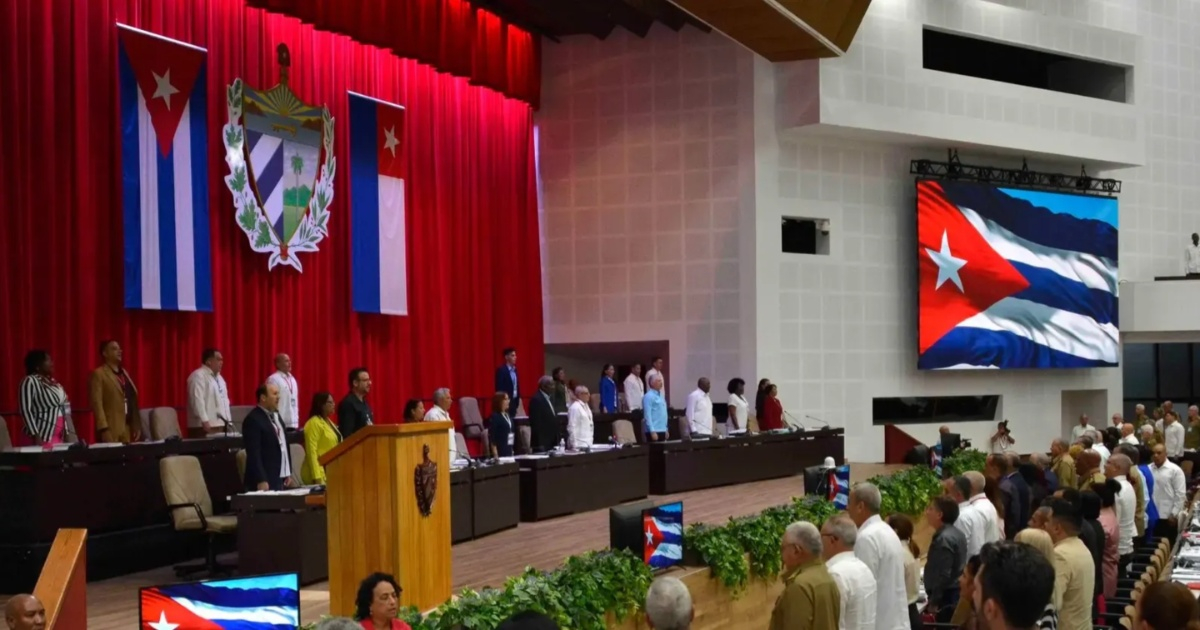
On Wednesday, the President of the National Assembly of People's Power, Juan Esteban Lazo Hernández, issued an official call to convene the Seventh Ordinary Session of the Tenth Legislature. This announcement was published in the Extraordinary Official Gazette No. 77 on Thursday.
The session is slated for July 29, 2026, beginning at 9:00 a.m. at the Palace of Conventions in Havana, as noted in the document labeled GOC-2026-382-EX77.
Relying on Article 111, section c) of the Cuban Constitution, Lazo Hernández signed the call to session, directing Central State Administration bodies and other authorities to inform all deputies.
The document bears the official motto "Year of the Centennial of Commander in Chief Fidel Castro Ruz," marking 2026 as a tribute to Fidel Castro's 100th birthday.
Legislative Agenda and Reforms
This upcoming session follows vigorous legislative activities earlier this year. On June 18, during a special session, the Assembly passed 176 economic reforms, which included the approval of private banking, removal of the 100-worker cap for micro, small, and medium enterprises, and opening up to foreign investment.
For the July 29 session, several significant legislative projects remain on the table, such as the Agricultural and Forestry Land Law, the Labor Code, and the Housing Law.
A law for reorganizing the Central State Administration is also in the pipeline, proposing to reduce the number of bodies from 27 to 21, a move the regime claims is part of its structural reform efforts.
Previous Sessions and Economic Context
The previous session—the Sixth Ordinary Period—was held virtually on December 18, 2025, due to the "complex situation" in the country, as acknowledged by the regime itself.
During that session, the State Budget Law 181 for 2026 was approved, Oscar Manuel Silvera Martínez was appointed as President of the Supreme People's Court, and the legislative schedule for 2026-2027 was updated through Agreement X-165.
This new session is convened amid a severe crisis. The recently implemented minimum wage of 3,210 pesos took effect on July 1; however, workers won't see this pay until August. Analysts warn that the approved reforms may be too late for a nation mired in a decades-long structural crisis.
According to the 2019 Constitution, the National Assembly of People's Power is Cuba's supreme state power organ. In practice, however, it functions more as a body that endorses the Communist Party's decisions rather than operating as an independent parliament.
Understanding Cuba's Legislative Dynamics
What is the significance of the upcoming National Assembly session?
The session is crucial as it follows a series of economic reforms and will address key legislative projects, including laws on agricultural land, labor, and housing, which are significant for Cuba's socio-economic landscape.
How does the Cuban National Assembly function in practice?
While the National Assembly is constitutionally the supreme state power organ, it primarily acts to ratify the Communist Party's decisions, lacking the independence typical of a parliamentary body.
What were the major outcomes of the previous session?
The last session approved the State Budget Law for 2026, appointed a new president for the Supreme People's Court, and updated the legislative schedule, adapting to the country's current economic challenges.