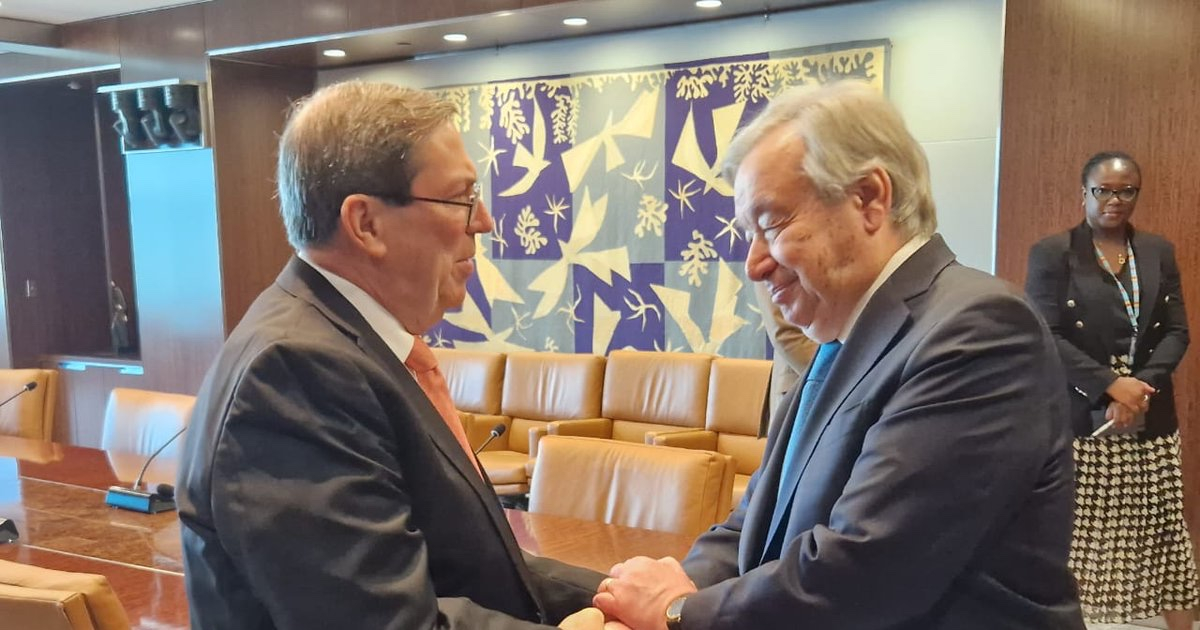
The contradictions of the Cuban regime are emblematic of an era. There is a stark contrast between the official Cuba that presents itself on the international stage and the reality faced by its ordinary citizens. One narrative emphasizes resistance, diplomatic victories, and global solidarity, while the other grapples with persistent blackouts, food shortages, crumbling healthcare facilities, inadequate salaries, and a historic wave of emigration emptying the country.
This discrepancy raises a pressing question: how can a government that has plunged its people into one of the deepest crises in history continue to receive support in United Nations votes? The answer highlights an uncomfortable truth: international diplomacy and political legitimacy do not always coincide.
For decades, the Cuban regime has leveraged its successes at the UN as a propaganda tool. Each favorable vote is touted as evidence of global endorsement for its political model. However, this interpretation blurs the line between two distinct concepts: a diplomatic vote is neither a historical judgment nor a moral endorsement of a government.
The Complex Dynamics of International Politics
In international relations, many nations cast their votes based on self-interest, strategic alliances, economic agreements, or ideological stances. The United Nations serves as a platform where democracies, authoritarian regimes, and diverse political systems coexist. Securing votes does not equate to being right.
The true measure of a government is not found in official speeches but in the everyday lives of its citizens. The reality in Cuba paints a picture of a nation where political power has failed to provide the basic elements of a functioning society. It is a country where millions have been forced to leave in search of opportunities that their own system could not provide.
The Illusion of Blame and the Reality of Internal Failures
For years, Cuban leaders have attributed their failures to a single cause: the U.S. embargo, or as they call it, the "blockade." However, Cuba's crisis cannot be solely attributed to external policy. Internal decisions have also played a significant role, including the suppression of private enterprise, lack of structural reforms, absolute centralization, and an economic model that has failed to deliver prosperity.
The core issue is not merely the extent of Cuba's trade with the world but how the country is managed and what rights Cubans have in participating in decisions that shape their future.
An unanswered question remains for the official propaganda: if the system is so successful, why are millions of Cubans trying to leave? If the reality is so favorable, why does the population struggle to access food, medicine, and basic services?
The Inescapable Reality
The contradiction is clear: a government can secure votes in an international organization while simultaneously losing the moral backing of its own people.
History is replete with examples of governments that maintained international allies while internally amassing failures, abuses, and a loss of legitimacy. Diplomatic support may delay certain processes, but it cannot indefinitely alter a nation's reality.
The Cuban regime will ultimately be judged not by the applause received in international halls but by the living conditions it has left its citizens.
Because no UN resolution can forever conceal the essential question: what has a government with over six decades of absolute power done to improve the lives of the people it promised to liberate?
Understanding Cuba's International Paradox
Why does Cuba receive support in UN votes despite its internal crisis?
Cuba receives support in UN votes due to international diplomacy where nations often vote based on strategic interests, alliances, and ideological stances, rather than the internal conditions of the country.
What has contributed to Cuba's internal crisis beyond the U.S. embargo?
Cuba's internal crisis is also a result of internal policies, such as the suppression of private enterprise, lack of structural reforms, centralization, and an economic model that has failed to provide prosperity.