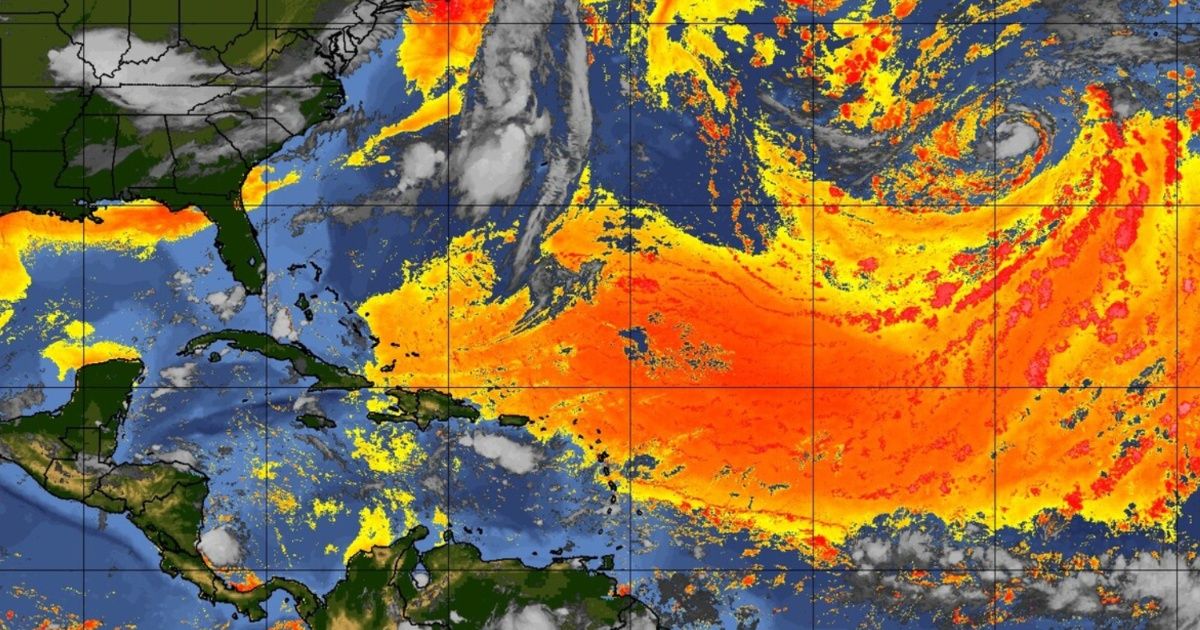
This week, a massive cloud of Sahara dust began to envelop Florida and the Gulf Coast, with its effects expected to persist through the following week, as meteorologist Matt Devitt reported.
"The Sahara dust is here. The year's largest columns have arrived in Florida and the Gulf Coast and will continue into next week," Devitt noted.
This phenomenon did not come without forewarning. Devitt had already alerted residents on Monday that substantial plumes of Sahara dust were set to drift over Florida and the Gulf in a span of 10 days. He reminded that July typically marks the peak of Sahara dust season in the United States.
Health and Environmental Effects
Devitt also cautioned about poor air quality. The dust can create unhealthy conditions where concentrations are higher, posing risks particularly to individuals with asthma, chronic bronchitis, or allergies.
Meteorologist Irene Sans from the Florida Public Radio Emergency Network (FPREN) indicated that this could be the first significant Sahara dust event of the season for Florida, as earlier layers were not dense enough to cause substantial weather changes.
Current Conditions and Forecast
The dust started affecting the southern part of the state on Wednesday and reached Central Florida by Thursday. Hazy conditions are expected in the northeastern part of the state through Thursday and Friday.
Residents will face extreme heat combined with humidity. With the dust present, temperatures could soar between 95°F and 99°F (35°C and 37°C), with heat indexes reaching up to 110°F (43°C).
Rainfall chances will drop to a mere 20-30%, removing the relief usually provided by afternoon storms.
The FPREN summarized the outlook: "Prepare for the dust... and expect multiple waves in the coming days. Less rain. Much more heat. Respiratory concerns."
Positive Aspects of Sahara Dust
Despite the challenges, the phenomenon has a significant positive effect: it suppresses hurricane development in the Atlantic by introducing dry, dusty air that weakens or inhibits tropical storm formation.
Additionally, it creates spectacularly vivid sunrises and sunsets and carries phosphorus and other nutrients that fertilize the Amazon rainforest.
However, on Florida's Gulf Coast, the same nutrients that enrich the Amazon can fuel algae blooms and red tide when deposited in the ocean.
Upcoming Events
This current episode is not isolated. Another dust wave, described as denser, is expected to reach the Texas coast between Tuesday and Wednesday of next week, indicating that the phenomenon will persist for several more days throughout the Gulf region.
Historically, in July 2024, conditions were 60% to 70% dustier than usual, with a dust cloud estimated to be the size of the contiguous 48 United States, one of the largest Sahara dust events ever recorded by the National Oceanic and Atmospheric Administration (NOAA).
Understanding Sahara Dust Impact on Florida
What are the health risks associated with Sahara dust?
Sahara dust can lead to unhealthy air quality, particularly affecting individuals with asthma, chronic bronchitis, or allergies due to higher concentrations of dust particles.
How does Sahara dust affect weather conditions?
Sahara dust can result in extreme heat and reduced chances of rainfall, as well as creating vivid sunrises and sunsets. It also suppresses hurricane formation in the Atlantic.
Why is the Sahara dust beneficial to the environment?
The dust carries nutrients like phosphorus that fertilize the Amazon rainforest, and its dry, dusty air inhibits the development of hurricanes.