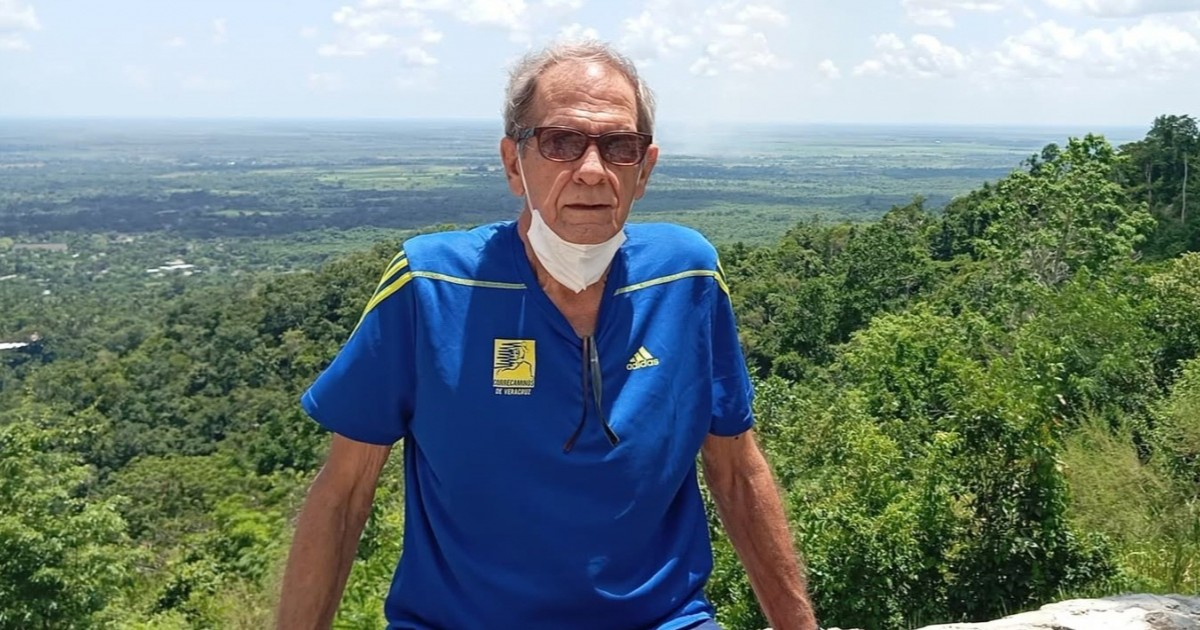
René Navarro Arbelo, a legendary figure in Cuban sports broadcasting, has taken to Facebook to share a poignant message about Cuba's current state. He describes it as "a mental and physical torture that hastens our survival instincts and leads us to a dire crossroads: to live or to die."
Titled "Cuba Today," his message is unambiguous. "Every day, sadness overwhelms us," writes the broadcaster, who turned 80 in December 2025 and has long been both an observer and a victim of the island's declining living conditions.
The Burden on the Elderly
Navarro highlights how the elderly bear the brunt of these struggles: "We, the old, suffer much more from these unimaginable shortages of all kinds." Yet, his concerns extend beyond his own age group, warning that "younger generations and children will also be permanently scarred by these hardships."
His message culminates with two questions that encapsulate the despair felt by millions of Cubans: "When will this nightmare end? Will there be compassionate and humane individuals advocating for a real solution to this conflict?"
A History of Outcry
This post is not an isolated incident. Navarro has been vocal on social media for years about his own situation and that of the country. In May 2019, he publicly questioned his pension: "Is it fair that after 43 years of work, 38 of them at ICRT, I receive a paltry salary?" He even disclosed having to sell bottles and plastic containers to help feed his household.
During the pandemic in November 2020, he reported waiting six hours in line at a pharmacy for Enalapril, a basic medication for hypertension. By January 2024, during an interview with CubaNet, he revealed selling his car to avoid starvation, surviving on a meager retirement of just 1,733 Cuban pesos a month. "What can you do with 1,733 pesos after so many years of work? That pension is unjust and impacts many, including a significant number of sports legends," he lamented.
The Stark Contrast
The irony is stark: in October 2022, the Cuban Institute of Radio and Television awarded him the National Television Prize for Lifetime Achievement, the highest accolade in the field, even as he lived in dire poverty.
Navarro's outcry comes at a time when Cuba is experiencing its worst crisis in decades. As of 2026, 33.9% of Cuban households report chronic hunger, blackouts last between 20 and 25 hours daily in several provinces, and only 30% of essential medications are available in the country.
Retirees are particularly hard-hit, with 39% receiving the minimum pension of 1,528 pesos monthly, less than $10, and only half managing to eat once or twice a day. In Cuba, old age often equates to poverty and neglect, a reality the regime has acknowledged by admitting that 2026 would be "a difficult year."
Navarro is not the only cultural icon to denounce these conditions recently, but few voices carry the symbolic weight of the man who chronicled Cuba's greatest sports achievements across eight Olympic Games, 11 Pan American Games, and nine Central American Games.
"When will this nightmare end?" Navarro asks. It's the very question that resonates with millions of Cubans who once heard him cheer "Go Cuba, go" and now struggle to survive in an island that has forsaken them.
Understanding Cuba's Current Challenges
What are the primary issues facing Cuba in 2026?
Cuba faces severe challenges in 2026, including widespread hunger, prolonged blackouts, and a significant shortage of essential medications.
How does the economic situation affect Cuban retirees?
Cuban retirees are severely affected by the economic situation, with many receiving pensions insufficient to cover basic needs, leading to poverty and malnutrition.
What actions has René Navarro taken to highlight these issues?
René Navarro has been outspoken on social media, questioning his pension, revealing personal hardships, and consistently calling attention to the nation's struggles.