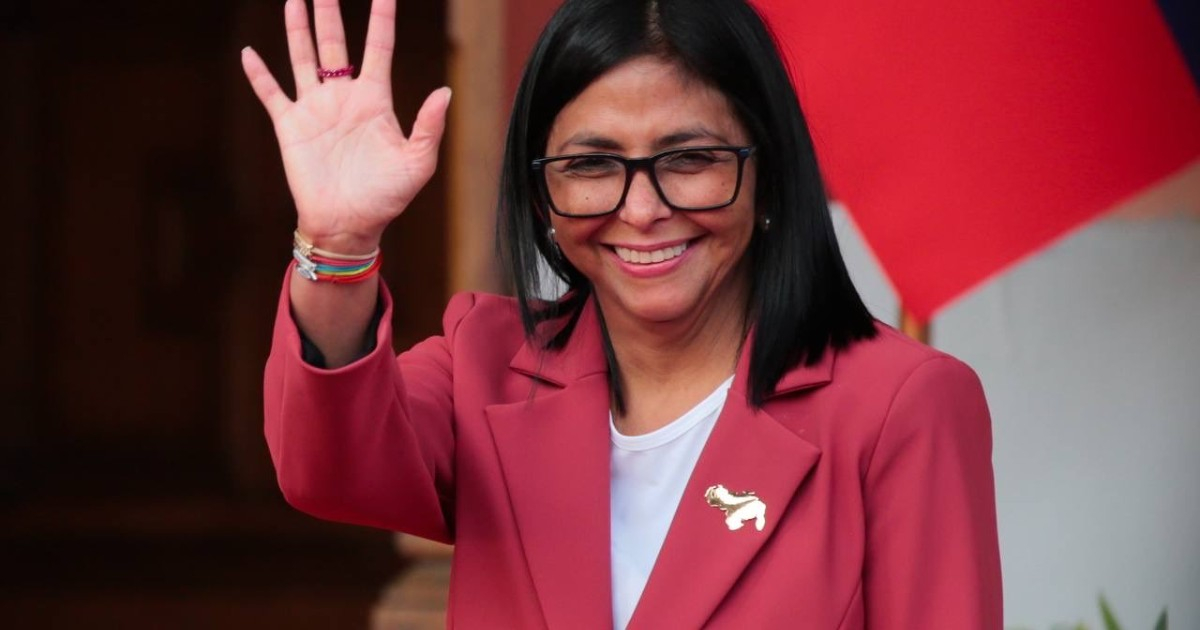
On Wednesday, Delcy Rodríguez announced the new Regulations of the Organic Hydrocarbons Law, marking a significant shift in Venezuela's oil policy, the most substantial in over 20 years. This move opens the door for private investment in the sector for the first time since the inception of the Chavista era.
The announcement, broadcast on the state-run Venezolana de Televisión, ends an 83-year legislative cycle. The new regulations replace 1,389 resolutions that have been in place since 1943, following a reform approved by the National Assembly on January 29, 2026.
Historic Shift in Venezuela's Oil Industry
During the event, Rodríguez declared, "After 83 years, we have signed the regulation of the Organic Hydrocarbons Law. Over this period, 1,389 resolutions were studied and analyzed. This regulation aims to transform Venezuela's reserves into development for our country," as broadcast by VTV.
On her social media account, the acting president elaborated, "We have taken a historic step for Venezuela's future. After 83 years, we have enacted the Regulation of the Organic Hydrocarbons Law, a tool that will allow us to turn our vast energy reserves into growth, development, and prosperity for our people."
This reform represents one of the most profound changes in the industry since the nationalization in 1976 and the laws instituted by Hugo Chávez, which centralized nearly all control of oil exploration, production, and commercialization in PDVSA.
Changes Under the New Legal Framework
The new regulations introduce structural changes that disrupt the model that has been in place for over two decades. Private companies can now manage primary activities—such as exploration, extraction, and transportation—at their own cost and risk, a role previously exclusive to the state.
In joint ventures, a minority private partner may handle operational management, although PDVSA retains majority ownership. Additionally, private firms are now permitted to directly market the produced oil, breaking the state's monopoly in this phase of the supply chain.
Fiscally, a maximum royalty rate of 30% is maintained, but the Executive can adjust it based on project specifics. Several taxes and special contributions, including those linked to high oil prices, have been eliminated.
Another significant change is the introduction of international arbitration mechanisms to resolve contractual disputes, a long-standing demand from foreign companies that left Venezuela after the Chavista expropriations.
Paula Henao, the Minister of Hydrocarbons, participated in the event and explained that the new text "will organize and control the proper application of the law," covering "the entire hydrocarbon value chain" and laying "the foundation for maximizing the recovery of all reserves in our territory."
Oil as a Lever for Reconstruction
Rodríguez explicitly linked the resources generated by the reform to the reconstruction efforts following the double earthquake on June 24, which resulted in at least 3,811 deaths, over 16,740 injuries, and nearly 18,000 displaced people, according to official figures.
"There will also be resources for the recovery and reconstruction of our homeland following the seismic doublet of June 24," she asserted during the promulgation ceremony.
The Political Context Behind the Reform
Rodríguez assumed the interim presidency on January 5, 2026, two days after Nicolás Maduro was captured by U.S. forces, and promptly prioritized opening the energy sector as a central pillar of her administration.
In May, U.S. Secretary of State Marco Rubio confirmed that since January 3, over 10 million barrels of Venezuelan oil have reached U.S. soil. The revenues are deposited in an account overseen by the Treasury Department and audited by KPMG.
"For the first time, that money is not being stolen. It is benefiting the Venezuelan people," Rubio stated in a report on Venezuelan oil.
Venezuela's production reached 1.2 million barrels per day in April 2026, with exports climbing to 1.25 million in June, the highest level in seven years. ExxonMobil, which exited Venezuela in 2007 after Chavista expropriations, is currently negotiating extraction rights in up to six fields, with CEO Darren Woods describing Venezuelan oil as "an immense resource now more freely open to the world."
FAQs on Venezuela's New Oil Policy
What is the significance of the new Hydrocarbons Law in Venezuela?
The new law marks a major shift in Venezuela's oil policy by allowing private investment in the sector for the first time in over two decades, aiming to transform the country's vast energy reserves into economic development.
How does the new regulation impact private companies?
Private companies can now manage primary activities such as exploration and extraction independently and are allowed to market the oil directly, breaking the state's monopoly on these phases.
What are the fiscal changes introduced by the new regulations?
The regulations maintain a maximum royalty rate of 30%, but allow for adjustments based on project specifications and eliminate several taxes and special contributions tied to high oil prices.