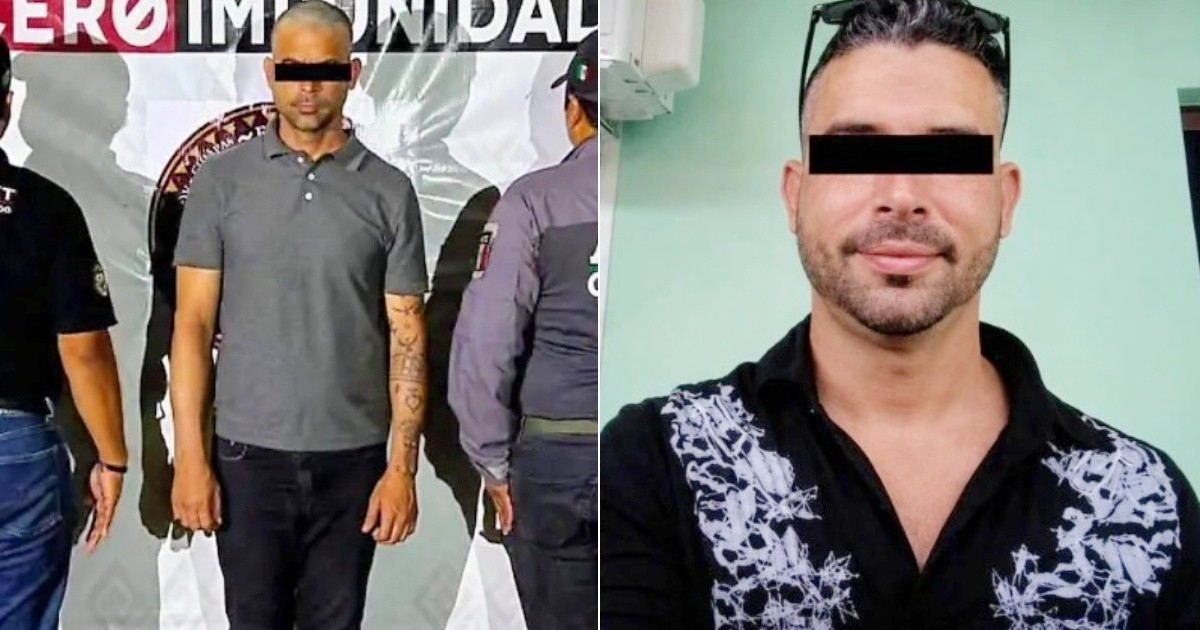
Yadriel Corona, a Cuban national, has been apprehended in Tapachula, Chiapas, accused of the murder of Lizbeth Bustos Vera. Reports from regional media suggest he was caught in the early hours of Monday while allegedly attempting to flee Mexico for Central America using fake documents.
The arrest was the culmination of a joint operation by the Ministerial Police of Quintana Roo and authorities in Chiapas. Upon consulting the Plataforma México system, Chiapas authorities discovered that Corona was wanted by the Quintana Roo State Attorney General's Office (FGE) for the crime of femicide, as reported by Caribe Peninsular. They promptly notified the Quintana Roo prosecutor's office, which then dispatched officers to Chiapas to facilitate his transfer.
The Life of Lizbeth Bustos Vera
Lizbeth, aged 43, hailed from Minatitlán, Veracruz, and held dual Mexican and Canadian citizenship. She had traveled to Mexico with her two young children to handle inheritance matters while her husband stayed in Canada. On June 16, she informed her family in Veracruz of her plans to return to Canada with her partner, but was never heard from again.
Concerned by the lack of communication, her family visited her residence on Bacalar Street, near the intersection with Kohunlich Avenue, in Cancun's Supermanzana 46. Unable to find her, they filed a formal report with the FGE on June 24, triggering the issuance of search bulletin number 557/2026.
Discovery of Lizbeth's Body
On the night of July 5, officers from the Ministerial Police's Femicide Unit searched the victim's home and noticed irregularities in the backyard. Using shovels and picks, forensic experts and officers unearthed Lizbeth's body, which was in an advanced stage of decomposition. She was buried in a clandestine grave about 30 centimeters deep and two meters long, covered with concrete blocks, cement, and sand.
Lizbeth's family members were present during the recovery efforts and were able to retrieve some of her personal belongings. The FGE also seized a Volkswagen Vento car believed to be owned by the victim.
Actions of the Suspect Post-Crime
According to the FGE of Quintana Roo, the accused allegedly assaulted Lizbeth with blunt force and a knife before burying her in the improvised grave. After committing the crime, the suspect reportedly used Lizbeth's cell phone to send WhatsApp messages to her family, creating the illusion that she was returning to Canada, thereby buying time to escape Quintana Roo.
Simultaneously, he allegedly withdrew funds from her bank accounts and attempted to destroy evidence linking him to the crime, as noted by Caribe Peninsular.
The investigation suggests that Lizbeth's intention to reunite with her husband in Canada could have been a motive. Additionally, there are inquiries into whether the suspect sought to claim ownership of her property and access financial support sent from Canada for her children's upkeep.
Profile of the Accused
Unofficial sources identify Yadriel Corona as hailing from Cienfuegos, Cuba, where he worked as a barber. He had been romantically involved with Lizbeth for approximately seven months and lived in the residence where her body was discovered. At the time of his arrest in Tapachula, he was allegedly carrying false documentation in an attempt to cross into Central America.
Next Steps in the Legal Proceedings
Yadriel Corona is set to appear before a Control Judge in Cancun, who will decide his legal fate. If found guilty of femicide, he could face a prison sentence of up to 55 years, according to Caribe Peninsular.
This incident is part of a troubling trend of gender-based violence involving Cuban nationals accused of crimes against their partners in Mexico. In May 2026, another 50-year-old Cuban man was formally charged with femicide after fatally stabbing his ex-partner in a Cancun bar. Independent observers OGAT and YSTCC reported that in 2025, at least 12 Cuban women were victims of femicide outside the island, with Mexico being one of the countries with the highest incidence.
Understanding Femicide in Mexico
What is femicide?
Femicide is the intentional killing of women because of their gender, often linked to domestic violence, misogyny, and discrimination.
How prevalent is femicide in Mexico?
Mexico has one of the highest rates of femicide in the world, with numerous cases reported each year, reflecting a significant societal issue.
What are the legal consequences for femicide in Mexico?
The legal consequences of femicide in Mexico can include long prison sentences, often up to 60 years, depending on the circumstances and jurisdiction.