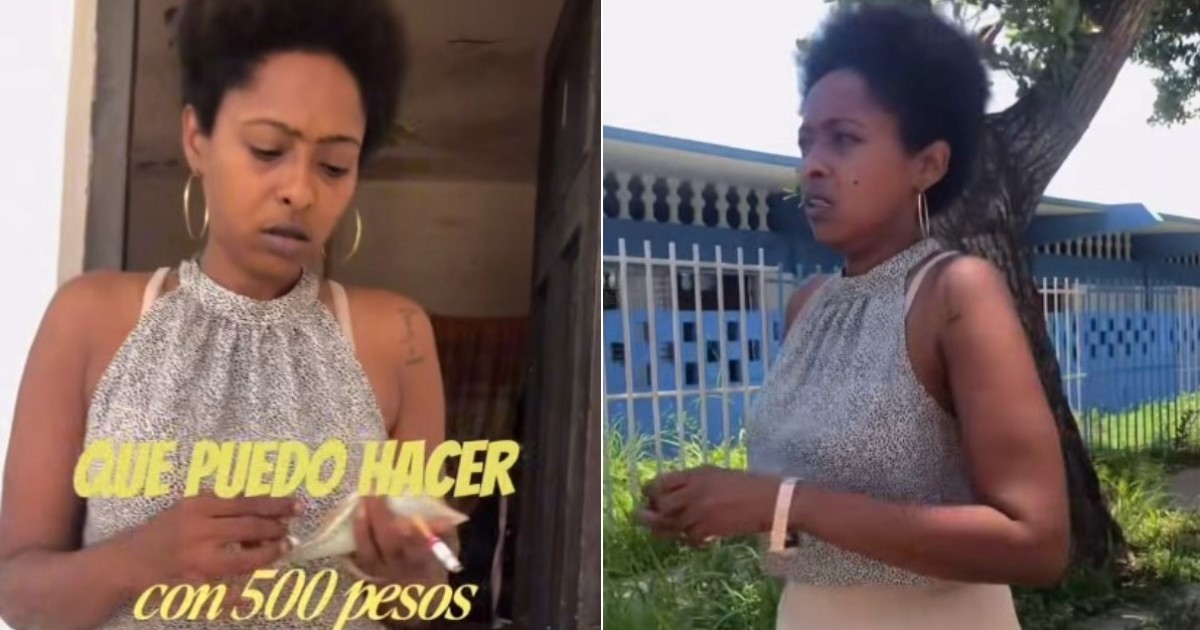
In a compelling example of resourcefulness, a Cuban mother demonstrated how to "stretch" a limited budget to make ends meet in her daily life.
With just 500 Cuban pesos—less than one dollar in the informal exchange market—Dayana Nda purchased a pound of peanuts, roasted them over charcoal, and managed to sell 30 cones at 50 pesos each, tripling her investment to 1,500 pesos.
The one-minute video she posted on Facebook starkly illustrates Cuba's economic crisis, while also highlighting the resilience of ordinary citizens.
Dayana's Daily Hustle
"I woke up today feeling overwhelmed and thought, what can I do with 500 pesos?" the video begins. Dayana explains that necessity pushed her into action: "Today, in this country, it's crucial to find ways to resolve the situation as much as possible to put food on the table."
She is quick to clarify: "Let no one say I'm romanticizing poverty. This is straightforward, folks."
The video captures the entire process of roasting and preparing the peanut cones, a small business that, as she confesses, has always helped her out of tight spots. She ends with a motivational call: "Don't just sit there; you can always find a way to feed your kids. You can start with 500 pesos."
Community Reactions and Risks
In the comments, Dayana provides further details, explaining that she cooked the peanuts with charcoal and sold them from her doorstep, noting that "thirty cones sell quickly."
Her life philosophy for moving forward is simple: "Fight from any corner. We can't just sit around. It's understandable that many feel overwhelmed, but we're here to find solutions."
The video garnered nearly 37,000 views and sparked a wave of reactions blending admiration, solidarity, and a sobering warning.
A viewer pointed out the harsh reality: "Be thankful an inspector didn't catch you! A fine would have been a real tragedy, no romanticism." The risk is genuine: Decree-Law 91/2024 imposes fines up to 72,000 pesos for selling without a license, a sum 22 times greater than the monthly minimum wage of 3,210 pesos.
Other comments paint a picture of a community acknowledging the hardships but praising initiative. "To those who beg, take note: a mother fighting for her children," one wrote.
Another was more direct: "Look for options, not excuses. People like you deserve help; it's easy to make videos asking for food, money, and even solar panels."
A third person shared their own experience: "I sold coffee on the streets during the coronavirus. Thanks to that, I had a lot of customers and survived comfortably."
There were also deeper reflections. "We all know the need and misery on the island. But what I admire about you is that you don't cry or ask for anything; you find ways to survive. That's admirable," wrote a user.
Another phrase captured the collective sentiment: "Life sometimes puts us in tough situations, and that's when the warrior inside us emerges."
Context of a Struggling Nation
The backdrop of this video is grim. According to the 8th Study on the State of Social Rights in Cuba, published Tuesday, 89% of the Cuban population lives in extreme poverty, and seven out of ten have skipped breakfast, lunch, or dinner due to lack of money or food.
To meet basic needs, an individual requires at least 96,000 pesos monthly, 30 times the minimum wage the regime touts as progress.
A mother having to resort to roasting peanuts over charcoal to feed her family is not a stroke of spontaneous ingenuity: it is a direct consequence of decades under a system that has failed to provide the bare essentials for its people.
Understanding Cuba's Economic Hardship
What prompted Dayana to start her peanut business?
Dayana was driven by necessity, looking for ways to provide for her family amidst the economic difficulties in Cuba.
What are the risks of selling without a license in Cuba?
Selling without a license can result in fines up to 72,000 pesos, which is a significant financial burden, especially given the low average income in Cuba.
How does Dayana's video reflect the broader economic situation in Cuba?
The video highlights the extreme poverty and resourcefulness of Cubans, illustrating how many are forced to find creative solutions to meet basic needs.