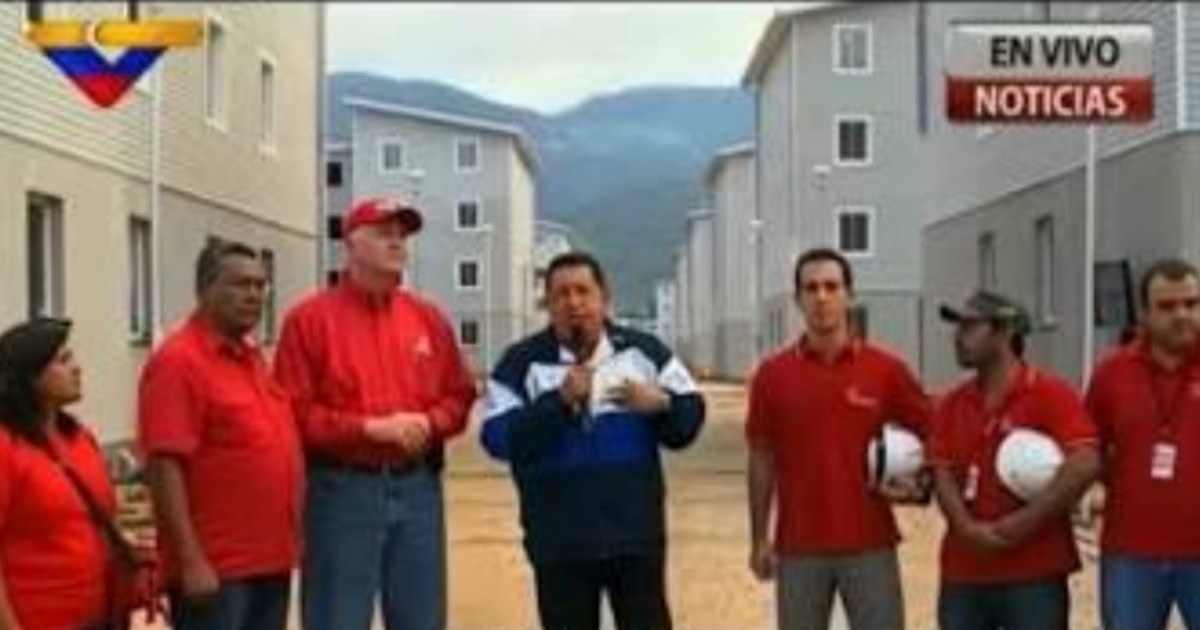
Back in 2012, Hugo Chávez stood proudly on a stage in Playa Grande, La Guaira, to inaugurate the Hugo Chávez Frías Housing Complex. This project, developed with Turkish collaboration, was envisioned as a beacon of hope, suggesting that even the poorest could achieve dignified living conditions.
Fast forward to 2026, and this very complex has turned into a field of rubble following devastating earthquakes measuring 7.2 and 7.5 that rocked Venezuela on June 24.
The Aftermath of Disaster
Johan Álvarez, a correspondent for VPItv, surveyed the destruction just 13 days after the quake. His findings were grim: nearly 80% of the approximately 190 structures in the complex had collapsed entirely.
Álvarez highlighted the deficiency in construction standards, stating, "This urban development of at least 190 buildings saw almost 80% of the constructions collapse completely." He also noted the poor adherence to international standards and the criticisms the buildings had faced.
Questionable Construction Practices
The residential area, built by the Turkish company Summa under a 2011 bilateral agreement, was home to around 3,400 families. A report by Milenio Televisión revealed the use of lightweight materials like styrofoam, aluminum, and thin sheets instead of concrete and steel, lacking proper foundations and structural supports.
"You can see how everything here is plastic; there are no foundations below, just a very thin layer of material," described the Milenio TV reporter while showing the ruins.
Unfulfilled Promises and Tragic Losses
During its inauguration, Chávez praised the project as a triumph of international cooperation, thanking Turkish efforts in bringing technology and machinery to build the seaside complex. However, what he omitted was that the initiative stemmed from his personal admiration of Summa’s work in Libya, and that these constructions never met Venezuelan seismic standards, as documented by Armando.info.
The promise of "earthquake-resistant" housing turned out to be one of the most costly deceptions of the Chávez era. Emanuel Figueroa, a resident of the complex, tragically lost his wife and daughter in the disaster.
"They assured us these homes would be strong, earthquake-resistant, and we believed them," Figueroa expressed in the Milenio TV report.
Now without his family and home, Figueroa is no longer a government supporter. His warning is stark: "Don't believe in empty promises, or you’ll end up like us. We thought this was going to be good when it wasn't. The poorest are once again left without homes, and most without families."
Corruption and Accountability
The collapse of the Hugo Chávez Housing Complex has reignited discussions about businessman Alex Saab's contracts with the Great Housing Mission of Venezuela, a program linked to contracts marred by documented irregularities, as reported by Infobae.
Official figures from the earthquake report over 3,500 fatalities and 16,740 injuries, while the UN estimates more than 50,000 people missing. In La Guaira, the hardest-hit area, over 17,000 individuals were left homeless after the collapse of 250 buildings.
Key Questions About the Housing Complex Collapse
What caused the collapse of the Hugo Chávez Housing Complex?
The collapse was primarily due to the structures' failure to meet international construction standards, using lightweight materials without proper foundations.
How many people were affected by the earthquakes in Venezuela?
The official report documented over 3,500 deaths and 16,740 injuries, with more than 50,000 individuals reported missing by the UN.
Who was responsible for the construction of the housing complex?
The complex was constructed by the Turkish company Summa as part of a bilateral agreement with Venezuela, initiated by Hugo Chávez.