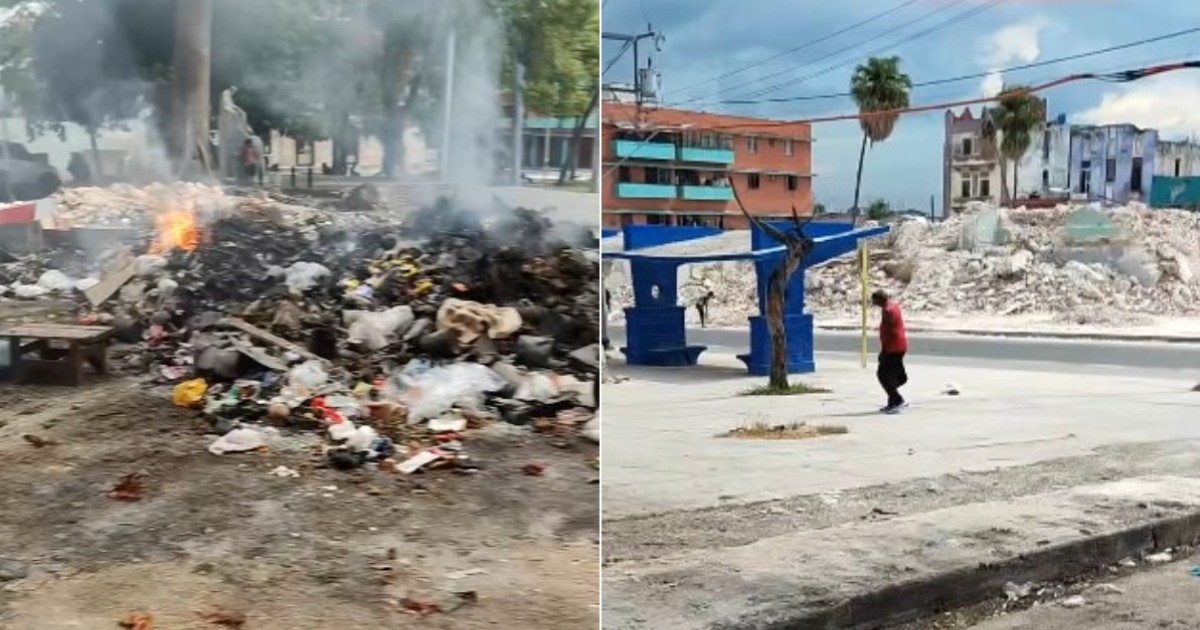
A video shared by Danny González La Rosa on Facebook, captioned "This is Havana now...", reveals a stretch of Centro Habana that resembles a conflict-ridden area.
The footage, which has garnered nearly 31,000 views, depicts shattered pavement riddled with potholes and sinkholes, heaps of burning trash emitting smoke, and piles of rubble where buildings once stood.
Commenters identified the scene as Belascoaín Street between Estrella and Maloja, opposite the vacant lot where the Instituto Superior de Diseño (ISDI) building once stood. This structure was demolished by a state company in March following years of partial collapses. The resulting debris remains piled on the lot, adding to the scene of devastation.
Responses to the video range from sorrow to outrage.
Comparisons to Global Disasters
Many users equated the imagery to war zones or natural disasters: "I thought it was Afghanistan or Venezuela after an earthquake," one user remarked. Another sarcastically noted, "I didn't know there was an earthquake in Havana." A third user stated bluntly, "It looks like a war zone, it's painful to watch these images!"
Comparisons to Haiti surfaced in numerous comments. "It's looking more like Haiti every day," one person wrote. Another added, "It reminded me of neighborhoods in Haiti; all that's missing are the street gangs, unless they're already there."
Political Undertones and Frustration
Several comments highlighted the political undertones of the situation. "Sad and shameful images, this decay has been ongoing for years. With the money stolen by Gil and his associates, we could have repaired buildings, power plants, and waste collection vehicles," one user stated, referring to former Economy Minister Alejandro Gil Fernández, who was sentenced to life imprisonment in December for corruption and espionage.
Another user challenged those blaming the embargo with a rhetorical question: "What does this have to do with the blockade?"
Public Health Concerns Amid Waste Crisis
The visible fires in the video are not isolated incidents. The garbage collection crisis in Havana has left only 44 of 106 collection trucks operational due to fuel shortages, resulting in 23,814 cubic meters of uncollected waste daily.
In light of this breakdown, open-air burning of trash has become common practice in the capital. The government has warned that the smoke poses "respiratory risks, neurological disorders, cancer, and exacerbation of pre-existing conditions like asthma."
One local resident shared her experience: "This smoke is driving me crazy, just like everyone else with respiratory issues, but soon, none of us will be left."
Near this area, Centro Habana's streets witnessed protests on June 30 due to power outages exceeding 18 hours, just five days before the video was shared.
In June, the national electricity generation deficit reached a record high of 2,208 MW, leaving nearly 70% of the country without power, with outages lasting up to 28 hours in some Havana neighborhoods.
Understanding the Crisis in Havana's Streets
What is causing the destruction in Havana's streets?
The destruction is primarily due to neglect, poor infrastructure maintenance, and a significant garbage collection crisis exacerbated by fuel shortages.
How has the local community reacted to the state of the streets?
The community's reactions range from grief to anger, with many comparing the area to war zones and expressing frustration over the government's handling of the situation.
What are the health implications of the garbage crisis in Havana?
The open burning of garbage poses serious health risks, including respiratory problems, neurological disorders, and cancer, as well as worsening existing conditions like asthma.