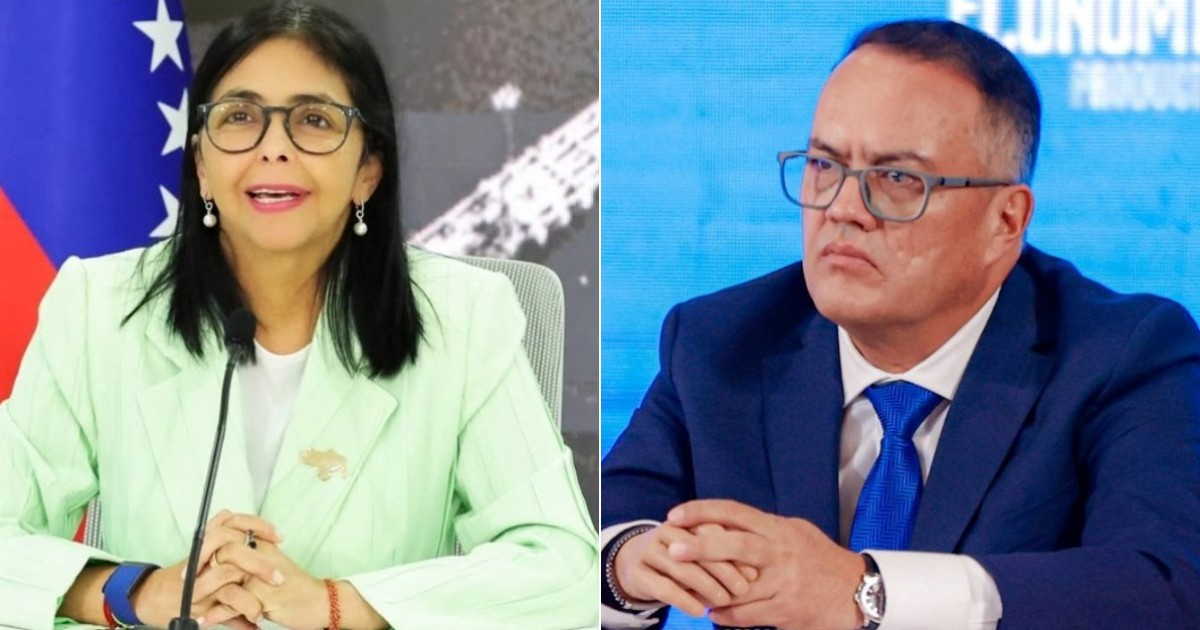
Venezuela’s interim leader, Delcy Rodríguez, has appointed José David Cabello, sibling of the influential chavista figure and Interior Minister Diosdado Cabello, as the head of Petroquímica de Venezuela (Pequiven). This strategic move further solidifies the Cabello family's grip on the nation's critical petrochemical resources.
Rodríguez made the announcement on her official X account, stating, "I have named José David Cabello as the new president of Pequiven, entrusting him with the responsibility to continue strengthening this key company for the petrochemical, industrial, and productive development of our country."
This appointment concludes José David Cabello's 18-year tenure as the head of the National Integrated Service of Customs and Tax Administration (Seniat), a position he has held since February 2008 under the regimes of Hugo Chávez and Nicolás Maduro.
Chavismo's Power Play: The Cabello Dynasty Expands
While Rodríguez frames this as a mere personnel shift, it represents a strategic enhancement of the chavista power structure. With this new role, the Cabello family now holds significant influence over the Ministry of Interior (Diosdado), the Ministry of Tourism (led by Diosdado’s daughter, Daniella, since February), and the state-run petrochemical enterprise.
José David Cabello is far from a technocratic choice. In May 2018, the U.S. Department of the Treasury’s Office of Foreign Assets Control (OFAC) sanctioned him for corruption, extortion, and money laundering through Seniat, alleging that he shared illicit profits with his brother Diosdado. Canada has also imposed sanctions on him for corruption and human rights abuses.
Implications for U.S. Energy Partnerships
The prospect of a sanctioned official like José David Cabello taking the helm of Pequiven raises serious questions regarding the feasibility of negotiations with companies such as Chevron, ExxonMobil, and Shell. These discussions, conducted under Rodríguez's interim government, aim to open Venezuela's energy sector to foreign investment amidst collaboration with the U.S. administration led by President Donald Trump.
Venezuela's Turbulent Times: Leadership Amidst Crisis
Rodríguez has been serving as interim president for six months following the apprehension of Nicolás Maduro by U.S. forces on January 3. Venezuela is currently grappling with an unprecedented seismic disaster: the June 24 earthquakes resulted in over 3,535 fatalities and 16,740 injuries, according to official figures, leaving tens of thousands homeless.
On the same Tuesday, Rodríguez announced additional changes within the economic cabinet. She appointed Calixto Ortega Sánchez, formerly the vice president of economic affairs and Venezuela's representative to the International Monetary Fund, as the president of Banco de Venezuela. Alejandro Puglia was named to lead the International Center for Productive Investment.
To fill José David Cabello's vacancy at Seniat, Rodríguez appointed Román Maniglia, previously the president of Banco de Venezuela, tasking him with enhancing revenue collection, fiscal discipline, and economic development.
These shifts follow the July 5 appointments, where Rodríguez named engineer Francisco Garcés as the Minister of Transportation, replacing Jacqueline Faría, who was assigned to oversee the restoration of homes and infrastructure damaged by the earthquakes.
The pattern is unmistakable: as Venezuela faces its most severe seismic catastrophe in over a century, Rodríguez continues to rearrange the state’s economic and strategic power in favor of the chavista inner circle, with the Cabello family emerging as the chief beneficiaries.
Understanding the Impacts of Venezuelan Leadership Changes
What is the significance of José David Cabello's appointment to Pequiven?
José David Cabello's appointment to Pequiven is significant as it strengthens the Cabello family's control over Venezuela's strategic petrochemical resources, further consolidating their power within the chavista regime.
Why are José David Cabello's sanctions relevant to his new role?
The sanctions imposed on José David Cabello by the U.S. and Canada for corruption and human rights violations raise concerns about the legality and ethical implications of his leadership in international energy negotiations.
How does Rodríguez's leadership impact Venezuela during the current crisis?
Delcy Rodríguez's leadership during the ongoing seismic disaster involves significant cabinet changes to strengthen the chavista power base, potentially prioritizing political alliances over addressing the humanitarian crisis effectively.