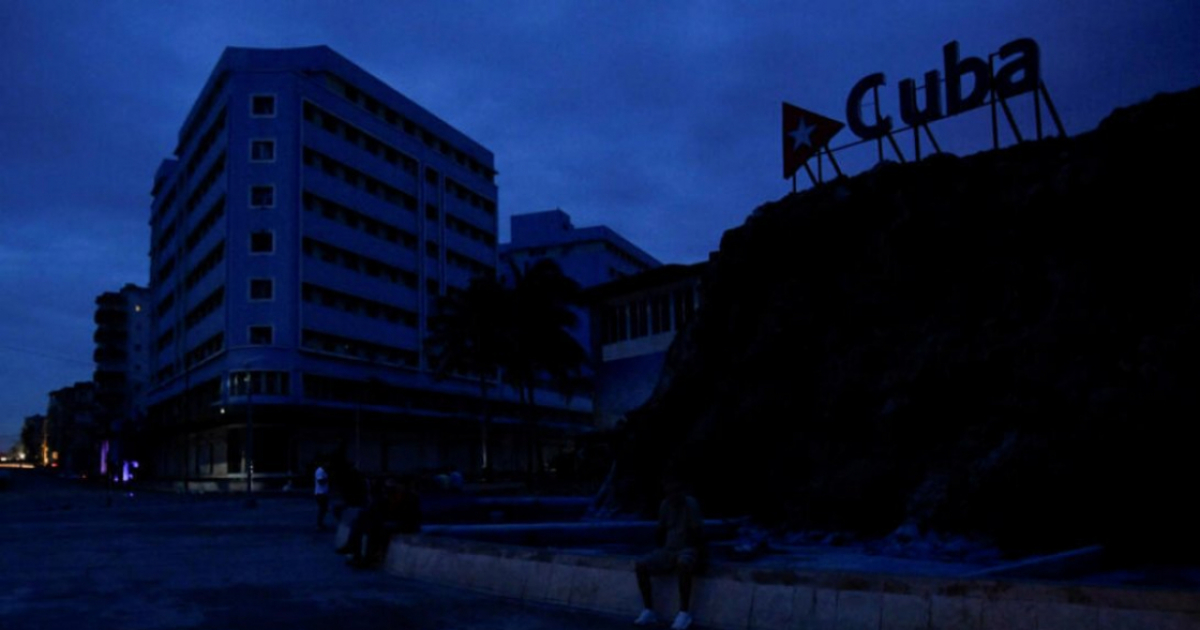
The U.S. Embassy in Havana issued a security alert on Monday following a complete shutdown of Cuba's electrical grid. This incident, which occurred at 12:17 PM local time, left the entire island without power and caused widespread disruptions in cellular and internet services across most provinces.
In its official announcement, the diplomatic mission highlighted that, according to Cuban state media, "the cause of the blackout and the timeline for restoration remain unknown." The embassy urged all U.S. citizens currently in Cuba or planning to visit to take immediate precautionary measures.
Growing Instability of Cuba's Power Network
The alert emphasized that Cuba’s electrical network "is becoming increasingly unstable," marking the seventh nationwide blackout in the last 18 months. Scheduled outages are a daily occurrence, while unscheduled ones continue to affect the country with increasing frequency and duration.
According to a press report, this marks the third complete blackout of 2026 and the eighth since late 2024. The series of national outages began on October 18, 2024, when the Antonio Guiteras thermoelectric plant's failure triggered the first total disconnection of the National Electroenergetic System (SEN).
Underlying Causes of the Electrical Crisis
The root causes are structural. The Antonio Guiteras plant, Cuba's largest thermoelectric facility, has been operating for decades without major maintenance since 2010. Further complicating matters, Venezuela halted its oil shipments to Cuba in January 2026, leading to the shutdown of 106 distributed generation plants and the loss of approximately 890 MW of power.
At the time of Monday's collapse, at least nine of the country's 16 thermoelectric units were not operational. The previous day, the Electric Union (UNE) had predicted a record shortfall of up to 2,230 MW during peak hours, with only 935 to 1,050 MW available against a demand of 3,100 MW. This meant that roughly 70% of the national territory was already experiencing scheduled outages before the total blackout.
In response to the outage, UNE announced the implementation of microsystems nationwide, but did not specify when services would be fully restored. The blackout also sparked a wave of mockery and criticism on social media directed at UNE, while a member of the Communist Youth attempted to blame the energy crisis on Donald Trump's administration.
U.S. Embassy's Recommendations for Preparedness
The embassy advised its citizens to keep phones and battery banks charged, have flashlights with spare batteries ready, store water and non-perishable food, and prepare to meet medical needs without electricity, including devices that require power and medications needing refrigeration.
This is the seventh security advisory issued by the U.S. diplomatic mission regarding Cuba's energy crisis in 2026, following alerts on February 3, March 4, March 16, March 20, April 30, and May 15. The longest blackout of the series, recorded in March 2026, lasted for 29 hours and 29 minutes in some areas, while in certain provinces, it extended for several days.
Frequently Asked Questions about Cuba's Electrical Grid Collapse
What caused the recent blackout in Cuba?
The exact cause of the recent blackout in Cuba is unknown, as reported by Cuban state media. However, structural issues and the lack of maintenance at major power plants, combined with Venezuela halting oil shipments, have contributed to the instability of the electrical grid.
How should U.S. citizens in Cuba prepare for blackouts?
The U.S. Embassy recommends citizens keep electronic devices and battery banks charged, have flashlights with spare batteries available, store water and non-perishable food, and prepare for medical needs without electricity, such as devices requiring power and refrigerated medications.