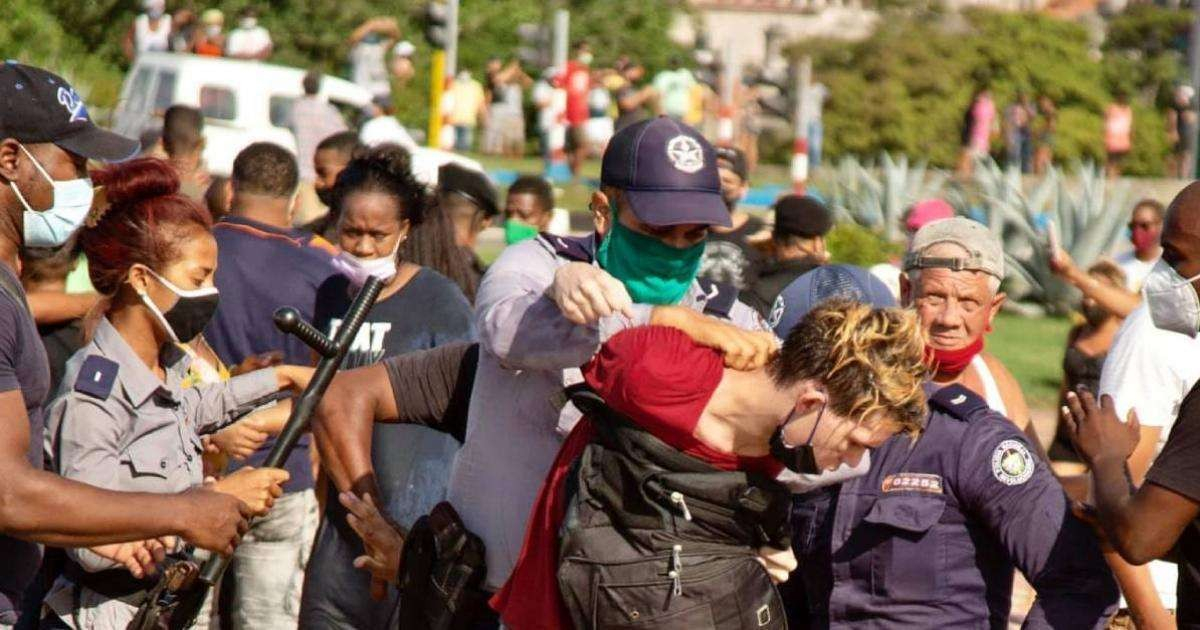
Republican Senator Tom Cotton reflected on Monday on the upcoming fifth anniversary of the significant July 11, 2021, protests in Cuba, emphasizing that thousands of citizens peacefully took to the streets demanding freedom and a better future after enduring decades of oppression.
"As we approach the fifth anniversary of the July 11, 2021 protests in Cuba, let us remember why thousands of ordinary Cubans peacefully marched throughout the country: to demand basic freedoms and opportunities for themselves, their families, and their future, after decades of suffering under a brutal Marxist regime," the legislator expressed on his X account.
Historic Protests Mark a Turning Point
The July 11 demonstrations represented the most significant social upheaval in Cuba since the victory of the Revolution in 1959. The protest began spontaneously in San Antonio de los Baños, Artemisa, and quickly spread to over 70 locations, including Havana, Santiago de Cuba, Matanzas, Holguín, and Palma Soriano.
Thousands of individuals took to the streets chanting "Homeland and Life," "Freedom," and "We Are Not Afraid," highlighting the scarcity of food and medicine, extended blackouts, and the lack of political freedoms.
Immediate Government Crackdown
The regime's response was swift. On the same day, Miguel Díaz-Canel made a televised address, memorable for many Cubans, declaring that "the combat order is given," urging government supporters to confront the demonstrators.
The repression resulted in at least one fatality, Diubis Laurencio Tejeda, who was shot in the back in the Havana neighborhood of La Güinera, and over 1,500 arrests, according to the organization Justicia 11J.
Ongoing Repercussions and Renewed Unrest
Five years later, the legal repercussions of those protests remain. An April 2026 report from Justicia 11J revealed that 338 individuals were still serving sentences related to the demonstrations, while human rights organizations reported 1,281 political prisoners in Cuba as of May this year.
The anniversary coincides with growing social discontent. The worsening energy crisis has sparked renewed protests in various parts of the island. Just this Monday, residents of Jaimanitas took to the streets after more than 24 hours without electricity, chanting slogans like "Down with the dictatorship!" and "This is unbearable!" shortly before the National Electric System experienced another total blackout, the seventh in just 18 months.
Commemorative Events Planned
Activities marking the fifth anniversary of the July 11 protests are being organized both inside and outside of Cuba. In Miami, the Cuban Freedom March organization has called for a gathering on July 11 under the slogan "Actions, not words," while the Cuban Classical Liberal Party announced a series of events from July 9 to 11 in Puerta del Sol, Madrid.
"We commemorate the fifth anniversary of the mass protests in Cuba to demand concrete actions that drive change in the regime," stated Alián Collazo, director of Cuban Freedom March, during the event's announcement.
Key Questions About July 11 Protests in Cuba
What triggered the July 11 protests in Cuba?
The protests were sparked by widespread dissatisfaction with the Cuban government's handling of economic conditions, marked by food and medicine shortages, extended power outages, and a lack of political freedoms.
What was the government's response to the protests?
The government responded with a crackdown, resulting in at least one death and over 1,500 arrests. President Miguel Díaz-Canel called on government supporters to confront protesters, leading to significant repression.
How are the protests remembered today?
The protests are remembered as a landmark moment of resistance against the Cuban regime, symbolizing the population's demand for freedom and better living conditions. Commemorative events continue to be organized to honor the courage of those who participated.