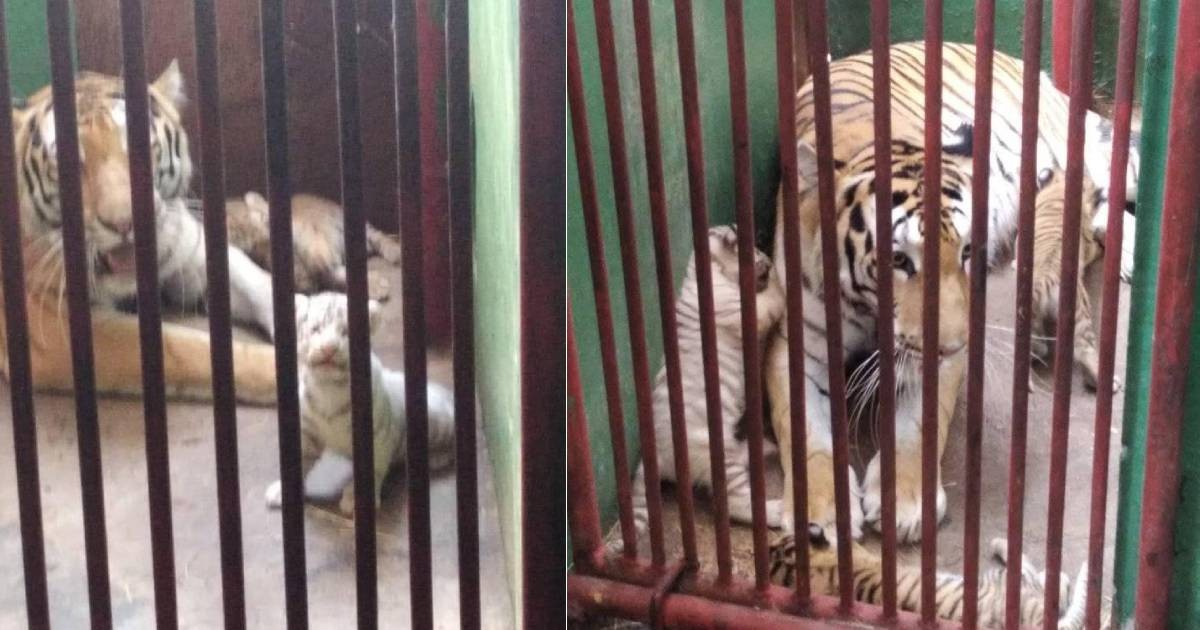
In a remarkable event, the National Zoo of Cuba welcomed the birth of four Bengal tiger cubs, including a highly unusual white one. This occurrence, described by caretaker Ángel Cordero as "a small miracle," comes at a time when the zoo is grappling with severe hardships.
This significant birth was highlighted by Reuters on Monday, emphasizing the stark contrast between the arrival of these new cubs and the daily struggles of a zoo operating with just a fraction of the fuel it requires.
Having dedicated 44 years to the zoo, Cordero expressed his profound excitement witnessing the birth.
"It's only the second time white tigers have been born in Cuba, and I was fortunate to witness it," he stated.
The first white tiger birth occurred in March 2021, alongside the birth of four other Bengal tiger cubs. Given Cuba's deteriorating economic conditions, this recent birth is even more extraordinary.
The white tiger is not a separate subspecies but a rare genetic variant of the Bengal tiger, caused by a recessive gene. Fewer than 200 exist worldwide, predominantly in captivity, with no known wild populations.
Challenges Faced by the Zoo
The joyous news of the tiger births comes as the zoo battles to care for its hundreds of animals amid increasingly challenging conditions. Cordero explained that the zoo requires about 20 liters of diesel daily to transport food to species such as buffaloes, zebras, rhinoceroses, hippos, and large felines, yet it receives only five liters.
The fuel shortage has forced employees to navigate the zoo's 375 hectares using horse-drawn carriages and electric tricycles.
"Everything hinges on fuel. The movement of animals and the delivery of food, which must be transported on wheels, rely on it; there's simply no alternative," Cordero explained.
Broader Impact of Cuba's Energy Crisis
Zoo Director Juan Carlos Santos told Reuters that despite these constraints, the animal population remains stable due to the dedication of the staff and the support from small private businesses providing essential supplies.
The zoo's challenges mirror Cuba's broader energy crisis, characterized by fuel shortages and prolonged power outages affecting numerous state institutions. This year, the National Botanical Garden closed after running out of necessary diesel, and the Camagüey zoo faced allegations of severe neglect and malnutrition among several lions.
Amid this bleak landscape, the National Zoo also celebrated the birth of a dromedary, the first in nearly three decades.
For the zoo's workers, the arrival of the four cubs—particularly the rare white tiger—signifies more than a reproductive achievement: it's an unexpected beacon of hope for a place striving to endure the crisis.
Understanding the Bengal Tiger Births in Cuba
What makes the birth of the white Bengal tiger in Cuba significant?
The birth is notable because white Bengal tigers are extremely rare, resulting from a recessive genetic variation. This is only the second time such an event has occurred in Cuba, making it an extraordinary occurrence amidst the country's economic challenges.
How is the fuel shortage affecting the National Zoo of Cuba?
The zoo receives only a fraction of the fuel it needs, impacting its ability to transport food and manage animal care. This has led employees to use horse-drawn carriages and electric tricycles to cover the zoo's extensive grounds.