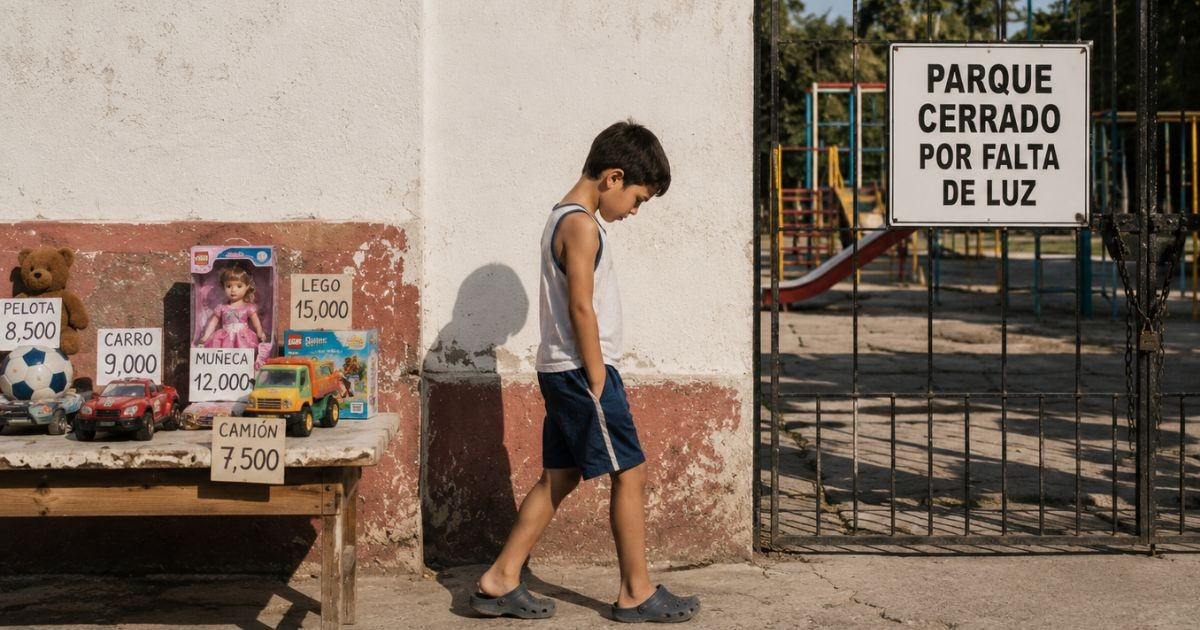
The summer of 2026 has dawned upon Cuba, bringing with it power shortages, a lack of affordable recreational activities, and a school year that concluded earlier than expected.
Research by IPS Cuba reveals that countless children are echoing a common refrain while stuck at home: "Mom, I'm bored."
Estela Reyes, a 28-year-old waitress in Havana, frequently hears this phrase from her eight-year-old son since his vacation began in mid-June.
"It's difficult that they ended the school year early. He's only eight, and sometimes I don't have anyone to watch him while I work. I also don't want him playing outside with neighborhood kids when I'm not around," she told IPS.
Impact of an Abruptly Shortened School Year
The academic year 2025-2026 wrapped up between June 15 and June 30, contrary to the July end date stated by Ministry of Education Resolution 43/2025.
Naima Ariatne Trujillo, the education minister, announced the early closure on July 1 via social media, although she had already hinted at it on television on May 16, citing the energy crisis and logistical constraints.
In the words of Havana photographer Jennifer Suárez, the school year was "a bit chaotic." Late in 2025, a chikungunya outbreak affected students and teachers, and by February 2026, power outages and transportation issues led to numerous teacher absences.
Reyes experienced these challenges firsthand: "Teachers came to class exhausted or didn't show up because of the night-time power cuts. My son was also worn out. I'm sure he couldn't perform at his best."
Struggling Educational System Amidst Crisis
The minister acknowledged how the crisis has burdened education: "After a night without power, getting children to focus in class is challenging. Teachers, facing the same issues with electricity and water at home, struggle to concentrate on teaching."
The government identified between 10,000 and 22,000 students in particularly challenging circumstances, either disconnected from their schools or living in remote areas.
Moreover, parents had to pay exorbitant prices to print school books at private businesses, as over three million textbooks couldn't be produced due to shortages in the publishing industry.
For university students, the situation is equally grim. Leonardo Gómez, a law student at the University of Havana and vice president of his faculty's Student Federation, bluntly told IPS, "This academic year shouldn't have happened, and effectively, it hasn't."
Recreational Activities Out of Reach
With the summer break offering no respite, state-run recreational facilities lie in disrepair, and where private businesses have stepped in, costs are prohibitive.
A family would need 4,000 pesos to visit Jalisko Park in Vedado, which is more than half of the average monthly salary of 6,830 pesos (roughly 12 dollars). A water park in Ciego de Ávila charged 500 pesos for just 30 minutes of children's swimming.
Additionally, Los Caballitos Park in Artemisa reopened under private management, demanding between 100 and 500 pesos per ride.
The basic monthly basket of goods now exceeds 96,000 pesos, around 14 times the average salary, turning any recreational outing into an unattainable luxury for most families.
Angela Hernández, a 74-year-old retired woman in Havana who cares for her granddaughter while her parents work, captured the sentiment of many: "I love spending time with my granddaughter and helping my family, but sometimes I feel too old for this pace, with so many power outages and problems."
Anne Lemaistre, director of UNESCO's Regional Office in Havana, warned in late May that "education in Cuba is at risk due to the current energy crisis," posing "a threat to the future of an entire generation, with long-term consequences."
FAQs on Cuba's Education and Economic Challenges
Why did the Cuban government end the school year early in 2026?
The government cited the ongoing energy crisis and logistical challenges as reasons for ending the school year earlier than planned.
How are Cuban families coping with the lack of affordable recreational activities?
Many families find recreational activities unaffordable due to exorbitant costs and the deteriorating state of public facilities, making leisure a luxury few can afford.
What impact does the energy crisis have on education in Cuba?
The energy crisis leads to frequent power outages, affecting both students' ability to focus and teachers' capacity to conduct effective classes.
What changes have been made to university admissions in Cuba?
Due to the current situation, entrance exams have been canceled, and university admissions will now be based on cumulative pre-university academic performance.