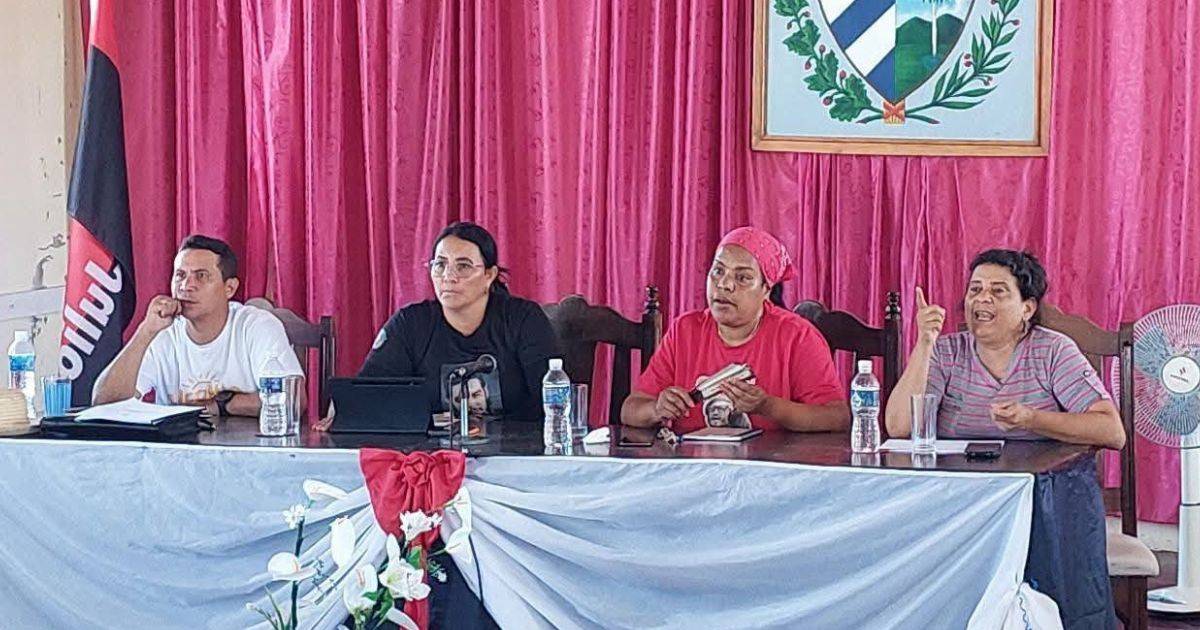
Yanetsy Terry Gutiérrez, the governor of Granma, convened a meeting on Sunday with representatives of small and medium-sized enterprises (SMEs) and self-employed individuals in Manzanillo, urging them to take on greater responsibility for the municipality's challenges. The state-run CNC TV Granma, with reporting by journalist Baldo Alexis Blanco, shared the details of this gathering.
This call to action for the non-state sector comes amid a situation acknowledged by the provincial government as dire. In June 2026, Granma's authorities confessed that they lack the over 400 million pesos required to pay their 111,000 retirees.
During the meeting, Terry Gutiérrez emphasized the importance of cash flow, bank deposits, and ensuring timely payments to pensioners and workers. She encapsulated the discussion with a phrase echoed by the state media as a rallying cry: "Solve problems and drive development."
The governor pushed the private sector to embrace responsibilities beyond their businesses, calling for social empathy with the phrase "putting ourselves in others' shoes." She acknowledged the efforts of those already involved in community support initiatives, such as direct cash payments to pensioners, and asserted that "Manzanillo has the potential to become a provincial benchmark."
What the official framed as "coordination" between sectors is, in reality, a shift of state responsibilities onto the private sector. In response to the cash crisis jeopardizing salary and pension payments, the regime has implemented pilot programs where SMEs and private businesses directly pay pensions to retirees with funds from their services. In Holguín, about 20 private businesses participate in this scheme, benefiting around 5,000 pensioners.
The pressure on the private sector extends beyond rhetoric. There have been documented incidents where finance inspectors, with police backing, force SMEs to deposit their cash into banks to fund pension payments. In Camagüey, there have been reports of forced cash withdrawals from self-employed individuals, what some have termed a "banking lockdown." Since April 2026, Resolution 86 from the Ministry of Finance requires SMEs, self-employed individuals, and cooperatives to report suspicious activities related to money laundering and terrorism financing.
The Cuban private sector contributes 23% of state budget revenues through taxes, accounts for more than half of retail trade, and generates nearly a third of employment, according to data on the private sector amid the crisis. It effectively serves as the sole support for an economy the State has been unable to sustain across more than six decades of dictatorship.
In June 2026, the Cuban government unveiled a package of 176 measures lifting key restrictions on SMEs, such as the 100-worker cap and the limit on owning only one company. However, these concessions coexist with increasing controls and the expectation that the private sector will fund functions the State cannot fulfill.
Cubans following the news on social media responded with skepticism and irony. Many pointed out that the governor is asking the private sector to solve problems the State has never been able to address, while subjecting them to inspections, banking obligations, and new regulations. Others noted that the minimum pension in Cuba has been just 4,000 pesos since September 2025, a figure rendered insignificant by inflation, turning pension collection into an ordeal for the elderly, who must endure endless lines at banks.
The state media concluded their publication with a phrase encapsulating the regime's approach to its own shortcomings: "Development with social justice demands shared responsibility."
Understanding the Challenges of Private Sector Involvement in Cuba
Why is the private sector being urged to take on state responsibilities in Cuba?
The Cuban government is facing a cash crisis, which has made it difficult to fulfill state obligations like pension payments. As a result, the government is urging the private sector, including SMEs and self-employed individuals, to help address these issues by taking on responsibilities traditionally held by the State.
What measures are being implemented to involve the private sector in Cuba's economic challenges?
The Cuban government has initiated pilot programs where private businesses directly pay pensions to retirees using funds generated from their services. Additionally, new regulations require these businesses to report suspicious activities related to financial crimes, and there are increasing pressures for them to deposit cash into banks to support state functions.
How have Cubans reacted to the government's demands on the private sector?
Many Cubans have responded with skepticism and irony to the government's demands, viewing them as another example of the State's inability to solve long-standing problems. They criticize the expectation that the private sector should resolve issues the government has failed to address, especially amidst increasing regulations and inspections.