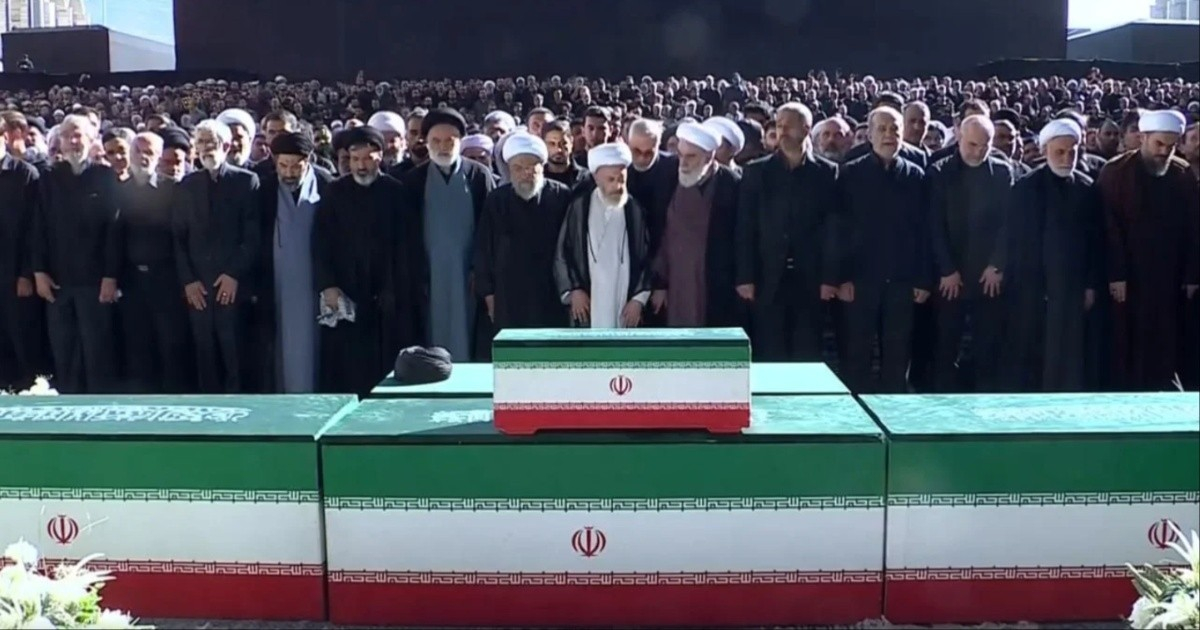
Mojtaba Jamenei, who has been appointed as Iran's third Supreme Leader following the death of his father, was notably absent from the large-scale funeral ceremonies held in Tehran on Sunday. In contrast, his three brothers and thousands of mourners from across the country were present.
The funeral took place at Tehran's Grand Mosalla of Imam Khomeini, where Ali Jamenei's three sons—Mostafa, Meysam, and Masoud—gathered to pray beside the coffins of their father and four other family members who perished in the February 28, 2026, attack. This joint offensive by the United States and Israel resulted in the deaths of the Supreme Leader, his daughter, son-in-law, daughter-in-law, and 14-month-old granddaughter.
Since that tragic day, Mojtaba has not been seen in public. According to Reuters, citing sources close to his inner circle, the new Supreme Leader suffered severe injuries during the attack: his face was disfigured, and he sustained significant injuries to one or both legs. To complicate matters further, Israel has publicly declared him a military target, exacerbating security concerns about any public appearance he might make.
There was a palpable sense of anticipation among those in attendance. A grieving young woman, interviewed by the semi-official Tasnim agency, voiced her disappointment: "Until the prayer began, I kept telling those around me that I hoped he would come himself. That was our only wish."
Mojtaba was selected as the new Supreme Leader of Iran by the Assembly of Experts on March 8 and 9, 2026, with 88 clerics casting their votes in his favor. Since then, he has communicated only through written statements, avoiding public appearances.
Iranian President Masoud Pezeshkian and Parliamentary Speaker Mohammad Baqer Qalibaf attended the funeral. State television showed Masoud Jamenei shedding tears and wiping his face with a keffiyeh as an imam recited prayers.
The funeral drew massive crowds: Tehran's metro network recorded 7 million journeys from Saturday night to Sunday morning, with throngs waving flags emblazoned with revenge slogans against the United States and Israel.
In a gesture of solidarity, the Cuban regime sent Walter Baluja García, the Minister of Higher Education, as the head of its official delegation to the funerals, underscoring the historical alliance between the two governments.
The conflict between Iran, the United States, and Israel, which lasted about 110 days, resulted in over 3,000 deaths and caused billions of dollars in damage to military and civilian infrastructure. The peace agreement reached on June 14, 2026, includes the unfreezing of Iranian assets held abroad and exemptions from financial sanctions. President Donald Trump told Axios that peace negotiations were paused for a week specifically due to the funeral events.
Following Sunday's ceremony in Tehran, Jamenei's remains will be moved to Qom on Tuesday, then to the Shia holy cities of Najaf and Karbala in Iraq on Wednesday, and finally to Mashhad, where he is set to be buried on July 9 next to the tomb of a medieval Shia imam.
Key Questions About Mojtaba Jamenei and Iran's Leadership
Why was Mojtaba Jamenei absent from his father's funeral?
Mojtaba Jamenei was absent due to severe injuries sustained in a recent attack, as well as security concerns, given that Israel has declared him a military target.
What were the consequences of the conflict involving Iran, the United States, and Israel?
The conflict resulted in over 3,000 deaths and extensive damage to both military and civilian infrastructure. A peace agreement was reached, which includes the unfreezing of Iranian assets and financial sanction exemptions.
Who attended the funeral of Ali Jamenei?
The funeral was attended by Iranian President Masoud Pezeshkian, Parliamentary Speaker Mohammad Baqer Qalibaf, and thousands of mourners, including Jamenei's three other sons.