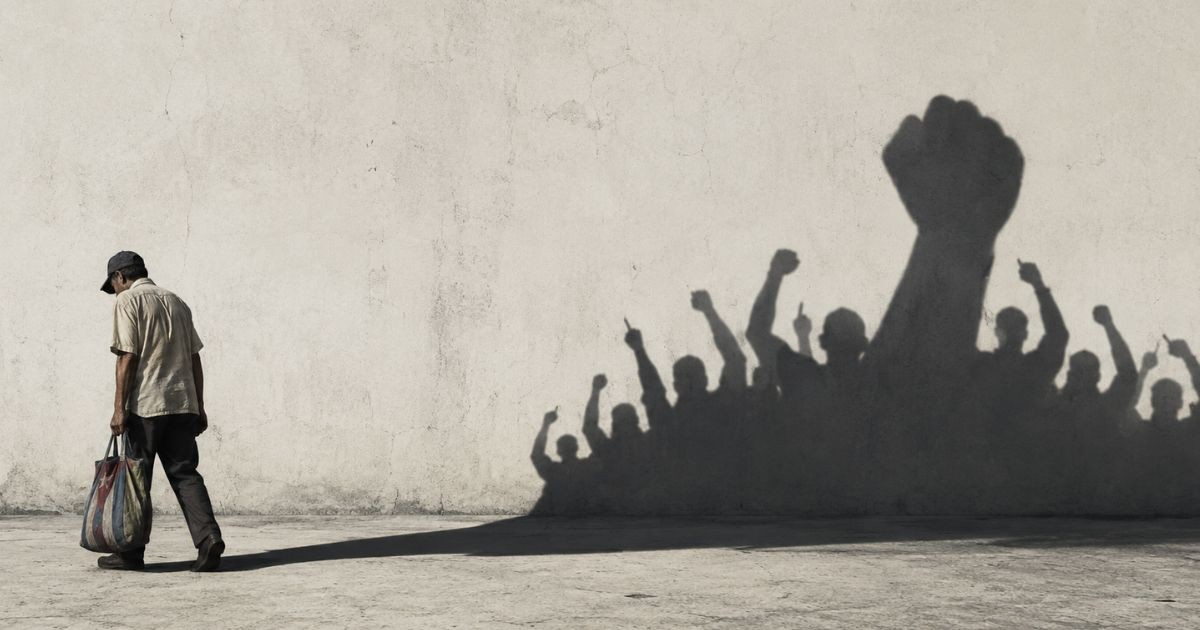
A well-known psychologist has warned that Cuban society has reached a moral breaking point that extends far beyond overt violence.
Dr. Roxanne Castellanos Cabrera, who holds a PhD in Psychological Sciences, shared her thoughts on Facebook, highlighting a pressing issue: the increasing normalization of aggression as a lifestyle in Cuba.
The catalyst for her comments was the controversial conga from Matanzas, with its chorus "pincha que yo te cargo la jaba," which went viral on social media in early July. This sparked a nationwide debate on the island's social decay.
To illustrate her point, Castellanos referenced William Golding's novel Lord of the Flies, which tells the story of children stranded on an island who abandon civilized behavior under extreme conditions. The psychologist frequently draws parallels between the book and the current situation in Cuba.
"Group aggression nullifies reason and personal responsibility, acting as an outlet for suppressed fears and anxieties," she explained, likening the viral conga's dynamic to the lynching scene of Simon in Golding's narrative.
According to Castellanos, the issue goes beyond bloodshed. "Aggression is becoming routine as a means of navigating life in Cuba. Metaphorically, it surpasses mere acts of violence," she noted.
The everyday language—phrases like "luchar la vida" (fight for life) and "batallar" (battle)—is, in her view, evidence of this normalization: "Supporting any way to 'fight' for life has become naturalized, as everyone 'fights' as they can."
She describes how this survival-at-all-costs mentality has even affected the solidarity among Cubans. "We must help each other survive, by any means, good or bad. It doesn't matter," she wrote, pointing out that "la jaba"—a popular symbol of provision and support—has also become emblematic of solidarity without ethical boundaries.
Her statement comes amidst a sustained rise in crime in Cuba, documented by the Cuban Observatory of Citizen Audit, which reported 2,833 verified crimes in 2025, a 115% increase from 2024 and a 337% rise compared to 2023.
There have been 34 confirmed femicide cases in Cuba so far in 2026, marking a 112.5% increase over the same period last year. From 2019 to June this year, 350 femicides have been recorded in total.
Cuban actor Ulises Toirac also commented on the conga video, stating that it "does not show popular joy, but rather the social deterioration in Cuba."
This isn't the first time Castellanos has raised concerns about Cuba's social collapse. In September 2025, she warned of the emotional toll of mass exodus, describing a Cuban family "fractured and burdened with suffering," with the most severe effects impacting children and the elderly.
Her latest assessment broadens to encompass the entire society: "It's urgent to focus on the human being. Because while it's said that without the economy, living conditions can't improve, it's also impossible to advance a country with a physically exhausted and morally collapsed society."
Understanding Cuba's Social Challenges
What is the main concern raised by Dr. Roxanne Castellanos?
Dr. Castellanos is primarily concerned about the normalization of aggression as a lifestyle in Cuba, which she believes is a symptom of deeper social and moral decay.
How does the controversial conga from Matanzas relate to this issue?
The conga's chorus, which became viral, sparked national debate on social decay, illustrating how aggression is being normalized in Cuban society.
Why is the increase in crime significant to Castellanos' analysis?
The rise in crime, including a significant increase in femicides, underscores the social and moral collapse that Dr. Castellanos highlights as a critical issue in Cuba.