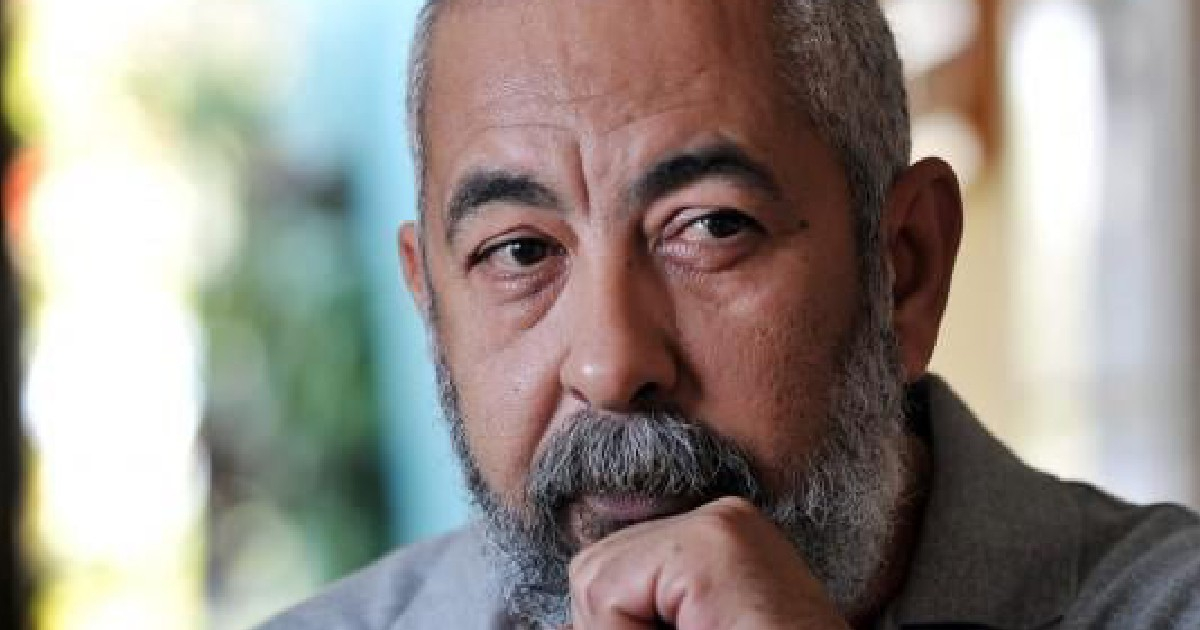
This past Saturday, renowned Cuban author Leonardo Padura shared a thought-provoking op-ed in El País, entitled "Cuba: Dying in the Arena." In this piece, he critically examines the Cuban government's newly introduced package of 176 economic measures, implemented in June 2026, and emphasizes that despite some economic concessions, the state is unwilling to relinquish its most valued possession—power.
Padura begins his narrative with a poignant memory from 1968. As a child walking to school in his Havana neighborhood, he discovered the local hardware store shuttered, seized by the Revolutionary Offensive that year, which nationalized countless small private businesses across the island. This moment was his first lesson in the harsh realities of a radical revolutionary process—where businesses "became property of the people, though in reality, they belonged to the state," never to reopen again.
From this memory, Padura draws a line through nearly sixty years to today's situation. The same government, with its unchanged system and almost identical leadership, now declares that any Cuban can start a factory with salaried workers or establish a private bank. "It has taken the Cuban society descending into the darkest of crises to consider what was once unacceptable, punishable, and condemnable as now convenient, appropriate, and just," Padura observes.
The novelist highlights that the regime's greatest fear was never private property itself but its political implications: "While unspoken, this has always been the political reason hovering over the society. It's well understood that money has the power to alter policies."
The Influence of External Pressures
Padura points to external pressures as a catalyst for change: "A policy of maximum pressure projected from Washington, including threats of military action, was necessary to reverse the country's rigid economic system." However, he warns that this newfound openness has clear boundaries: the state intends to maintain "the most important and efficient of its industries, the industry of control." In Cuba, he notes, "one may play with each link in the chain but without touching the monkey."
The article also delves into Padura's personal experiences, highlighting the harshness of past prohibitions now being lifted. In 1985, his father was sentenced to six months in prison for "currency trafficking" after purchasing hair dye for his mother's clandestine patio salon.
Understanding the Economic Reforms
The 176 measures passed by the regime include authorizing private banks, currency exchange houses, lifting the cap of 100 workers for small and medium-sized enterprises, and allowing individuals to own more than one business. Economist Pedro Monreal criticized these reforms as a "deformed hybrid," suggesting they rely more on revocable concessions than guaranteed rights.
The backdrop for these reforms is dire: Havana faces power outages lasting up to 22 hours a day, with even longer disruptions in the provinces, severe shortages of essential medicines, a 26% drop in GDP since 2020, and real inflation nearing 70%. Since 2021, almost two million Cubans—roughly 15% of the population—have fled the country.
Padura articulates this social divide with precision: "While some sectors of society glimpse flashes of wealth, the majority are experiencing a rapid impoverishment that, by 2026, has forced a vast human mass to live at basic survival levels."
He concludes with probing questions, often alarming in nature: who will have faith in a government that has sown distrust for decades and now seeks investment in Cuba? And who, within the power structures, will be best positioned to benefit from what he terms a "foreseeable investment piñata"?
FAQs about the Impact of Cuban Reforms
What are the key elements of the new Cuban economic reforms?
The reforms include the authorization of private banks, currency exchange houses, lifting the cap on workers for small and medium-sized enterprises, and allowing ownership of multiple businesses.
Why does Leonardo Padura criticize these reforms?
Padura criticizes the reforms as superficial efforts that do not challenge the state's control, which remains its most crucial asset. He argues that the changes are driven by external pressures and do not address the root issues.
What is the current economic situation in Cuba?
Cuba is experiencing severe economic challenges, including frequent power outages, shortages of essential medicines, a significant drop in GDP, and high inflation. These conditions have led to a mass exodus of citizens.