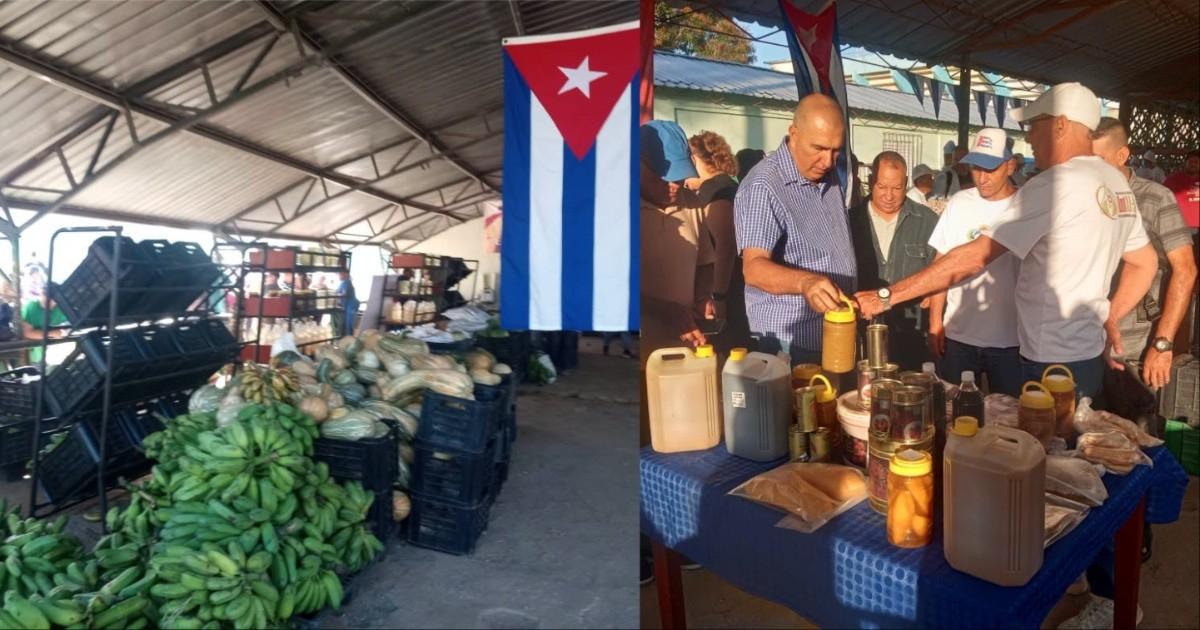
This past Saturday, the state-run media outlet Tiempo21Cuba touted the agricultural fair in Las Tunas as a "challenge to resilience" and a "testament to the commitment for the people." Meanwhile, citizens on social media were quick to label it the "misery fair" and liken it to a "theatrical performance."
The event took place in the 26 de Julio Park of the provincial capital, showcasing over 800 quintals of root vegetables, greens, fruits, and other produce, contributed by state agricultural entities from five out of the province's eight municipalities.
However, Cuba's ongoing energy crisis cast a shadow over the fair. Both the dairy and meat processing companies in Las Tunas struggled to participate effectively, as power outages impeded their production capabilities.
Outrage Over Exorbitant Prices
The private sector mainly offered plantains priced at 40 pesos each, while eggs were sold at an astonishing 2,600 pesos per carton. The reaction from the public was swift and critical. "A plantain for 50 to 70 pesos, this fair isn't meant for the common folk. What can elderly pensioners eat? This scene is a charade," lamented Facebook user Guillermo Leon.
Gerardo Pavon echoed the sentiment, declaring, "The fair of misery. The propaganda is sickening." The outrage is backed by arithmetic: the average pension in Cuba is approximately 3,056 pesos per month, meaning a single carton of eggs would nearly consume an entire pensioner's income.
Economic Policy and Its Impact
The Cuban regime further exacerbated inflation by removing price caps on several basic goods through Resolution 150/2026 on June 21, a move that came at a time when most Cubans struggle to meet basic living expenses.
Official reports highlighted the participation of the Provincial Food Industry Company and its subsidiary Intalsur, offering nearly twenty products derived from flour, fruits, and vegetables. Additionally, the El Ferrocarril market and the Mipyme Mercasa were praised for their "competitive" pricing.
The Fair's Troubled History
Held biweekly in Las Tunas, the fair's recent history underscores an accelerating decline. May's edition was canceled due to a lack of fuel for transportation, and the June 21st fair, organized for Father's Day, faced widespread criticism for its exorbitant prices, with yogurt at 490 pesos and ice cream at 1,460 pesos.
The backdrop of these issues is a severe energy crisis: as of last Friday, Cuba faced an electricity deficit of 2,206 MW, nearly reaching the historic high of 2,208 MW set on June 25. These shortages result in blackouts affecting up to 70% of the island, leaving some areas without power for 20 to 24 hours a day.
User Ariel Mora encapsulated the sentiment of many with a mix of nostalgia and irony: "They call this a fair. Fairs were what we had years ago... and of course, they'll blame the embargo."
Understanding Cuba's Economic Challenges
What factors contributed to the high prices at the Las Tunas agricultural fair?
The high prices were influenced by the ongoing energy crisis, limiting production capabilities, and the removal of price caps on basic goods, which has led to increased inflation.
How does the energy crisis affect daily life in Cuba?
The energy crisis results in frequent blackouts, impacting up to 70% of the island, with some areas experiencing power outages for 20 to 24 hours daily, affecting production and daily living conditions.
Why is the Las Tunas fair criticized despite being a regular event?
The fair faces criticism due to its high prices, which are unaffordable for many citizens, and the perception that it does not adequately address the needs of the local population amidst the economic crisis.