On Saturday, provincial leaders in Guantánamo held an emergency meeting with all municipalities to urgently demand increased cash deposits in banks. This is seen as the only method by which the regime can ensure the payment of salaries for educators and pensions for retirees in July.
The meeting, conducted via audioconference and led by top officials from the Communist Party and the provincial government, set a daily cash collection goal of nearly 15 million pesos for the entire province, as reported by the official newspaper Venceremos.
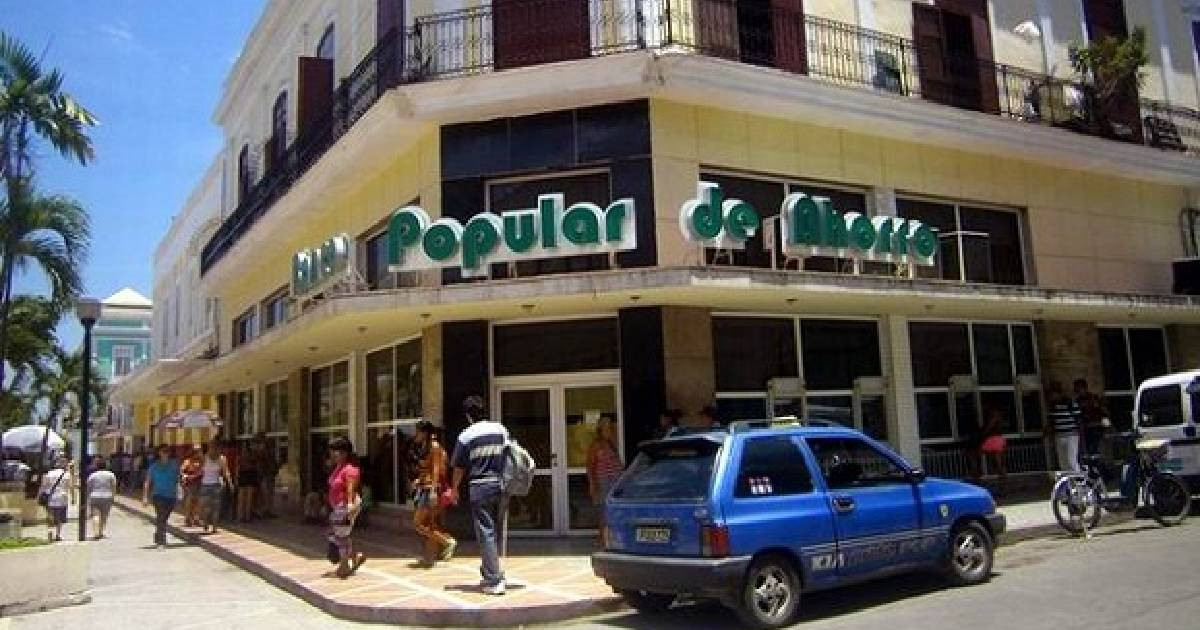
Figures presented during the session revealed that branches of the Banco Popular de Ahorro (BPA) are only reaching 94% of this target, while the Banco de Crédito y Comercio (Bandec) falls short at 77%, with both institutions gathering just over 12 million pesos together.
This shortfall of at least three million pesos each day poses a direct threat to the payment of salaries and pensions throughout the month, in a province where — similar to the rest of the country — cash predominantly circulates outside the formal banking system.
This issue is not unique to Guantánamo. In June, the government of Granma publicly admitted it lacked the over 400 million pesos required to pay its 111,000 retirees, prompting the adoption of a staggered payment system based on each branch's daily income.
In response to the crisis, the Central Bank extended a pilot program nationwide, initially launched in Holguín. This initiative involves approximately 20 micro, small, and medium enterprises (MSMEs) paying pensions directly in cash to retirees, benefiting around 5,000 pensioners.
The underlying issue is the failure of the mandatory banking policy introduced in August 2023. Three years later, only 3.77% of transactions in Cuba are digital, more than 50% of ATMs in Havana were out of service in May, and Venceremos acknowledged that the crisis "has shifted from a banking difficulty to a social problem."
Additional Challenges in Guantánamo
During the same meeting on Saturday, Guantánamo's authorities tackled other pressing issues, such as the failure to meet the commercial circulation plan in Baracoa, Manuel Tames, San Antonio del Sur, and Imías, and the ongoing deterioration of electrical transformers affecting both state and residential sectors.
Cuba has over 1.7 million retirees who rely on a collapsed banking system, with maximum pensions amounting to 4,000 pesos per month, equating to less than $10 at the informal exchange rate.
Meanwhile, in June, the National Assembly approved a package of 176 measures, including the authorization of private banking for the first time since 1959, reforms which analysts deem too late given the scale of the collapse.
Understanding the Economic Crisis in Cuba
Why is there a cash shortage in Guantánamo?
The cash shortage in Guantánamo is primarily due to the failure of the mandatory banking policy and the limited circulation of cash within the formal banking system. This shortage is affecting the payment of salaries and pensions.
What measures are being taken to address the pension payment issue?
The Central Bank of Cuba has implemented a pilot program, extending it nationwide, where MSMEs in Holguín are paying pensions directly in cash to retirees, benefiting around 5,000 pensioners.
How is the economic crisis affecting retirees in Cuba?
Retirees in Cuba, numbering over 1.7 million, are severely impacted by the banking system's collapse, receiving pensions that equate to less than $10 monthly at the informal exchange rate.