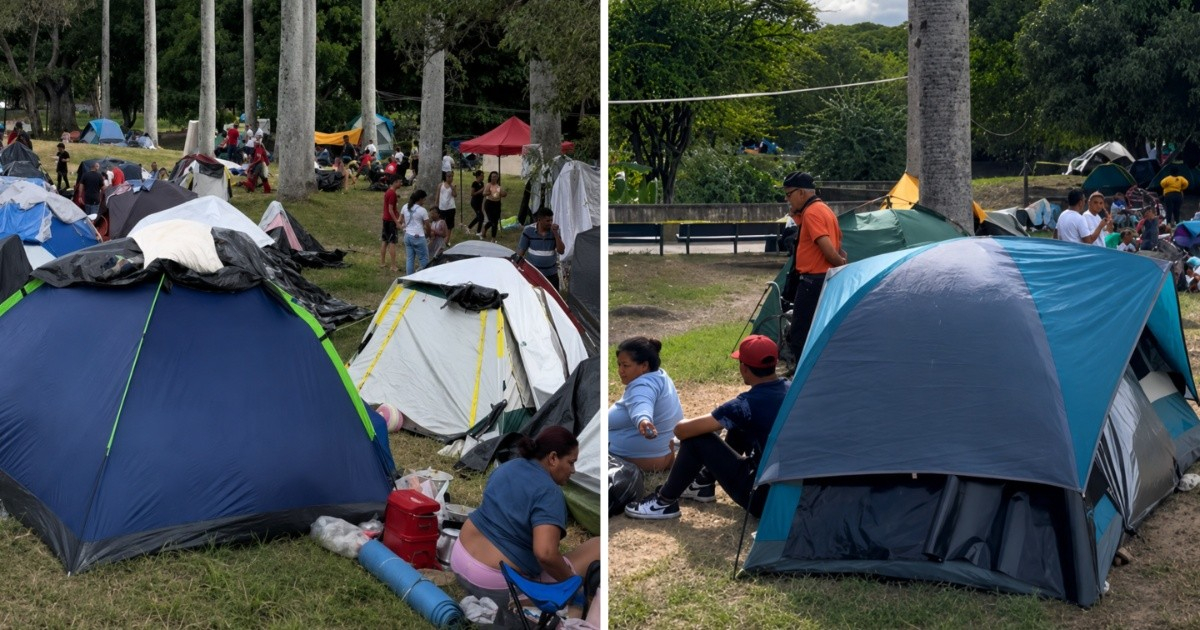
Following the devastating earthquakes that struck Venezuela on June 24, hundreds of families have been left homeless and are now spending their tenth night on the streets of Caraballeda. Despite promises from Nicolás Maduro's government to relocate them, these assurances remain unfulfilled, as reported by EFE.
In a bid for government action, residents blocked the main access road to Caraballeda this past Saturday. Their demand was clear: to be moved to the Las Caracas hotel complex, a temporary refuge promised by authorities, yet still unrealized a full ten days later.
"We've been here more than ten days with children, adults, out in the street," explained José Guillén, 32, a resident of OPPE 30, a 13-story white tower that housed around 300 people. Despite the building still standing, its interiors are completely destroyed.
Outside, the atmosphere is marked by resilience, with children playing and drawing on the pavement, surrounded by refrigerators, stoves, and the few possessions families managed to salvage. Inside the building, two bodies remain.
Juan Jiménez, a fourth-floor resident who managed to reclaim some belongings, voiced a shared frustration with a simple question: "Where is the government? We just want them to at least come and say: get on the buses."
Following the protests and roadblock, four police trucks arrived at midday Saturday to transport families to a temporary shelter. The evacuation was assisted by the Tupamara collectives, groups aligned with the government, along with security forces.
The Broader Humanitarian Crisis Unfolding
The plight of Caraballeda's residents highlights a broader humanitarian crisis. Authorities estimate that 15,000 people have been rendered homeless by the twin earthquakes, which registered magnitudes of 7.2 and 7.5, occurring just 39 seconds apart.
The official toll at the end of this week stands at 2,954 dead and over 16,000 injured, with 885 buildings affected and 189 completely collapsed. The United Nations estimates as many as 50,000 people may be missing beneath the rubble.
Among those with no place to go is Belkys Chacón, who, along with her husband, was buried by debris during the first quake while managing their beachside candy stand. Since then, they have been living outdoors, with neither a mattress nor a destination in sight.
Criticism of Government Response
The regime's response has come under heavy criticism. The NGO Provea reported that the 14,000 military and police personnel deployed have focused on maintaining public order rather than providing essential services like potable water, food, or basic sleeping supplies.
Acting President Delcy Rodríguez announced seven days of national mourning from July 2 and pledged new housing for the displaced by the end of 2026. However, for the hundreds of families in Caraballeda, such a promise remains unfulfilled, ten days after the catastrophe.
On the international front, over 30 countries are involved in rescue efforts, with approximately 3,600 specialists and more than 1,000 tons of humanitarian aid. The UN estimates the direct physical damages at $37 billion, equivalent to 6% of Venezuela's gross domestic product.
Key Questions About the Venezuelan Earthquake Crisis
What actions have been taken to aid those affected by the earthquakes in Venezuela?
International efforts involve over 30 countries, contributing with approximately 3,600 specialists and over 1,000 tons of humanitarian aid. However, local government actions have been criticized for focusing more on public order than on providing essential services.
How many people have been displaced due to the earthquakes in Venezuela?
Authorities estimate that around 15,000 individuals have been left homeless following the twin earthquakes, which struck with magnitudes of 7.2 and 7.5.
What is the estimated death toll from the Venezuelan earthquakes?
The official death toll is reported to be 2,954, with more than 16,000 people injured. The United Nations has also indicated that up to 50,000 people could be missing under the debris.