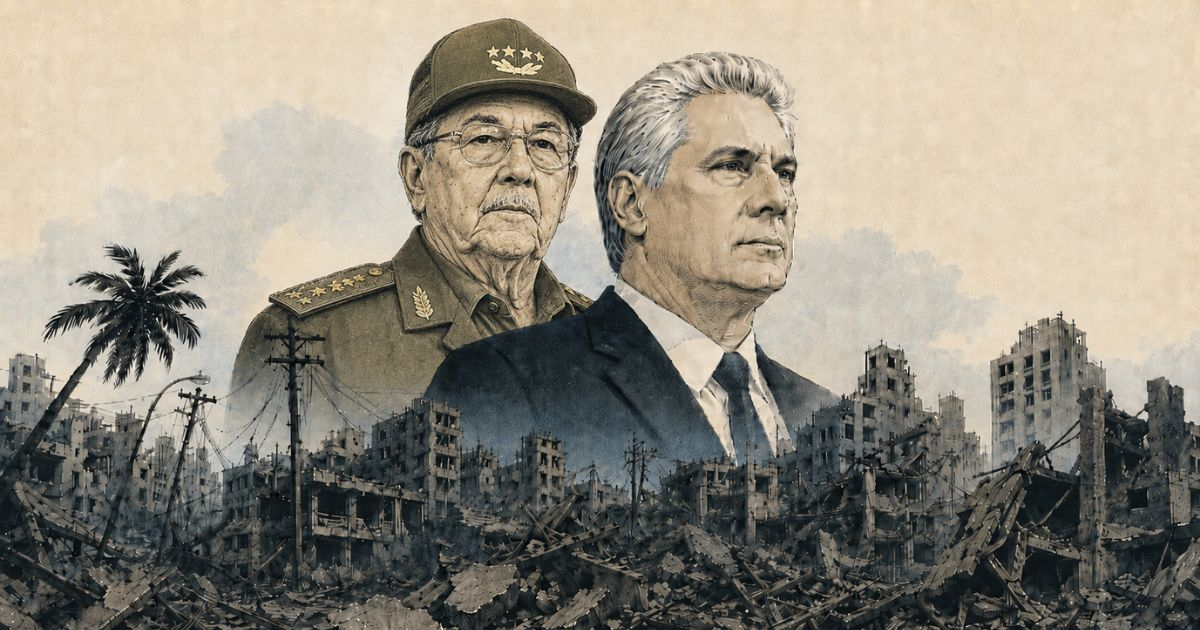
The ruling elite in Cuba made a long-standing calculation: it's better to govern over a crumbling nation than to risk losing power in a transition.
This perspective is essential to understanding why the dictatorship remains unyielding. The regime doesn't cling to revolutionary rhetoric out of belief but because the narrative of a besieged fortress transforms their downfall into a tale of epic struggle. Without this story, the collapse would simply reveal the leaders' accountability. With it, they masquerade their failure as a heroic sacrifice against foreign adversaries.
The government doesn't just tolerate catastrophe; it has turned it into a strategy. The ongoing deterioration of the country depopulates the nation, weakens civil society, and perpetuates the endless excuse of the embargo. Each departing plane alleviates pressure that might otherwise be directed at those in power. Individuals who are desperate or cornered leave, taking with them the potential energy for change.
Thus, hunger is no longer a failure of the system but a tool. Power outages, medicine shortages, and empty shelves pose no threat to the leadership as long as the repressive apparatus remains operational.
The true limit isn't found on the streets. It's the day the regime can no longer sustain itself financially. No repressive machinery can survive when unable to pay those who enforce its will. This, not voluntary reform—which will never happen—is the sole real crack in their facade.
The pressure from the United States hasn't failed due to lack of intensity but due to a lack of dialogue. Negotiations are impossible with those who have no intention of negotiating, merely stalling for time.
Trump and Rubio have pushed to the brink: sanctions against Díaz-Canel and the Castro family, actions against GAESA and its business network, pressure on the missions of enslaved doctors, warnings about the use of force. The regime’s response is predictable: victimhood, besieged fortress rhetoric, and no substantive movement. Not because the pressure isn't felt, but because any real concession threatens their primary concern: maintaining control.
There is no alternative. It's not that Cuban society doesn't desire genuine change—80% of Cubans support a transition to a capitalist, liberal democracy—but the regime won't allow it. Faced with such obstinacy, Marco Rubio cannot hesitate. Allowing the dictatorship to rule unchallenged for more years over the ruins it created would not be a miscalculation; it would be an unforgivable oversight.
As long as no one stops them, they will continue to govern over the ruins of Cuba.
Understanding the Cuban Regime's Stance on Power and Reform
Why does the Cuban regime refuse to negotiate or transition?
The Cuban regime refuses to negotiate or transition because it prioritizes maintaining power over initiating change. They use the narrative of a besieged fortress to justify their actions, turning the country's collapse into a story of heroic sacrifice against external enemies.
How does the Cuban government use the country's hardship as a strategy?
The Cuban government has turned the country's hardships into a method to sustain power. By allowing the nation to deteriorate, they deplete civil society and use the embargo as an excuse. This depopulation and pressure relief through migration prevent the potential for organized change.