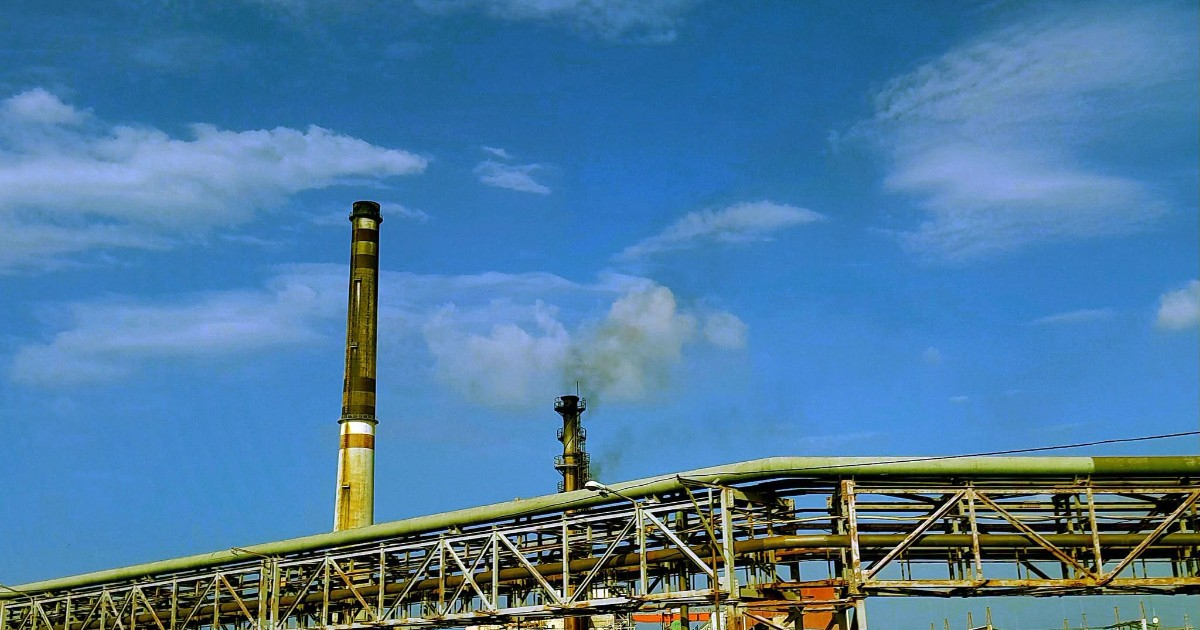
Early Saturday morning, the first unit of the Lidio Ramón Pérez Thermoelectric Plant (CTE Felton) in Mayarí, Holguín, successfully reconnected to the National Electric System. At precisely 1:50 AM, the unit began generating a stable output of 155 MW while fine-tuning parameters to increase its load.
“#FeltonOne now: 155 MW stable, adjusting parameters to increase load. Shift C in operation. The unit synchronized at 1:50 AM this Saturday," reported Emilio Rodríguez Pupo on Facebook.
This update comes shortly after a severe incident at the same plant on Friday night. A previous synchronization attempt led to a sudden frequency drop, plunging the entire province of Granma into darkness.
According to Granma's Electric Company, the provincial disconnection was an automatic protection protocol: "A sharp frequency drop occurred, necessitating Granma's disconnection to prevent a collapse of the National Electric System."
Mere minutes earlier, at 8:08 PM on Friday, a fault at the Victoria de Girón Substation in Havana caused significant oscillation within the system, leading to the abrupt shutdown of Renté 3 and Felton 1 units, as stated in the official report.
Electricity Shortages Persist Despite Felton's Reconnection
Despite Felton 1's reconnection, Cuba's national electricity outlook remains dire for Saturday. The Electric Union projects a deficit of 2,050 MW during peak nighttime hours, with only 1,050 MW available against an estimated demand of 3,100 MW.
The expected impact for Saturday night's peak is projected to reach 2,080 MW, adding to Friday's maximum outage of 2,221 MW at 8:00 PM, which saw uninterrupted service disruptions nationwide.
Currently, eleven thermoelectric units are out of service: six due to malfunctions—units 6 and 8 of Máximo Gómez, Antonio Guiteras, unit 6 of Diez de Octubre, unit 2 of Felton itself, and unit 3 of Antonio Maceo—and five under maintenance.
Fuel Shortages Aggravate Energy Crisis
Additionally, 106 distributed generation plants are halted due to a lack of fuel, along with the Regla Barge, Melones Barge, Mariel Fuel Plant, and Moa Fuel Plant.
The Electric Company of Havana confirmed that the capital's maximum outage on Friday reached 586 MW, with 407 MW remaining unrestored "with no scheduled recovery" at the time of their report.
The crisis stems from deep-rooted structural issues that no single synchronization can resolve: Cuba requires between 90,000 and 110,000 barrels of oil daily for its electric system but only produces 40,000, and the Venezuelan supply ceased in January 2026.
Public Discontent and Protests Escalate
Mounting frustration has spilled onto the streets. Since July 1, protests, pot-banging, and blockades have erupted in Havana and Santiago de Cuba neighborhoods, with chants escalating from "We want electricity!" to "Freedom!" and "Down with the dictatorship!"
The Cuban Conflict Observatory recorded 1,311 protests in May 2026, the highest number since July 11, 2021, indicating the public's patience with chronic blackouts has worn thin.
Understanding Cuba's Energy Crisis
What caused the power outage in Granma province?
The power outage in Granma province was triggered by a sharp frequency drop during an attempted synchronization of the Felton thermoelectric plant, resulting in an automatic disconnection to prevent system collapse.
How does the fuel shortage affect Cuba's energy supply?
Cuba's energy supply is severely impacted by fuel shortages, as the country needs between 90,000 and 110,000 barrels of oil daily but produces only 40,000. With the cessation of Venezuelan oil shipments in 2026, the situation has worsened, leading to widespread power outages.