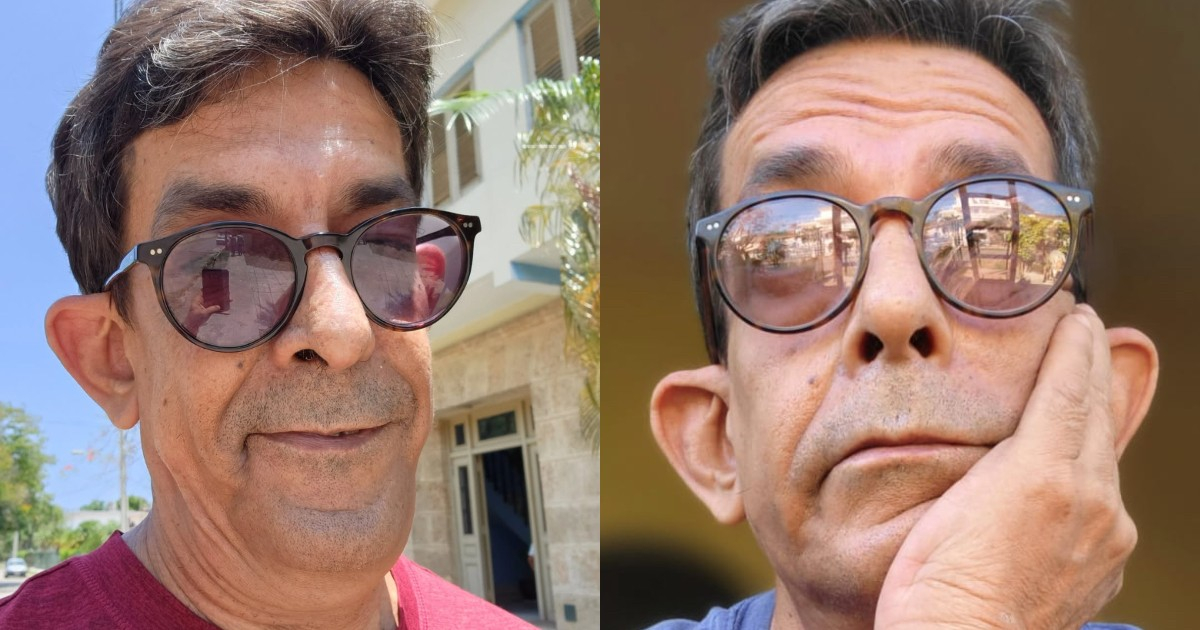
The well-known Cuban comedian, Ulises Toirac, took to Facebook to issue a powerful critique against the Cuban government's repressive tactics. In his post, he dismantles the regime's logic and demands the release of all political prisoners, labeling it as a fundamental step towards genuine progress in the nation.
Toirac begins his post with a straightforward argument: "The problem with 'deterrent tactics' against dissenting voices is that they don't solve issues; they exacerbate them. And they multiply them."
He argues for the necessity of dissent, emphasizing that opposition is crucial, whether things are going well in a country or not. "Opposition is necessary," he asserts.
The Contradiction of Repression
In a compelling analogy, the actor questions the regime's contradictions: if the government claims that the U.S. embargo is unfair because it portrays them as ineffective, why then repress and imprison the "few insignificant negative voices" if they assert they have widespread public support? "Aren't massive demonstrations of support proof enough of their strength?" he asks.
Toirac highlights the lack of public evidence showing that dissenters work "for a foreign power," pointing out that these are simply citizens exercising their right to think and express themselves: "What’s troubling is that there are no published proofs of dissenters being 'in service of a foreign power.' This indicates that their dissent is out of personal conviction, and as citizens, they have the right to think, speak, and defend their ideas."
Arbitrary Legalities and Calls for Action
One of Toirac's harshest criticisms targets the arbitrary nature of legislative and judicial actions: "There are prisoners serving sentences for defending the current economic measures! The law isn’t a wardrobe to change daily."
He calls for a specific resolution: "Release all political prisoners who 'don't exist in the country'—a claim they haven't made for a long time. It would be a sign of strength, confidence, and the establishment of more plural internal participation."
A Nation in Crisis
This denunciation comes amid a documented context: according to Prisoners Defenders, Cuba reached a record of 1,260 political prisoners by April 2026, with new detentions involving torture, sexual assault, and death threats.
The comedian also criticizes government officials for being detached from the harsh realities faced by most citizens. They enjoy solar panels, air conditioning, food, gas-fueled cars, medicines, and send their children abroad for education, all while denying a crisis that, according to Toirac, is evident to anyone on the streets.
He paints a stark picture: "People are dying—not dramatically, but literally. Cuba is indeed in a phase of humanitarian disaster," contrasting with statements from Foreign Minister Bruno Rodríguez, who denied on July 1 that Cuba is experiencing a humanitarian crisis.
Toirac concludes with an image that encapsulates the everyday degradation experienced by millions: "Our sheets aren't damp from fulfilled carnal desires but from sweat. A sticky sweat no one can escape, mixed with the dust and decay from our streets. And we can't wash those sheets or rekindle those desires. There’s nothing to do it with."
This post marks the latest in a series of critical commentaries. On Thursday, Toirac described the conga in Matanzas as evidence of a failed state; days earlier, he criticized the 176 economic measures approved by the National Assembly as "belated and ineffective," claiming the regime is "merely trying to buy time."
Understanding the Critique of Cuba's Government
What are Ulises Toirac's main criticisms of the Cuban government?
Toirac criticizes the Cuban government's repressive tactics against dissenting voices, arbitrary legal actions, and the detachment of officials from the citizens' realities. He calls for the release of political prisoners and highlights the country's humanitarian crisis.
Why does Toirac believe opposition is necessary in Cuba?
Toirac argues that opposition is essential because it allows citizens to exercise their right to think and express themselves, which is crucial for addressing problems and achieving genuine progress, regardless of how well things might be going in the country.
What evidence does Toirac use to support his claims?
Toirac cites the lack of public evidence showing dissenters working for foreign powers and highlights the record number of political prisoners reported by Prisoners Defenders, alongside the humanitarian crisis visible in everyday Cuban life.