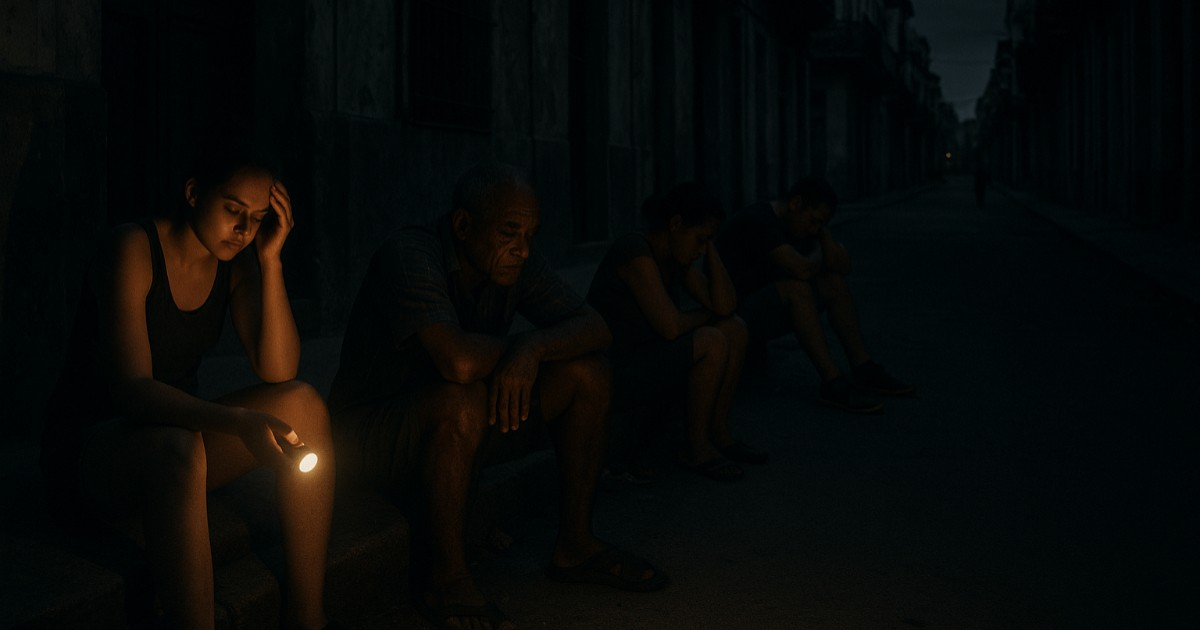
This week, Cuban photographer and entrepreneur Mikely Arencibia Pantoja shared a poignant reflection on Facebook, offering a raw depiction of what it means to endure another day in Cuba. His message, encapsulating the frustration of an entire generation, comes with a stark warning.
Living Day by Day in Cuba
Entitled "Surviving 24 Hours in Cuba," Arencibia, who resides in Pinar del Río, begins with a statement many can relate to: "Few nations have mastered the art of surviving just one more day like Cubans. Often here, the goal isn't progress; it's simply making it to tomorrow."
He describes the Cuban people as "professional scarcity managers," juggling meager salaries that can't even be withdrawn all at once due to cash shortages at banks. Despite their existence, these financial institutions often lack money.
The accompanying image speaks volumes: a soot-blackened aluminum pot cooks on an open wood fire, supported by makeshift construction rods, against a cracked cement wall. This scene isn't from the past; it's the bleak reality for millions of Cubans in 2026, where power outages last up to 20 to 40 hours daily in several provinces.
Everyday Survival Tactics
Arencibia meticulously lists the survival strategies that Cubans have normalized: stretching a meal meant for three to feed five, repairing a fan ten times before replacing it, making a pair of shoes last for years, and saving an empty bottle or a piece of wire because, as he says, "throwing something away can be a luxury."
The narrative also highlights the primary question many Cubans face upon waking: not "What will I achieve today?" but "How do I get bread? How can I cook, and with what? How do I get to work? How do I support my family?" This shift from ambition to mere survival is central to his reflection.
A Call for Change
Arencibia's message goes beyond admiration for resilience. His warning is clear: "We must be careful not to confuse the ability to survive with a quality life. Admiring people's ingenuity is one thing; accepting that life is a constant struggle is another."
The context surrounding these words is powerful. Since 2020, Cuba's GDP has plummeted by 26%, with an additional 6.5% contraction expected this year. The average state salary is around 6,830 pesos monthly—roughly $15—while basic living costs exceed 50,000 pesos per person each month. A single onion can cost 900 pesos, nearly a third of the minimum wage for many state workers.
Exacerbating the situation, the banking system is in turmoil: Banco Metropolitano has capped withdrawals at 3,000 pesos, and in April, EFE reported waits of four to six hours at Havana banks just to access one's own money. The banking crisis, which the government pledged to resolve, remains unresolved.
In this dire landscape, Arencibia concludes with a hopeful vision: "Our true goal should be to live, to make plans, to build a future where we have time to focus, enjoy, socialize, and grow."
Understanding Cuba's Economic Struggles
What is the main message of Mikely Arencibia's reflection?
Arencibia's main message is a critique of the daily struggle for survival in Cuba, emphasizing that the ability to endure hardship shouldn't be mistaken for a quality life. He calls for a future where Cubans can live, plan, and grow without constant adversity.
How has Cuba's economic situation impacted its citizens?
Cuba's economic challenges, including a significant GDP decline and high living costs, have forced citizens to adopt daily survival tactics. The banking crisis, with limited cash availability, further complicates their lives.
Why is the image accompanying Arencibia's post significant?
The image of a soot-covered pot on a makeshift stove vividly illustrates the harsh living conditions Cubans endure, highlighting the reality of widespread power outages and resource scarcity.
What has been the government's response to the banking crisis?
Despite promises to resolve the banking crisis, the Cuban government has yet to provide a solution, leaving citizens facing long waits at banks and restricted access to their funds.