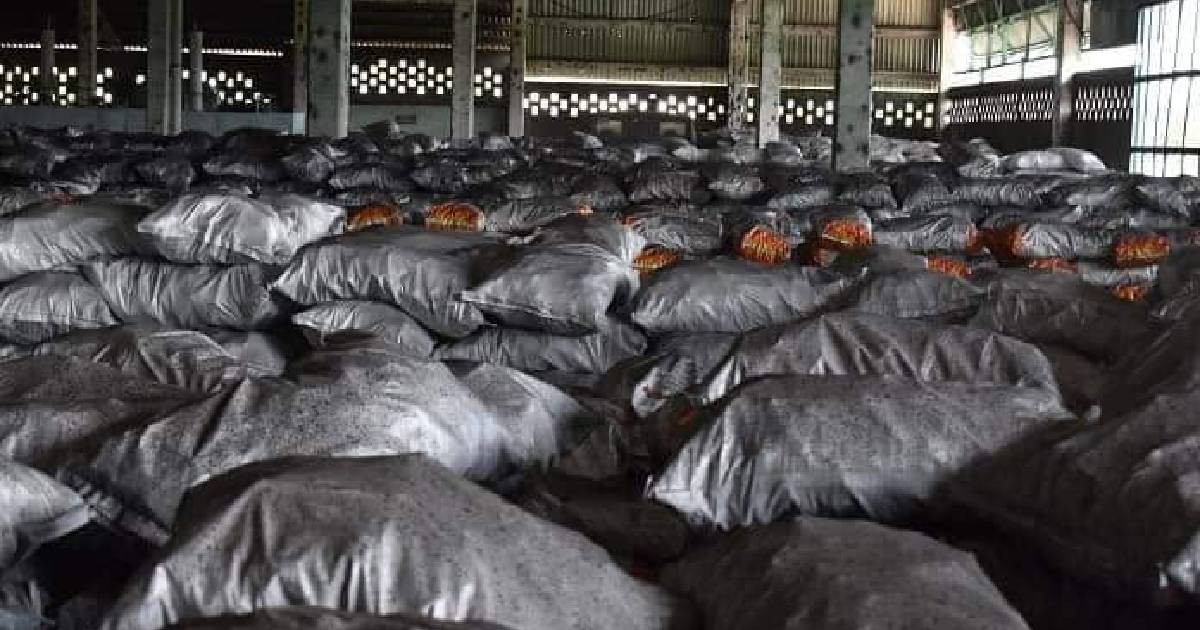
In the first five months of 2026, the province of Las Tunas managed to produce a meager 682 tons of charcoal for export, merely 16% of the planned 4,143 tons. This shortfall is striking, given that Las Tunas is home to one of the country's highest concentrations of marabú.
According to Luis Manuel Peralta Agüero, the provincial delegate of the Ministry of Agriculture, the lack of fuel and material resources for cutting and extracting the invasive plant, coupled with a shortage of labor in the six state entities involved—Acopio, Agroforestal, Agroindustrial de Grains, Agroindustrial Municipal Las Tunas, Flora y Fauna, and Agroint—has led to this failure. Notably, only Agroint has shown positive results.
The situation is paradoxical, as Peralta acknowledged that the dense marabú in Las Tunas could produce between 15,000 and 20,000 tons of charcoal annually. Yet, he warned that "amid the current economic and financial crisis, regaining production momentum is unlikely," as reported by the digital portal Tiempo 21.
Challenges in Internal Supply
While production for local consumption surpassed its target—with 732 tons collected by May against a goal of 228—this figure is insignificant given the actual demand from families in Las Tunas. These families rely heavily on charcoal as their primary cooking fuel amid Cuba's worst energy crisis.
Peralta stated that increasing production and better organizing sales are the two key challenges facing the province's agricultural sector. If addressed, these measures "could lead to price reductions and relief for families amid the instability of the National Power System."
Impact of National Energy Crisis
Charcoal is scarce at agricultural fairs, where it is usually sold at affordable prices, forcing people to turn to the informal market at much higher rates. Nationally, the price of a bag of charcoal skyrocketed from between 900 and 1,400 pesos in December 2024 to between 3,200 and 5,000 pesos by June 2026, in a country where the average official salary is around 6,930 pesos per month.
The energy crisis exacerbates the situation. Cuba stopped receiving Venezuelan oil in November 2025, and Mexico halted its shipments in February 2026. As the electrical deficit grows—impacting how most Cuban families cook—liquefied gas becomes almost unattainable, with prices soaring between 10,000 and 50,000 pesos in the informal market.
Government Measures and Local Struggles
The Camagüey government set an official price of 1,400 pesos for a 20-kilogram bag of charcoal starting June 21, while authorities in other provinces have penalized those attempting to produce artisanal charcoal to address local shortages. In Santiago de Cuba, where power outages exceed 20 hours daily, residents resort to building makeshift kilns between buildings due to a lack of alternatives.
Structurally, the paradox lies in the state's prioritization of charcoal exports to earn foreign currency—Cuba generated $61.8 million from this sector in 2023 and ranks as the ninth-largest global exporter—while millions of families cannot afford it domestically.
Understanding Cuba's Charcoal Crisis
Why is there a charcoal shortage in Las Tunas despite the abundance of marabú?
The shortage is attributed to a lack of fuel, resources for extraction, and labor shortages in state entities responsible for charcoal production, despite the high density of marabú in the region.
How has the energy crisis affected the price of charcoal in Cuba?
The energy crisis has caused the price of charcoal to spike dramatically, with prices rising from 900-1,400 pesos in December 2024 to 3,200-5,000 pesos by June 2026, as supplies dwindle amid increased demand.
What measures are being taken to address the charcoal shortage in Cuba?
Efforts include setting official prices for charcoal and penalizing unauthorized production, but the focus remains on increasing production and improving sales organization to stabilize supply and reduce prices.