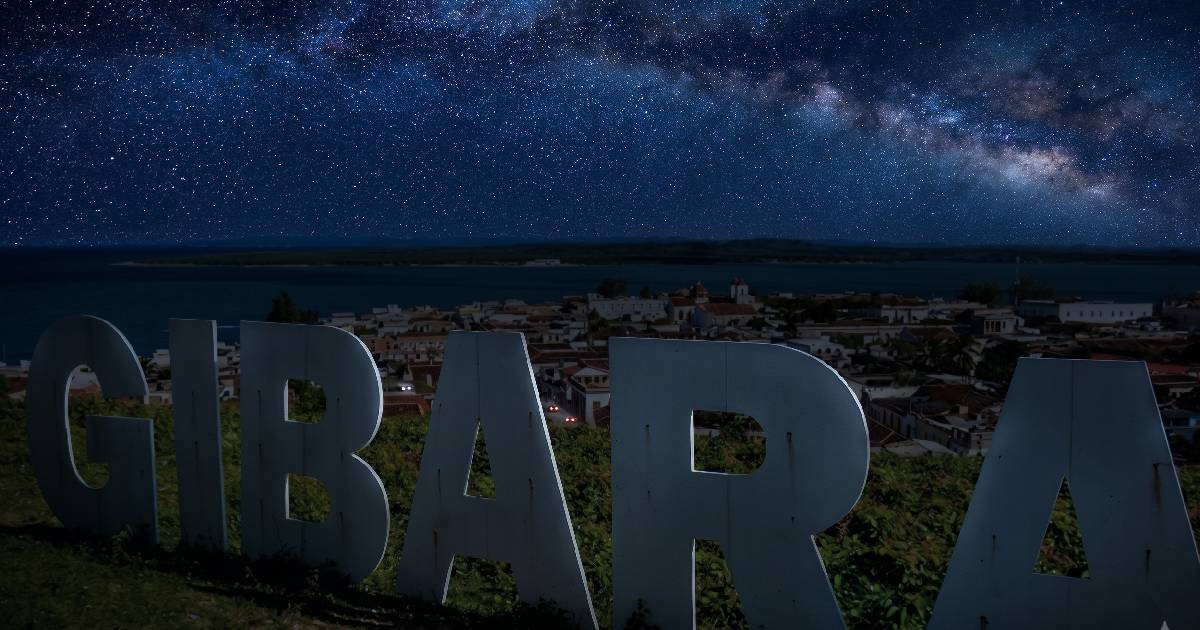
The 20th edition of the Gibara International Low-Budget Film Festival is set to take place from July 14 to 18 in the picturesque town known as the "White Village of the Crabs." Outdoor screenings powered by independent battery systems will be the highlight, providing a much-needed escape from the crippling power outages that have plunged Holguín province into darkness for over 50 consecutive hours at times.
According to a report from the Cuban News Agency, the organizing committee has intentionally designed this year's festival to be a "resilient stage through the art of cinema," acknowledging the challenging environment surrounding the event.
Sergio Benvenuto Solás, who chairs the Organizing Committee, shared that the festival was initially postponed from April and rescheduled for the summer "to encourage greater involvement from university students and young people."
The backdrop is grim: Holguín grapples with a mere 70 MW to cover a maximum demand of 240 MW, supplying less than 30% of the necessary capacity. This forces residential areas to endure around three hours of electricity followed by 39 to 40 hours of blackout, sometimes even longer.
Gibara, where the festival will be held, is no stranger to this harsh reality. In September 2025, the town witnessed street protests after enduring over 24 hours without power, with at least seven individuals detained and police crackdowns captured on citizen videos.
Creative Solutions to Power Shortages
To combat the ongoing crisis, the festival will emphasize open-air screenings through three strategically placed screens across the city, each supported by a battery system to ensure continuity when the power grid fails.
Benvenuto acknowledged that "attendance will dwindle, and international participation will be reduced," yet he assured that the festival will maintain its usual high standards in film programming.
While there won't be any large concerts, the event will feature theater, music, dance, and discussion forums, tailored to fit the current circumstances of the country.
Celebrating Diverse Filmmaking
The competition categories include feature films and short films of fiction, documentaries, animation, and experimental cinema, with the Lucía Awards as the main accolades. The animation section boasts 14 entries from eight nations: Mexico, Cuba, Brazil, Spain, Chile, Argentina, Colombia, and Peru.
Established in April 2003 by the late Cuban filmmaker Humberto Solás (1941-2008), the festival serves as a platform to champion creativity and low-budget productions, cementing its status as one of Latin America's most esteemed cinematic gatherings.
Benvenuto promised, "Gibara will operate as a city of spotlights, three of which will be dedicated to cinema, and during the evenings, the festival will transform into a space of joy, quality, and light," a statement that holds literal significance in a province where electric light has become a rare commodity.
Understanding Gibara's Film Festival Amid Power Struggles
What is the main theme of the Gibara Film Festival this year?
This year's festival is themed around resilience through cinema, addressing the extreme conditions caused by ongoing power outages.
How will the festival address the power outages in Holguín?
The festival will feature outdoor screenings powered by independent battery systems, ensuring continuity even during power cuts.
What type of films will compete at the festival?
The festival will host competitions for feature films, short films, documentaries, animation, and experimental films, with entries from several countries.