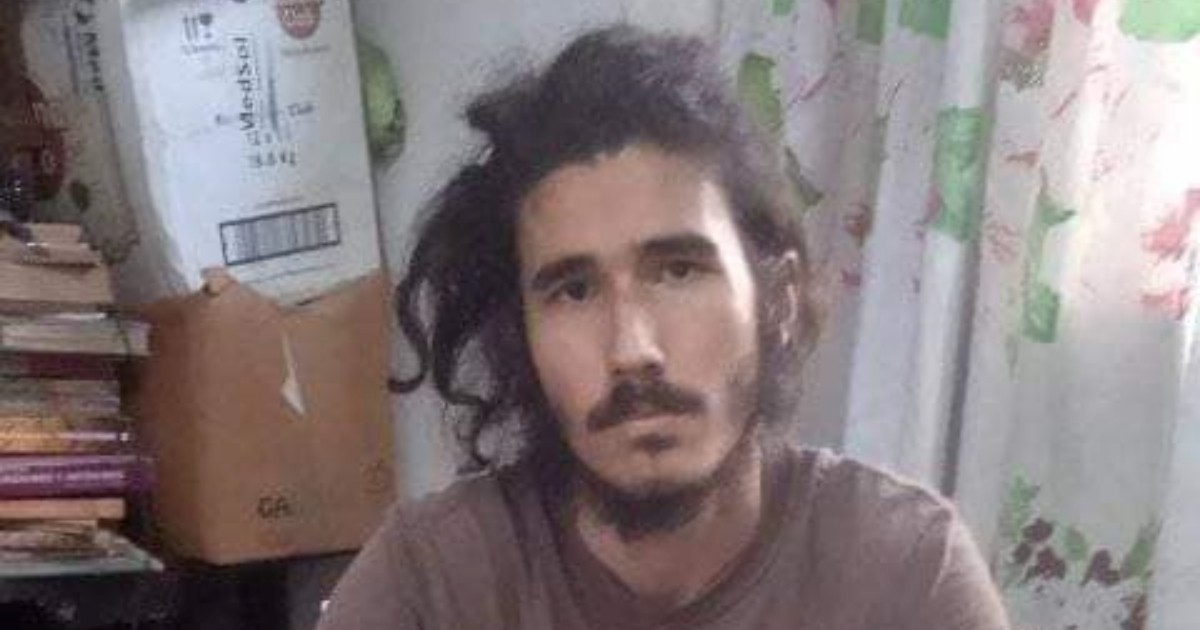
Leonardo Romero Negrín was released on Friday following a two-day detention after being violently arrested during a protest in Central Havana on Wednesday.
Journalist and researcher Lisbeth Moya González announced the news on her Facebook page, confirming that the activist was freed with a fine of 2,000 Cuban pesos.
"We did it. Leonardo Romero Negrín is free. This wouldn't have been possible without all of you. He was released with a fine of 2,000 pesos and many people who care about him," wrote Moya González, who led the public campaign demanding his release.
Protest and Arrest
Romero Negrín was taken into custody on Wednesday night at the intersection of Ánimas and Consulado Streets while participating in a cacerolazo—a protest involving banging pots and pans—by residents angry over prolonged blackouts and water shortages. Police officers intervened, detaining him and transporting him to the Zanja Street police station within the same district.
The authorities initiated a criminal case against him for alleged "public disorder," initially raising concerns that he wouldn't be released promptly.
Solidarity and Support
Friends and family kept vigil outside the police station for hours without receiving substantial information, being promised updates at 8:00 am, then 10:00 am, and finally 2:00 pm.
The arrest sparked a wave of support. Esteemed filmmaker Fernando Pérez recorded a message of solidarity amid a blackout, shared by Moya González on Friday.
"I'm in the middle of a blackout, but I've heard that Leonardo Romero, a young man expressing his ideas and eager to contribute, is detained," the filmmaker said.
"Until young people are heard and can participate, we will have a fractured Cuba, not the Cuba we dream of," he added.
Wider Reactions
Professor Alina Bárbara López Hernández also shared Pérez’s video and joined the call for the activist's release, despite being under house arrest herself since June 18 following a peaceful protest in Matanzas.
Organizations like Cubalex, Justicia 11J, and the Academic Freedom Observatory alerted diplomatic missions in Cuba, UNESCO, the European Union, the Inter-American Commission on Human Rights, and Amnesty International.
Cubalex highlighted the case as evidence of a "pattern of persecution against former political prisoners in Cuba," subjected to "surveillance, threats, arbitrary detentions, and criminal proceedings based on false charges."
Background of Repression
This is not the first time Romero Negrín has faced regime repression. He was arrested in April 2021 for carrying a sign on Obispo Street, violently detained during the July 11, 2021 protests—where he was held for six days and reported beatings—arrested in March 2025 for protesting with a blank sign in Central Park, and detained multiple times during early 2026.
Context of Crisis
The release comes amid an unprecedented energy crisis and a wave of cacerolazos sweeping across Cuba since June. On Thursday, the electricity deficit hit a record 2,211 MW, leaving approximately 69% of the country without power.
Moya González hailed Romero Negrín's freedom as a collective victory but stressed that the struggle is ongoing: "We got Leo out, but many remain inside. For Wilber Aguilar Bravo's son, for Marta Perdomo's children, for Alina Bárbara López Hernández and her dignified protest, for Luis Manuel Otero Alcántara, and for all those imprisoned for protesting, for fighting, for raising their voices, for dreaming of a Cuba where everyone has a place, we must continue."
Key Questions About the Current Situation in Cuba
Why was Leonardo Romero Negrín arrested during the protest?
Leonardo Romero Negrín was arrested for participating in a cacerolazo protest in Havana, which was against extended blackouts and water shortages.
What charges were brought against Romero Negrín?
Authorities opened a case against Romero Negrín for alleged "public disorder," but he was eventually released with a fine.
How did the public react to Romero Negrín's detention?
There was significant public outcry and support, including messages from prominent figures like filmmaker Fernando Pérez, which helped pressure for his release.